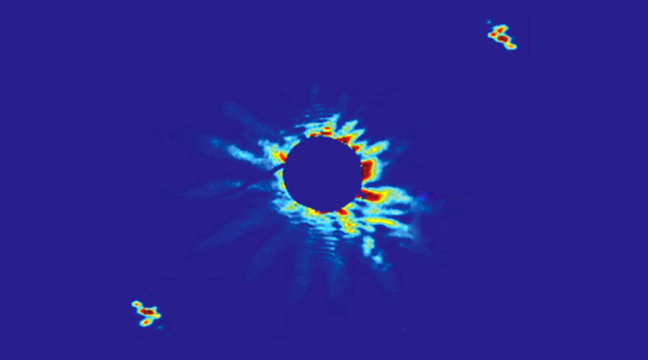
Earthquakes and stock markets exhibit complex behaviors arising from countless random events that are best analyzed statistically, rather than individually. Using the ALS, researchers applied such a statistical analysis to the nanoscale fluctuations of exotic magnetic phases — stripes and skyrmions. https://als.lbl.gov/a-crackling-analysis-of-stripe-and-skyrmion-phases/
Black Carbon Sensor Network Featured on Local News
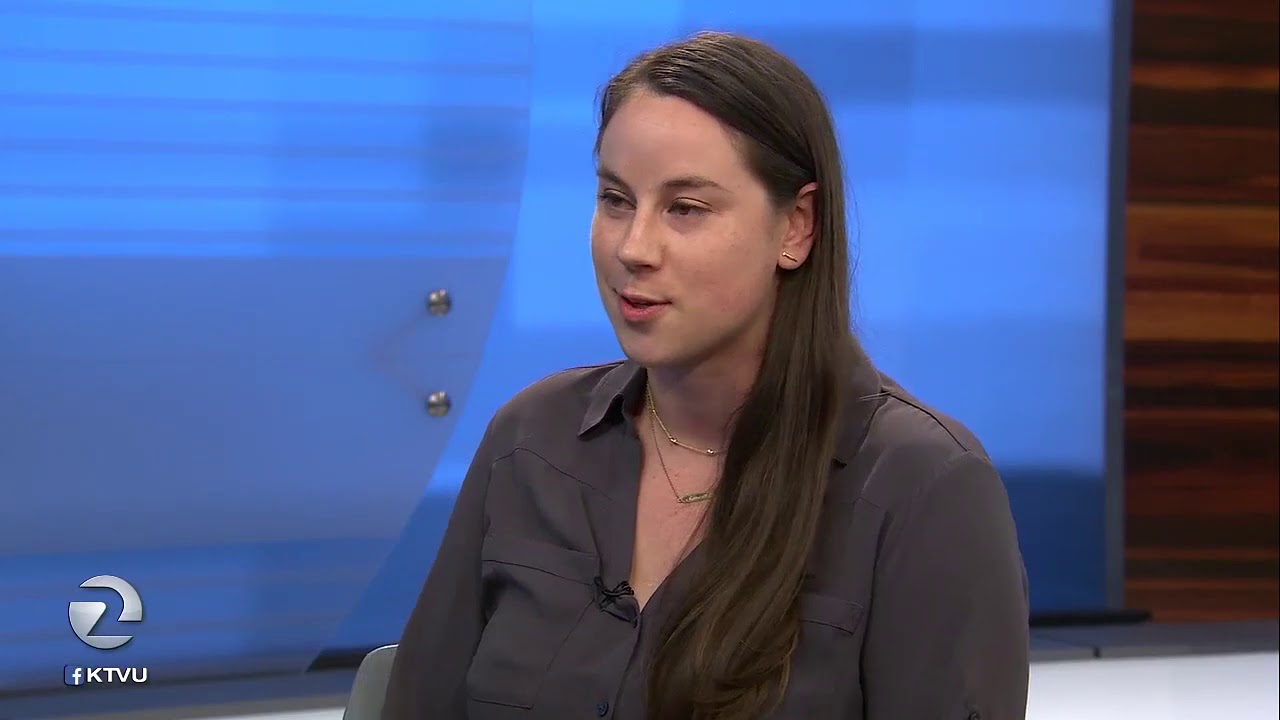
ETA’s Chelsea Preble was interviewed by FOX Channel 2 News about a Berkeley Lab and UC Berkeley effort to measure black carbon in West Oakland neighborhoods. Black carbon contributes to global warming and is a health hazard. One hundred sensors were installed to monitor levels of black carbon. https://youtu.be/6X8f9CLBoB8
ETA’s Chelsea Preble was interviewed by FOX Channel 2 News about a Berkeley Lab and UC Berkeley effort to measure black carbon in West Oakland neighborhoods. Black carbon contributes to global warming and is a health hazard. One hundred sensors were installed to monitor levels of black carbon.
Lab Technologies Showcased at National Lab Day
Attendees at National Lab Day in Washington D.C. stopped by the Lab’s booth to learn more about Berkeley Lab’s Interruption Cost Estimate Calculator. The event showcases national lab research for members of congress and industry. The Lab’s Model Predictive Control technology was also featured.
JGI Applies Machine Learning to Finding Inoviruses
Using machine learning, scientists have uncovered a diversity of inoviruses — filamentous viruses with small, single-stranded DNA genomes. More than 10,000 inovirus-like sequences were identified from 70,000 microbial and metagenome datasets, compared to the 56 previously known inovirus genomes. https://jgi.doe.gov/learning-to-look-inoviruses/
Lab Participates in National Lab Day in D.C. Today
National Lab Day — an event in D.C. connecting members of congress with national lab research — focuses on grid modernization. Berkeley Lab is hosting two exhibits: the Interruption Cost Estimate (ICE) Calculator and Model Predictive Control. Director Witherell is attending.
New Sensor Reveals Air Quality Patterns in Neighborhoods
Black carbon, or soot, is a significant contributor to global warming and linked to adverse health outcomes. Researchers from Berkeley Lab and UC Berkeley have installed 100 custom-built sensors across West Oakland, creating the largest black carbon monitoring network deployed in a single city. https://newscenter.lbl.gov/2019/07/22/new-sensor-network-neighborhood-air-quality/
Weekly Science IT Office Hours Begin Wednesday July 24
Starting July 24, Science IT will provide weekly in-person office hours from 10:30 a.m. to noon in Bldg. 50B-3209. Consultants will be on hand to discuss using Lawrencium for high performance computing, virtual machine hosting, storage, or cloud options to facilitate your science workflows. https://scienceit.lbl.gov/
South Dakota Senator Mike Rounds Visits LZ Collaboration
U.S. Senator Mike Rounds (right) met with members of the Berkeley Lab-led LUX-ZEPLIN collaboration during a meeting in South Dakota earlier this month. LZ is a dark matter search experiment at the Sanford Underground Research Facility in Lead, South Dakota. He’s pictured with the Lab’s Kevin Lesko. https://newscenter.lbl.gov/2019/07/16/some-assembly-required-scientists-piece-together-largest-us-dark-matter-experiment/
New Laws of Attraction: Printing Magnetic Liquid Droplets
Using a modified 3D printer, researchers have fabricated a magnetic device out of liquids, which could aid a variety of applications, from artificial cells that deliver targeted cancer therapies to flexible liquid robots that can change their shapes to adapt to their surroundings. https://newscenter.lbl.gov/2019/07/18/new-laws-of-attraction-scientists-print-magnetic-liquid-droplets/