The Laboratory Directed Research and Development (LDRD) program awarded $23 million to 96 projects for fiscal year 2020, an increase of slightly more than $1 million from FY19 levels. The projects chosen fell within three funding tracks: Lab Initiative, Area Priority, and Early Career Development. https://drive.google.com/file/d/16L4BjB-FFgARO8YefbOgVFhKVzA00X8I/view?usp=sharing
Submissions Now Open for R&D 100 Awards
Do you have a significant innovation that will make a real difference? The R&D 100 Awards program is a science and technology competition that recognizes new commercial products, technologies, and materials that are available for sale or license. Submit an entry by May 1. https://www.rd100conference.com/submissions-for-2020/
Food Spoilage & Chronic Disease May Have Similar Source
In a recent discovery, Berkeley Lab scientists found that an exotic molecule linked to ozone could help explain our risk for developing chronic diseases or cancers as we get older, and how our food decomposes over time. https://newscenter.lbl.gov/2020/02/26/diseases-and-food-spoilage/
Water Improves Material’s Ability to Capture CO2
With the help of the ALS, UC Berkeley and ExxonMobil researchers fine-tuned a material to capture CO2 in the presence of water. The material was developed for use on the relatively humid flue gases emitted by certain natural gas power plants, a cleaner-burning alternative to coal. https://als.lbl.gov/water-improves-materials-ability-to-capture-co2/
Groundbreaking Step Toward Efficient Data Centers
Berkeley Lab’s decades of expertise in energy-efficient data centers is now being applied to NERSC resources via the Efficiency Optimization Project, a partnership between NERSC, ETA, and Sustainable Berkeley Lab that uses operational data analytics to optimize cooling systems and save electricity. https://cs.lbl.gov/news-media/news/2020/less-is-more-lbnl-breaks-new-ground-in-data-center-optimization/
Shedding New Light on Antibiotic Synthesis
Atomic-scale structural analyses performed at the Advanced Light Source are helping scientists understand the inner workings of the enzyme “assembly lines” that microbes use to produce an important class of compounds, many of which have uses as antibiotics, antifungals, and immunosuppressants. https://newscenter.lbl.gov/2020/02/14/new-light-antibiotic-synthesis/
ALS Reveals Preserved T. Rex Blood Vessels
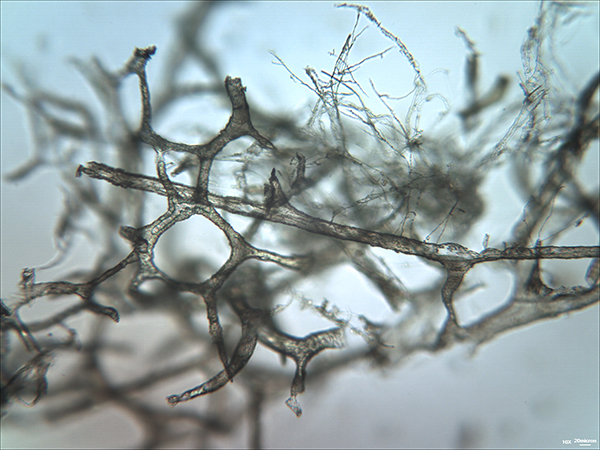
Scientists used the Lab’s Advanced Light Source to determine the chemical mechanisms that allow soft tissue structures to persist in dinosaur bones, countering the long-standing belief that protein-based body parts can’t survive more than 1 million years. The sample came from a T. rex femur. https://newscenter.lbl.gov/2020/02/14/dinosaur-blood-vessels/
Quantum Internet Workshop Maps Quantum Future
Building on multiple research efforts across the U.S., some 70 representatives from national labs, government agencies, and universities gathered in New York City Feb. 5 and 6 for the first Quantum Internet Blueprint Workshop to discuss building a nationwide entangled quantum Internet. https://www.es.net/news-and-publications/esnet-news/2020/quantum-internet-workshop-begins-mapping-the-future-of-quantum-communications/
Four Lab Scientists Awarded 2020 Sloan Fellowships
Four Lab scientists have been awarded 2020 Sloan Research fellowships for their scientific achievement. The fellowships from the Alfred P. Sloan Foundation seek to stimulate fundamental research by early-career scientists and scholars of outstanding promise. https://stratcomm-elements.lbl.gov/2020/02/12/four-2020-sloan-research-fellows-from-berkeley-lab/
Exascale Annual Meeting Showcases Milestones
More than 40 staff from the Lab’s Computing Sciences Area participated in the Exascale Computing Project’s (ECP) 4th annual meeting in Houston, Texas. ECP is a multi-agency effort in the Department of Energy designed to ensure that the U.S. maintains leadership in high-performance computing. https://cs.lbl.gov/news-media/news/2020/ecp-year-4-annual-meeting-showcases-projects-momentum-and-milestones/