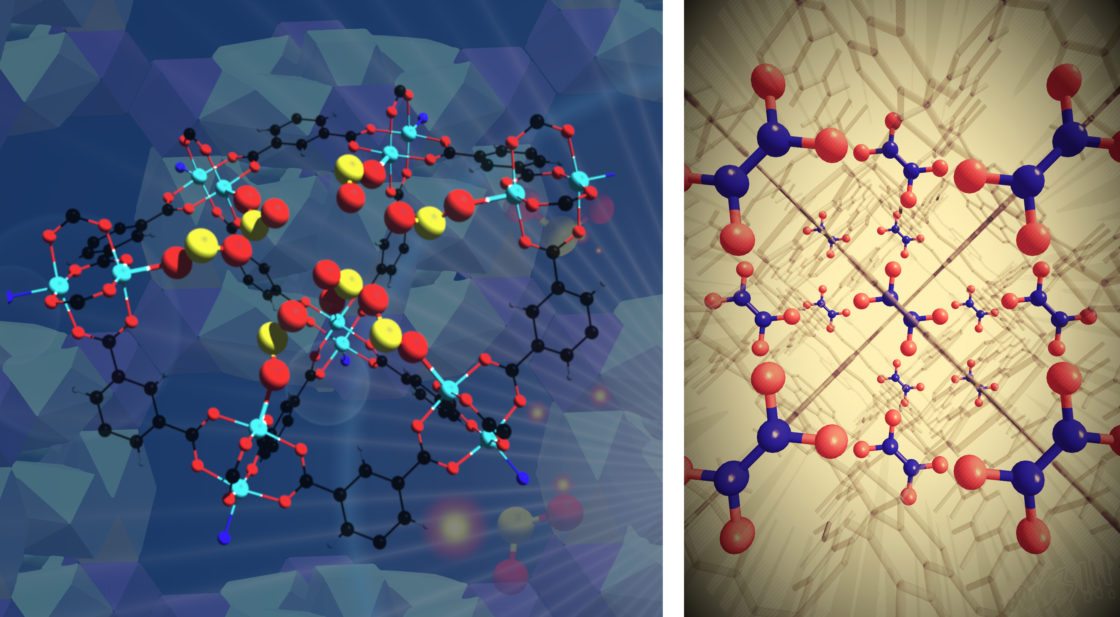
Current technologies for reducing toxic emissions are often ineffective and wasteful. At the ALS, studies of two new materials revealed how they reversibly bind these gases, enabling the materials to be reused over many cycles while permitting conversion of the gases into valuable chemical products. https://als.lbl.gov/crystallography-reveals-how-new-molecular-cages-trap-toxic-gases/
Major Step Towards World’s Most Powerful Accelerator
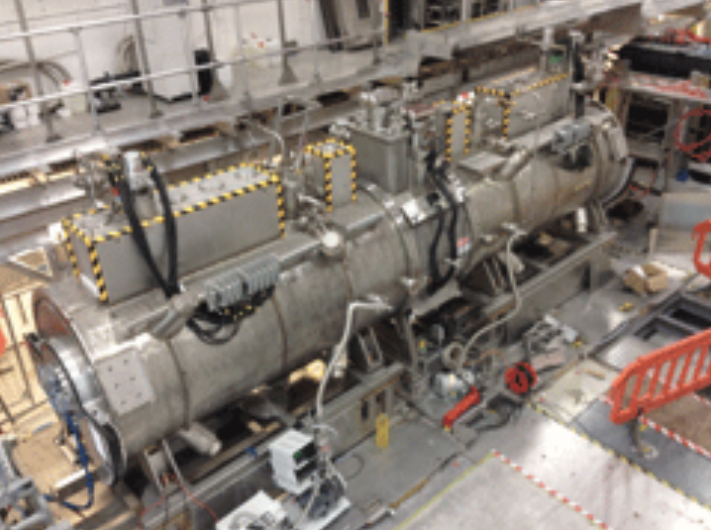
The international Muon Ionization Cooling Experiment (MICE) collaboration, a U.K.-based effort that includes researchers at Berkeley Lab, has made a major step forward in the quest to create an accelerator for subatomic particles called muons. https://newscenter.lbl.gov/2020/02/05/breakthrough-next-big-step-to-building-most-powerful-particle-accelerator/
Inspiring STEM Careers in the Everglades
In 2018, JGI embarked on a pilot project with biology students from Boca Raton Community High School in Florida to apply the latest molecular techniques to learn more about the microbial communities in the Loxahatchee National Wildlife Refuge. The data from that project has just been published. https://jgi.doe.gov/inspiring-stem-careers-hands-on-everglades-loxahatchee-microbiome/
Resisting Destructive Carbon Buildup in Electrodes
Key challenges in the transition to sustainable energy can be met by converting CO2 to CO using electrochemical cells, but carbon buildup at the electrodes is a problem. At the ALS, researchers have studied a new type of catalyst that’s more resistant to carbon deposition, extending device lifetime. https://als.lbl.gov/new-catalyst-resists-destructive-carbon-buildup-in-electrodes/
Particles Away From Complete Annihilation
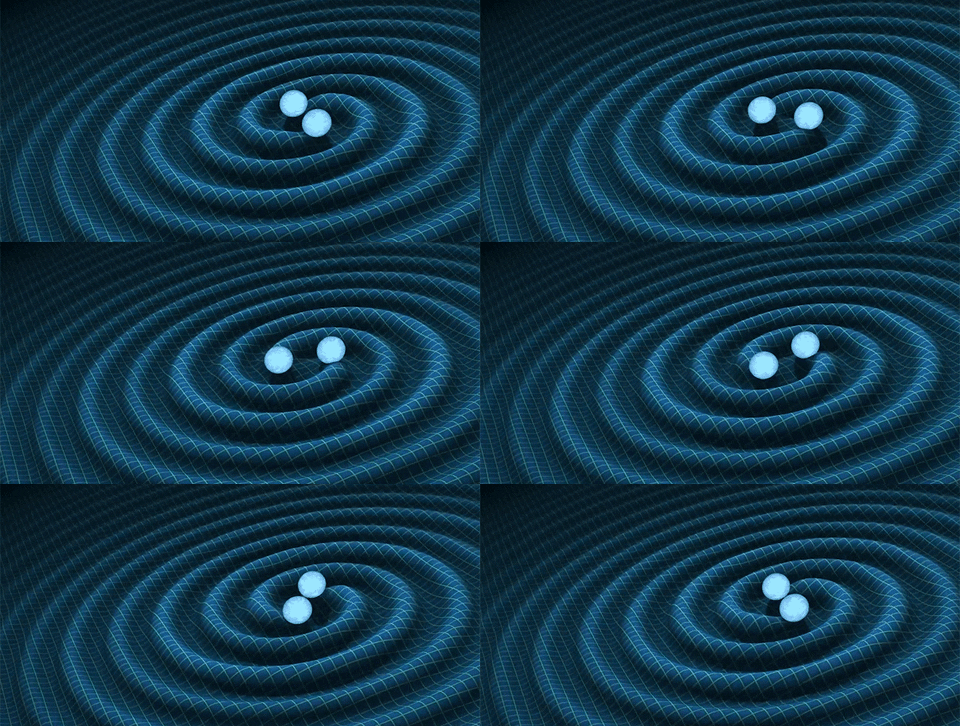
A team including Berkeley Lab researchers have found a way to show how the tiniest particles in our universe helped life survive the Big Bang. A study of gravitational waves shows that a reshuffling of matter and anti-matter by neutrino particles may be what saved us. https://www.ipmu.jp/en/20200204-cosmicstringsgw
Safer Surgery for Those With Hirschsprung Disease
Biosciences Area researchers collaborated on a study on the gut microbiome in relation to Hirschsprung-associated enterocolitis (HAEC). They identified a microbiome signature that might predict the development of postoperative HAEC, a leading cause of death in Hirschsprung disease patients. https://biosciences.lbl.gov/2020/01/21/microbiome-signature-could-predict-post-op-enterocolitis-in-hirschsprung-disease-patients/
World of Science: Sun is a ‘Boiling Pot of Popcorn’
Astronomers recently released what they said are the most detailed images ever taken of the surface of our sun. As seen through the brand-new Daniel K. Inouye Solar Telescope in Hawaii, the sun looks like a boiling pot of popcorn, belying the notion of a bland yellow orb. https://www.nytimes.com/2020/01/29/science/daniel-inouye-solar-telescope-pictures.html
Turning Up the Heat on Antibiotic-Resistant Diseases
A biocompatible polymer designed by researchers at the Molecular Foundry could accelerate new medical therapies that use the power of near-infrared light to fight diseases such as antibiotic-resistant infections and cancer. The material also holds promise for targeted therapies and energy storage. https://newscenter.lbl.gov/2020/01/30/ptt-antibacterial-resistance/
Molecular Handle Enables Viral Attack on Joint Cells
At the ALS, researchers investigated how the chikungunya virus, which can cause debilitating joint pain, engages a receptor protein found on the surfaces of joint cells. The work provides a path forward in the fight against a family of viruses that can result in acute and chronic arthritis. https://als.lbl.gov/molecular-handle-enables-viral-attack-on-joint-cells/
Blue Diode Paves Way to Better LEDs
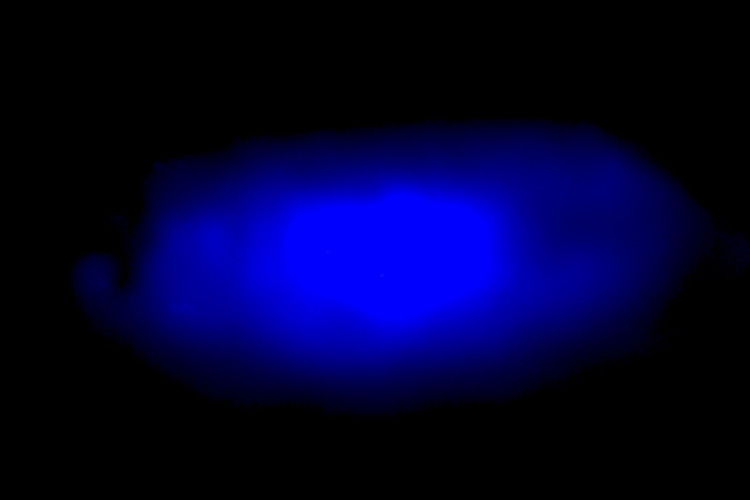
Scientists have created a blue light-emitting diode (LED) from a trendy new semiconductor material, halide perovskite, overcoming a major barrier to employing these cheap, easy-to-make materials in electronic devices. This research was led by Berkeley Lab’s Peidong Yang. https://news.berkeley.edu/2020/01/24/blue-diode-illustrates-limitations-promise-of-perovskite-semiconductors/