Scientists have discovered that a human DNA repair protein functions by marking and then further breaking damaged DNA. Their findings have provided much-needed insight into how DNA repair works in healthy cells and how different mutations can translate into different diseases and cancer. https://newscenter.lbl.gov/2020/06/22/protein-sculpts-dna-to-repair/
Some Lab Magnet Work Proceeds on Particle Accelerator Upgrade
COVID-19 risks led to a temporary halt in fabrication work on high-power superconducting magnets built by a collaboration of DOE national labs for an upgrade of the world’s largest particle collider at CERN in Europe. Even so, researchers at Berkeley Lab are carrying out some project tasks. https://newscenter.lbl.gov/2020/06/17/some-lab-magnet-work-proceeds-on-particle-accelerator-upgrade/
Off the Scales: Fish Armor Both Tough and Flexible
The use of fish-scale design goes back to ancient times. Roman and Egyptian warriors used it for their armor, which provided both protection and flexibility. Lab scientists used high-tech imaging to examine the scales of carp to better understand why the material is so strong yet flexible. https://newscenter.lbl.gov/2020/06/18/off-the-scales-fish-armor-both-tough-and-flexible/
For Physics Collaborations, Working Remotely Isn’t New
For some members of Berkeley Lab’s ATLAS group, the transition to working from home after the COVID-19-related shutdown of most activities at CERN didn’ require a big adjustment. Marjorie Shapiro and Fabio Cerutti discuss how they were able to continue their research on this particle detector. https://newscenter.lbl.gov/2020/06/17/in-international-physics-collaborations-working-remotely-is-nothing-new/
Exploring How Ocean Waves Change in Evolving Climate
Wind-generated ocean waves can cause considerable physical and economic damage to coastal communities, and are increasing in intensity due to climate change. Lab researchers are using NERSC to create projections that will help them understand how waves change in an evolving climate. https://cs.lbl.gov/news-media/news/2020/reassessing-the-global-dataset-of-wave-climate-projections/
Register for Lab Research SLAM by June 19
Early career scientists and postdocs who want to participate in this year’s research SLAM must submit their intent to enter by June 19. The first prize is $3,000, plus participants get valuable experience in how to explain their research project in a compelling way. https://slam.lbl.gov/
$1 Million for Industry/Research Partnership Projects
Four Lab recipients of the DOE award include Biosciences — for the development of an aviation biofuel precursor and accelerating the engineering of biofuels and bioproducts — and ETA, for research on a microgrid analysis tool, hydrogen renewable energy, and the Sensor Suitcase. https://ipo.lbl.gov/berkeley-lab-energy-and-environment-projects-receive-1-million-in-technology-commercialization-funding-awards-from-department-of-energy/
Developing Support Structures for Scientists
Rachel Wood-Robinson (ETA) sees the COVID-19 shutdown as an opportunity for scientists to reexamine and strengthen their core values on a personal, interpersonal, and societal level. In a recent ACS article, she suggests an experimental approach to help researchers chart a productive path forward. https://pubs.acs.org/doi/10.1021/acs.chemmater.0c02027
High to Low: Using Satellites to Help Find Groundwater
A new computational approach offers a high-tech yet simple method for estimating groundwater: it pairs high-resolution images derived by satellite with advanced computer modeling to estimate aquifer volume change from observed ground deformation. https://newscenter.lbl.gov/2020/06/11/could-the-answer-to-groundwater-resources-come-from-high-in-the-sky/
Boosting the Viability of Long-Term Energy Storage
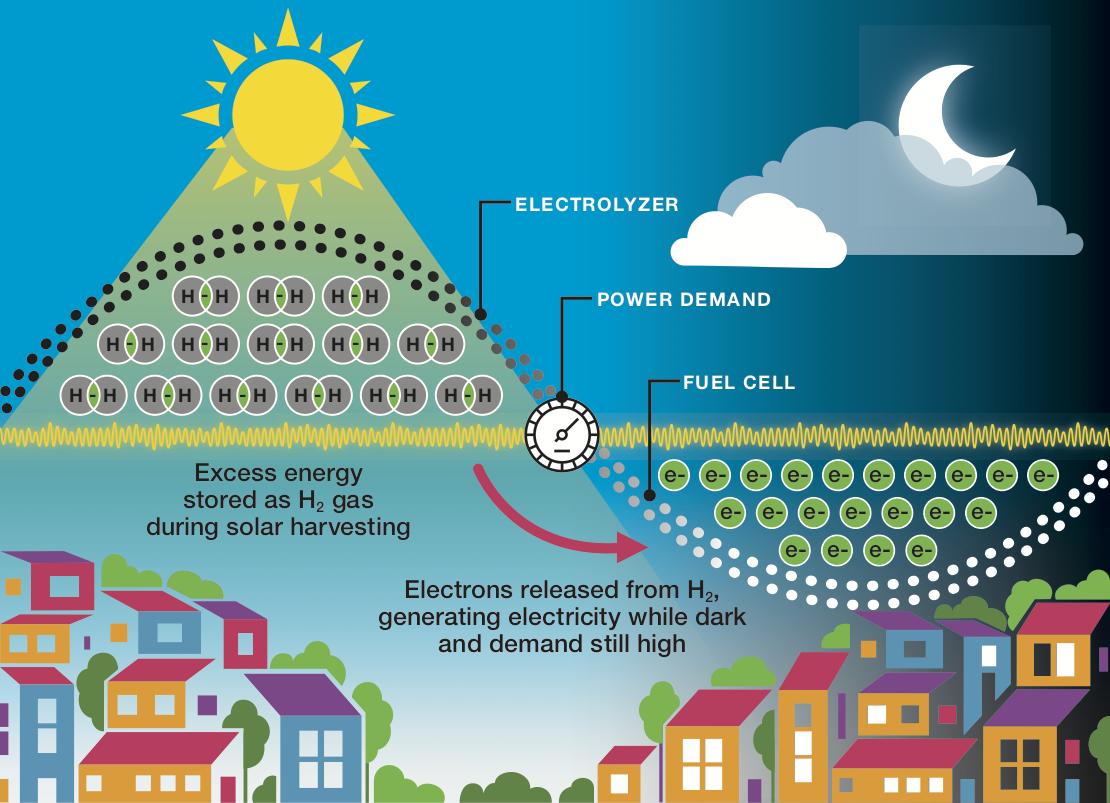
A new type of device that has the potential to efficiently store vast amounts of energy has recently been reconfigured and improved by Energy Technologies Area researchers. This breakthrough could be a stepping-stone to helping our evolving power grid become more resilient. https://appliedenergyscience.lbl.gov/news/article/boosting-viability-long-term-energy-0