A Joint Genome Institute-supported study finds that as warm-adapted microbes edge polewards, they’d oust resident tiny algae. https://jgi.doe.gov/climate-change-threatens-base-of-polar-oceans-bountiful-food-webs/
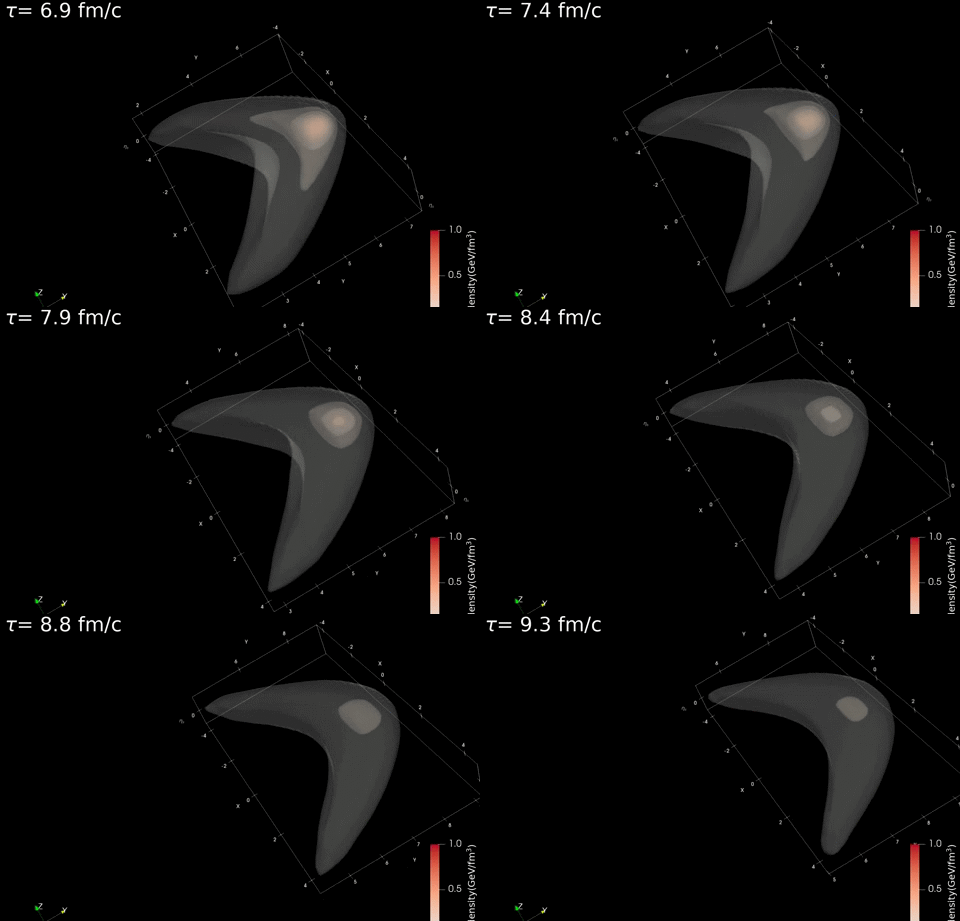
How to Catch a Perfect Wave: Looking Inside Quark-Gluon Plasma
Lab researchers have reported new clues to solving a cosmic conundrum: How the quark-gluon plasma – nature’s perfect fluid – evolved into the building blocks of matter during the birth of the early universe. https://newscenter.lbl.gov/2021/09/16/closer-look-inside-perfect-fluid/
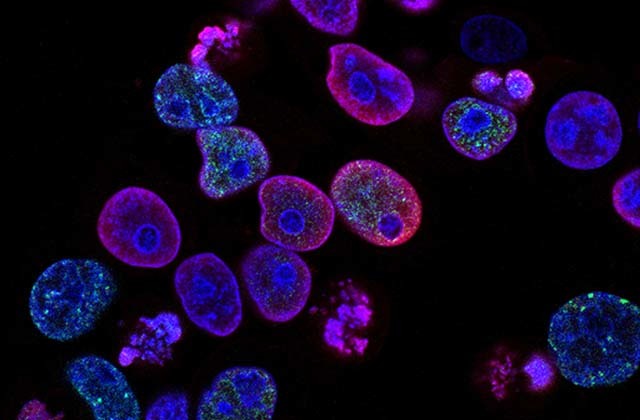
Boosting Small Molecule Production in Super ‘Soup’
Researchers supported through the Joint Genome Institute’s Emerging Technologies Opportunity Program are finding early success in boosting cell productivity in a cell-free “soup.” The discovery is the beginning of what one researcher called “a beautiful collaboration” with JGI. https://jgi.doe.gov/etop-boosting-small-molecule-production-in-super-soup/
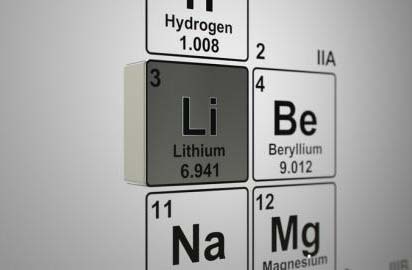
Safely Harnessing the Power of Lithium Metal Batteries
As lithium-ion batteries — the type commonly found in electric vehicles and portable electronic devices — are reaching the theoretical limits of their energy-storing potential, researchers at Berkeley Lab envision a future of safe, high-performance rechargeable lithium-metal (Li-metal) batteries. https://eta.lbl.gov/news/article/safely-harnessing-power-lithium-metal
Video: Observing the Microbial Genome
In this Basics2Breakthroughs video, project scientist Lauren Lui uses the latest bioinformatics technology to study the genes of immensely bountiful and diverse microbes so we can learn how they shape the environment – and how we could harness them for agriculture, medicine, and more. https://vimeo.com/592425575/a49904831e
AI-Fueled Software Reveals Accurate Protein Structure Prediction
Lab researchers joined an international effort to produce a computer software tool called RoseTTAFold. The tool assesses relationships within and between structures, eventually helping to build a very detailed picture of a protein’s shape. https://newscenter.lbl.gov/2021/09/07/ai-fueled-protein-prediction/
Enzyme Action Movie Shows How Nature Makes Penicillins
Scientists from Oxford University, Diamond Light Source, and Berkeley Lab, who specialize in studying the atom-by-atom choreography of enzymes, have revealed new insights into the function of isopenicillin N synthase, an enzyme needed to produce some of the world’s most critical antibiotics. https://newscenter.lbl.gov/2021/09/07/enzyme-action-penicillins/
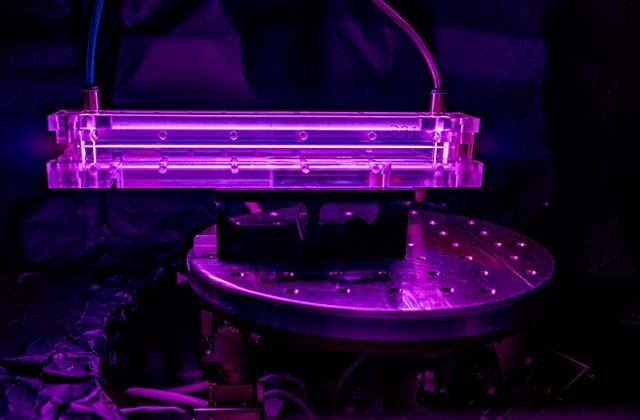
BELLA Uses Unprecedented Plasma Lensing for High-Intensity Lasers
High-power laser pulses enable a variety of applications, ranging from scientific research to industry and medicine. At the Berkeley Lab Laser Accelerator (BELLA) Center, scientists use plasma channels, or “capillaries,” to produce stable, higher intensity pulses. https://newscenter.lbl.gov/2021/09/09/unprecedented-plasma-lensing-for-high-intensity-lasers/
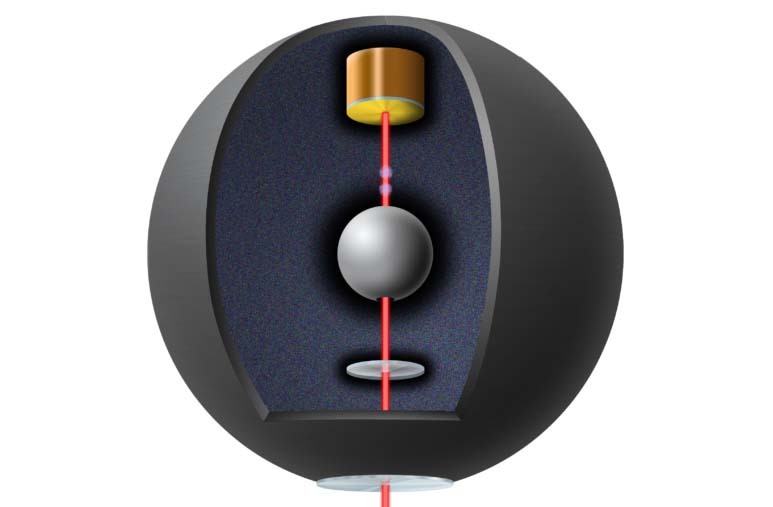
Answering the Question: Is Gravity a Quantum Force?
Researchers at Berkeley Lab and the National Institute of Standards and Technology (NIST) have proposed an experiment that takes advantage of the two weirdest properties of quantum theory to settle the persistent question: Is gravity truly a quantum force? https://newscenter.lbl.gov/2021/09/07/is-gravity-a-quantum-force/
Molecular Foundry Fall 2021 Proposal Call Now Open
The Molecular Foundry’s fall proposal call is now open. User proposals will be accepted until Sept. 30. The fall call emphasizes nanoscale science, including nanostructures, high-resolution microscopy, and advanced nano-fabrication. Click to learn more and for proposal writing tips. https://foundry.lbl.gov/2021/08/25/foundry-proposal-call-fall2021/