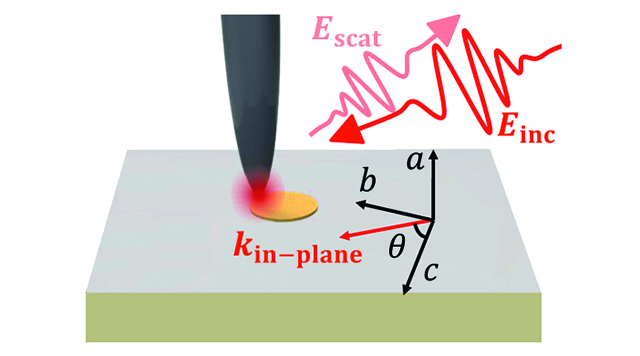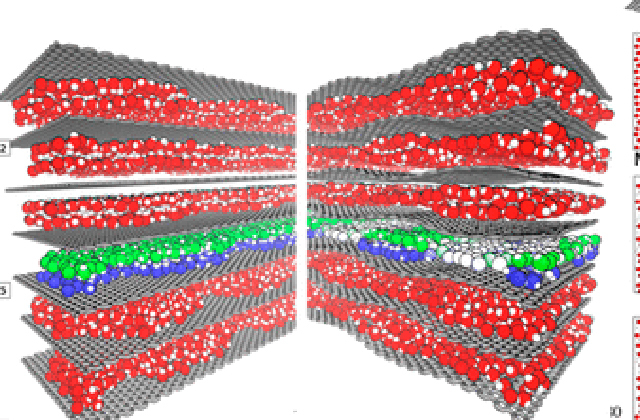
As devices get smaller and faster, the study of light/matter interactions at the nanoscale will become crucial for developing quantum and microelectronic technologies. Researchers have now expanded the capabilities of a method that uses infrared light at the ALS for probing such phenomena. https://als.lbl.gov/a-powerful-infrared-technique-broadens-its-horizons/
NAWI Publishes Sustainable Water Future Roadmaps
As the American West faces increasing water shortages, the National Alliance for Water Innovation (NAWI), a research alliance headquartered at Berkeley Lab, has published roadmaps outlining what it will take to achieve water sustainability through innovative water treatment technologies. https://eesa.lbl.gov/nawi-publishes-roadmap-series-for-sustainable-water-future/
Report: The Value of Wind Energy
According to a new Department of Energy report prepared by Berkeley Lab, wind energy continues to see strong growth, solid performance, and low prices in the U.S. Key findings point to wind as a growing and valuable share of the nation’s electrical supply. https://newscenter.lbl.gov/2021/08/30/technology-advancement-and-value-of-wind-energy/
ABPDU Celebrates a Decade of Bio Innovation
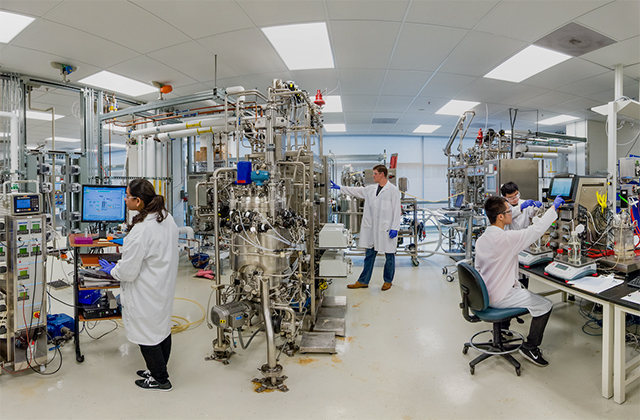
The Advanced Biofuels and Bioproducts Process Development Unit (ABPDU), which opened ten years ago to boost the development of advanced biofuels, has helped dozens of researchers and collaborators scale-up innovative biotechnologies as part of a bio-innovation boom. https://newscenter.lbl.gov/2021/08/26/abpdu-decade-bioinnovation/
LED Material Shines Under Strain
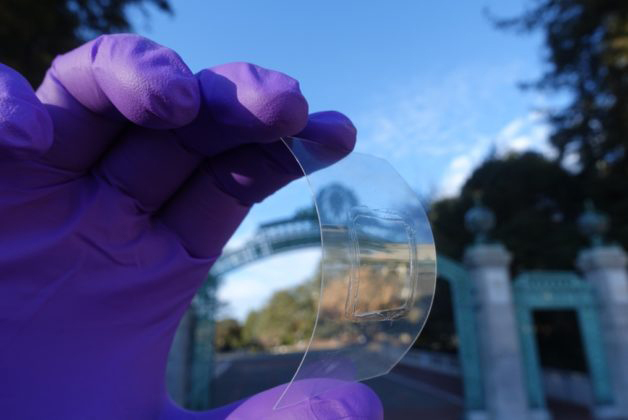
Smartphones, laptops, and lighting applications rely on light-emitting diodes (LEDs) to shine bright. But the brighter the shine, the more inefficient LEDs become. Lab researchers are increasing the efficiency of LED devices by stretching or compressing semiconductor film to change its structure. https://newscenter.lbl.gov/2021/08/26/led-material-shines-under-strain/
Trio of Studies Underscores Thirdhand Smoke Dangers
The thirdhand smoke (THS) research group in Biosciences’ Biological Systems and Engineering (BSE) Division contributed to three recently published studies that further underscore the harms of exposure to the lingering toxic residues from tobacco smoke. https://biosciences.lbl.gov/2021/08/13/trio-of-recent-studies-underscore-harms-of-exposure-to-thirdhand-smoke/
Networking Project Receives DOE 5G Research Funding
A project led by Mariam Kiran, a research scientist with the Lab’s Scientific Networking Division, will receive part of $6 million in DOE funding for 5G network research. Kiran’s research uses artificial intelligence combined with network virtualization to support end-to-end network connectivity. https://www.es.net/news-and-publications/esnet-news/2021/u-s-department-of-energy-to-provide-6-million-for-research-on-advanced-networking/
Mountains of Data and the Future of Water
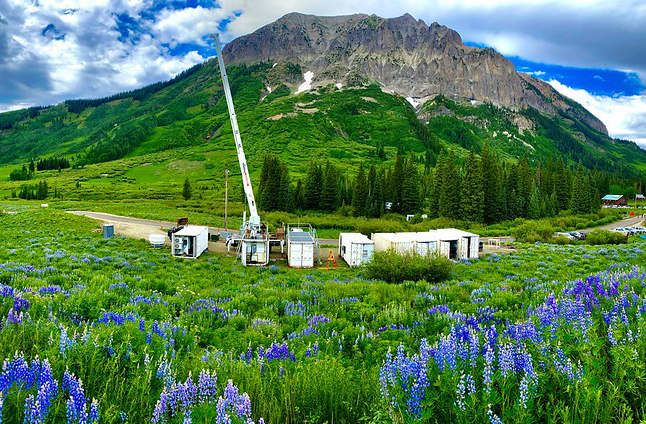
Led by Berkeley Lab researchers, the Surface Atmosphere Integrated Field Laboratory (SAIL) is a first-ever “bedrock-to-atmosphere” observation system designed to analyze mountain watersheds. The data from this study may allow scientists to predict the future of water availability in the West. https://photostories.lbl.gov/mountains-of-data-an-unprecedented-climate-observatory-to-understand-the-future-of-water
QSA Sets a Shared Direction for Quantum Computing
The Quantum Systems Accelerator (QSA) recently brought together experts from member institutions to establish common goals in this still-emerging field. They developed a roadmap of electronics controls for different qubit technologies, allowing for innovation within a shared direction. https://archive.quantumsystemsaccelerator.org/how-the-quantum-systems-accelerator-set-a-shared-direction-in-electronic-controls-for-quantum-computing/
Perspective on Interfacial Chemistry Named ACS Editors’ Choice
A recent paper highlighting the work of Lab scientists in the DOE Condensed Phase and Interfacial Molecular Science program has been selected to be featured as an American Chemical Society Editors’ Choice. Co-authors on the study include scientists from Chemical Sciences and the ALS. https://pubs.acs.org/doi/10.1021/acs.jpcb.1c03756