Researchers at the Joint BioEnergy Institute and the Agile BioFoundry developed a synthetic biology tool, Automated Recommendation Tool (ART), to produce accurate, predictive machine learning models to guide metabolic engineering and recommend designs for the next engineering cycle. https://ipo.lbl.gov/2020-011
Scientists Capture Particle’s Out-of-Body Experience
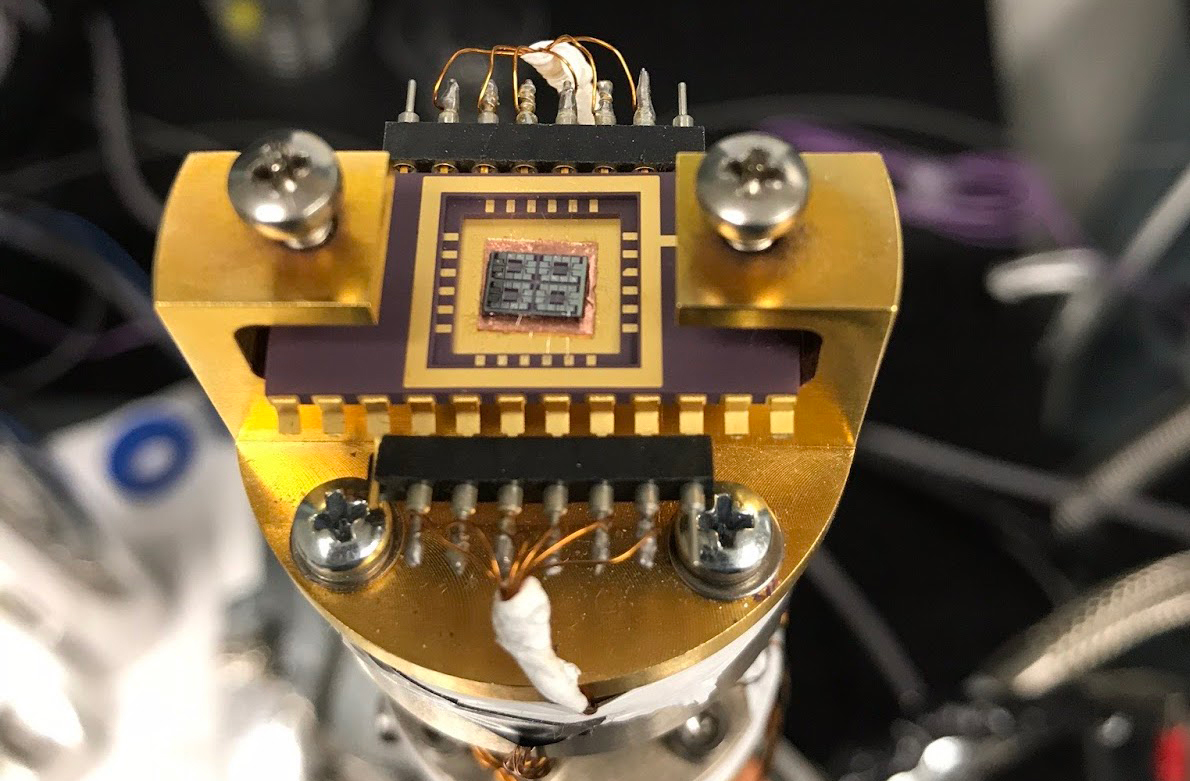
Scientists at the Lab and UC Berkeley have taken the clearest picture yet of electronic particles that make up a mysterious magnetic state called quantum spin liquid. The achievement could facilitate the development of superfast quantum computers and energy-efficient superconductors. https://newscenter.lbl.gov/2021/08/19/exotic-particle-out-of-body/
ETA Researchers Develop Better Battery Testing Technique
Researchers in the Energy Technologies Area have developed a new technique that combines thermal and electrochemistry expertise to make lithium battery testing cheaper and faster. https://newscenter.lbl.gov/2021/08/16/new-thermal-wave-diagnostic-technique-advances-battery-performance-testing/
“Inescapable” COVID-19 Antibody Discovery
An antibody therapy that appears to neutralize all known SARS-CoV-2 strains, and other coronaviruses, was developed with help from structural biologist Jay Nix and the Advanced Light Source. https://newscenter.lbl.gov/2021/08/16/inescapable-covid19-antibody/
Converting Waste Heat to Electricity with Nanowire
A team of researchers from the Lab and Stanford has developed a cost-effective thermoelectric waste-heat recovery system to reduce electricity-related carbon emissions. Converting waste heat cost-effectively to electricity can provide a zero-carbon source of energy. https://newscenter.lbl.gov/2021/08/16/silicon-nanowire-offers-efficient-high-temperature-thermoelectric-system/
Bringing Machine Learning to Women’s Health
With a newly published image database, Computational Research Division scientist Daniela Ushizima and the Center for Recognition and Inspection of Cells (CRIC) are offering innovative opportunities for the use of machine learning to improve cervical cancer screening. https://crd.lbl.gov/news-and-publications/news/2021/cric-database-brings-machine-learning-to-womens-health/
Take a Deep Dive Into FLEXLAB
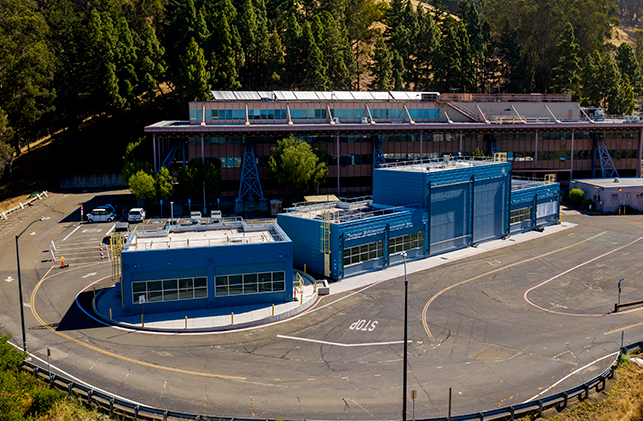
FLEXLAB is more than the rotating building up on Alvarez Road. It is a first-of-its-kind testbed that allows users to test integrated energy savings strategies across building technologies, renewable energy, storage, and the grid. https://flexlab.lbl.gov/animation
Lab Scientists are Key Contributors to Latest IPCC Report
Four Lab climate scientists, Charles Koven, Michael Wehner, William Collins, and Chaincy Kuo, were key contributors to the Intergovernmental Panel on Climate Change’s 6th Assessment Report, Working Group I. Released today, the report points to an urgent need to cut greenhouse gas emissions. https://newscenter.lbl.gov/2021/08/09/latest-ipcc-report-points-to-urgent-need-to-cut-emissions/
Designer DNA: JGI Helps Users Blaze New Biosynthetic Pathways
A recent special issue of the journal Synthetic Biology puts the spotlight on the Joint Genome Institute’s DNA Synthesis Science Program, which empowers research collaborators to take on ambitious synthetic biology experiments. https://jgi.doe.gov/at-your-service-jgi-synthesizes-dna-for-you/
Nanoscale Metallic Particles Detected in Brain Tissue
Researchers detected nanoscale metallic deposits in brain tissues isolated from Alzheimer’s disease subjects using the Advanced Light Source. The discovery suggests new directions of study in neurochemistry, neurobiology, and the development of neurodegenerative disease. https://als.lbl.gov/nanoscale-metallic-particles-detected-in-brain-tissue/