A study at the ALS showed that spins in nanostructured antiferromagnetic materials can be affected by the dimensions of features imprinted onto the material. The results suggest that nanoscale patterning can be used to engineer spin configurations in future antiferromagnetic spintronic devices. https://als.lbl.gov/controlling-spin-in-antiferromagnetic-nanostructures/
Hugo Destaillats Favorite Element? Titanium
See why Destaillats, a chemical staff scientist/engineer in Berkeley Lab’s Energy Technologies Area, chose titanium, an element used a variety of everyday products, from eyeglasses to paint. https://eta.lbl.gov/news/article/hugo-destaillats-shares-his-favorite
Nov. 1 Town Hall on Energy Frontier Research Centers
A town hall will be held Friday, Nov. 1, 11 a.m. to noon, in the Bldg. 50 auditorium to discuss proposals for a new round of Office of Science Energy Frontier Research Centers. The centers bring together teams to tackle the toughest scientific challenges preventing advances in energy technologies. https://calendar.google.com/event?action=TEMPLATE&tmeid=MDRhZ2hrODJ0aXBzbWlhNGhwZTU5cTBudHUgYXJpY2FAbGJsLmdvdg&tmsrc=arica%40lbl.gov
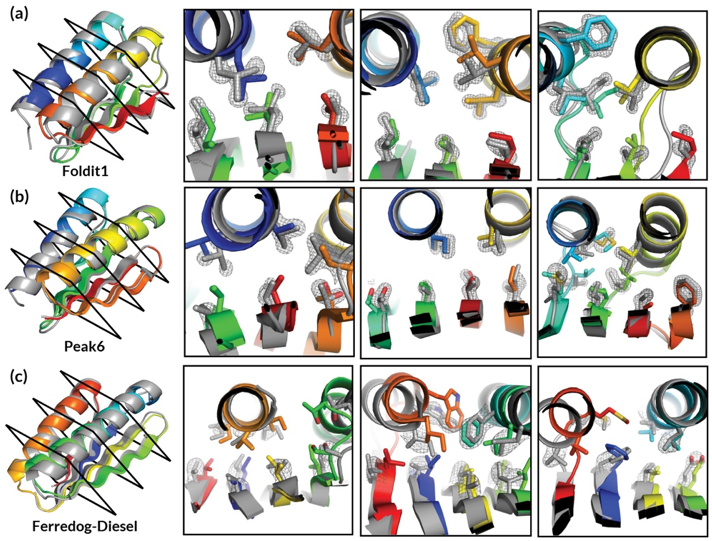
ALS Confirms Results of Crowdsourced Protein Folding Game
Proteins fold in unique ways, making how they interplay with diseases and medicines key to designing effective drugs. A crowdsourcing game allows players to try different fold configurations, and a study showed gamers with little or no training in this field were able to build realistic models. https://newscenter.lbl.gov/2019/11/01/gaming-protein-structures/
How Food Preparation Affects the Gut Microbiome
The gut microbiome undergoes rapid and dramatic changes when the host switches between eating cooked or raw vegetables, according to researchers who performed molecular analyses to determine how cooking affects the metabolites and phytochemicals present in vegetables and tubers. https://newscenter.lbl.gov/2019/11/01/raw-food-gut-microbiome/
SLAM Friday: Maria Zurek
Every Friday in a feature series in Elements, meet one of the 12 early career Lab scientists who competed in the 2019 SLAM pitch contest. This week, watch and read Maria Zurek’s pitch on “Dancing With the Quarks: Peeking Inside the Proton.” https://slam.lbl.gov/2019-slam/2019-finalists/maria-zurek
Using Physics to Keep Our Electrical Grid Safe
In this Q&A, Berkeley Lab’s Sean Peisert discusses his efforts to ensure the systems that provide the services and products we use daily, such as the electrical grid, oil and gas pipelines, vehicles, and manufacturing plants, stay secure from cyberattacks. https://newscenter.lbl.gov/2019/10/24/using-physics-to-keep-our-electrical-grid-safe/
Simplify Your Data Management With Dryad
Dryad is now available as a free service for Lab researchers looking to publish and archive their data. Dryad is a comprehensive data management service designed to make data discoverable and reusable, while providing data citations that allow researchers to receive credit for their work. https://commons.lbl.gov/display/itdivision/Simplify+Your+Data+Management+With+Dryad
Dark Matter Day Q&A with Physicist Quentin Riffard
Quentin Riffard, a project scientist for the LUX-ZEPLIN dark matter detection experiment that is now being installed at the Sanford Underground Research Facility in Lead, South Dakota, shares his experiences in researching dark matter in this Q&A. https://newscenter.lbl.gov/2019/10/31/dark-matter-day-qa-quentin-riffard/
Lab Innovations Recognized With R&D 100 Awards
Cutting-edge technologies from Berkeley Lab to detect radiation, make buildings more energy efficient, and accelerate neuroscience research were honored with R&D 100 Awards by R&D World magazine. https://newscenter.lbl.gov/2019/10/30/berkeley-lab-innovations-recognized-with-3-rd-100-awards/