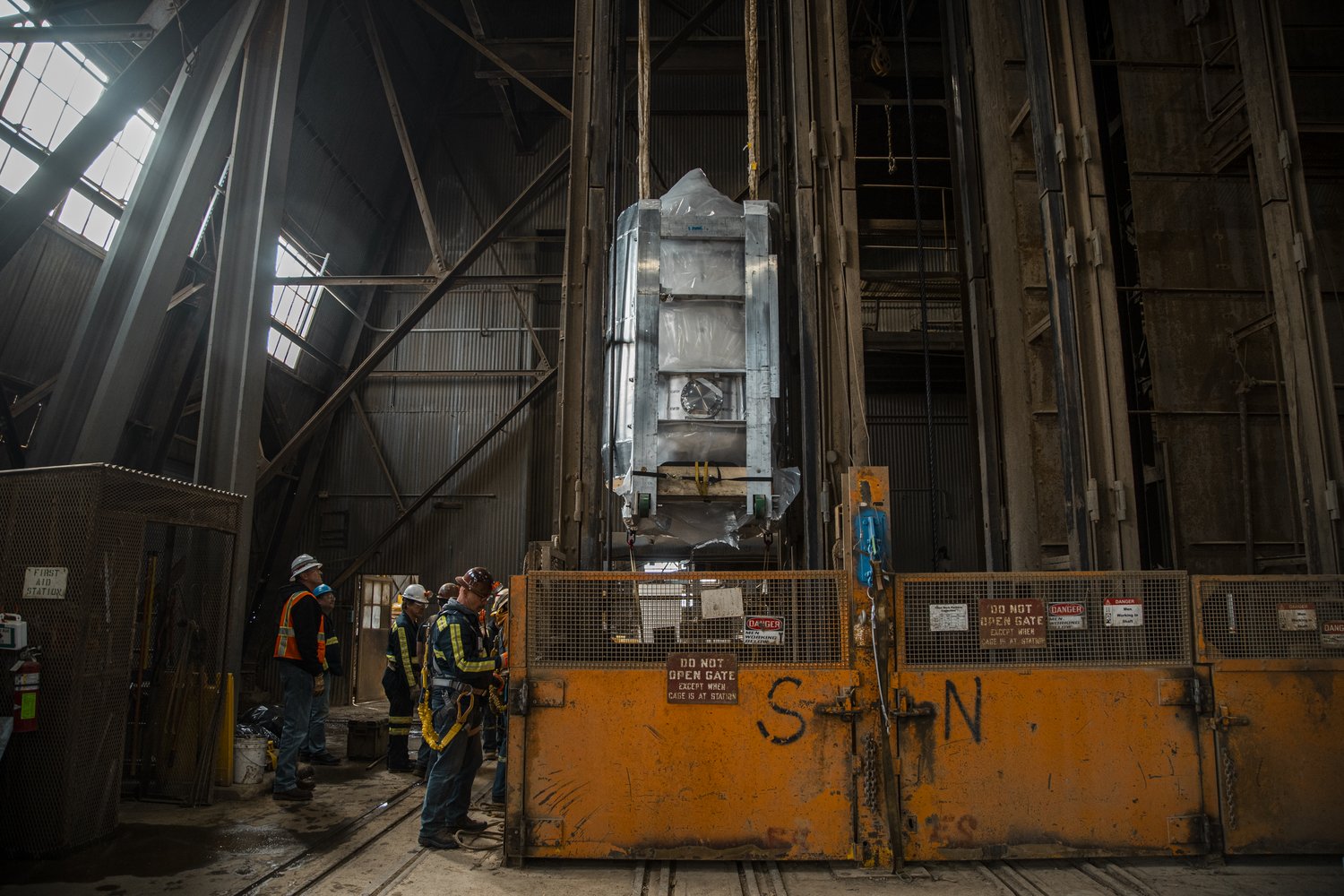
Last week, crews at the Sanford Underground Research Facility in South Dakota strapped the central component of LUX-ZEPLIN – the largest direct-detection dark matter experiment in the U.S. – below an elevator and slowly lowered it 4,850 feet down a shaft formerly used in gold-mining operations. https://newscenter.lbl.gov/2019/10/29/dark-matter-experiments-central-component-takes-a-deep-dive-nearly-a-mile-underground/
Apply for Cyclotron Road Fellowships By Nov. 6
Cyclotron Road provides entrepreneurial scientists and engineers with funding, tools, knowledge, and networks to mature their ideas from concept to first product, positioning them to bring their technology to scale. Application deadline is Nov. 6 for the two-year, paid fellowship. http://www.cyclotronroad.org/apply
Improving Indoor Air Quality During Wildfires
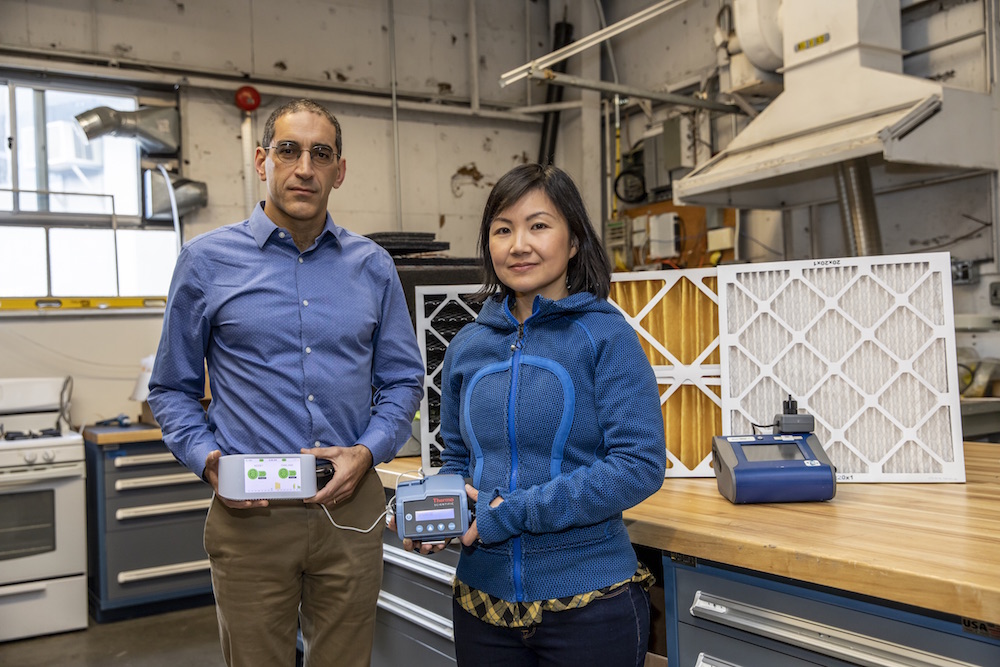
Berkeley Lab indoor air scientists Brett Singer and Rengie Chan discuss protecting homes, schools, and other buildings from air pollution during wildfires in this Q&A. https://newscenter.lbl.gov/2019/10/25/improving-indoor-air-quality-during-wildfires/
Nov. 6 Application Deadline for Next I-Corp Course
DOE’s Office of Technology Transitions will host Cohort 11 of Energy I-Corps, a six-week course that gives national lab research teams the tools and training to transition energy-related technologies to the marketplace. Contact the Lab’s Russell Carrington (x6439) by Nov. 6 to express interest. https://ipo.lbl.gov/blic/
Living on the Edge: How a 2D Material Got Its Shape
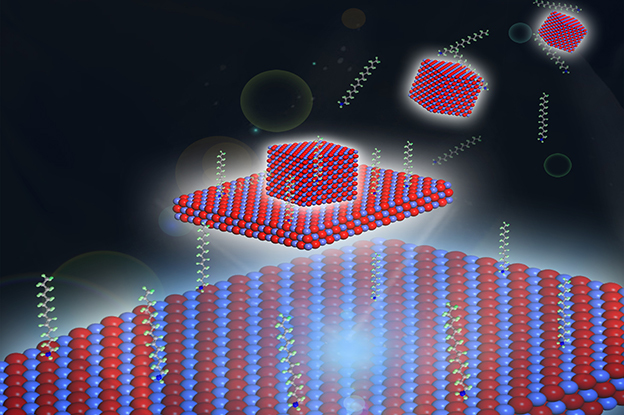
Scientists at Berkeley Lab have gained valuable insight into why 3D transition-metal-oxide nanoparticles can easily grow into 2D nanosheets. Their findings could revolutionize the design of materials with surface-enhanced properties for energy storage and catalysis applications. https://newscenter.lbl.gov/2019/10/24/how-a-2d-material-got-its-shape/
SLAM Friday: Patricia Valdespino
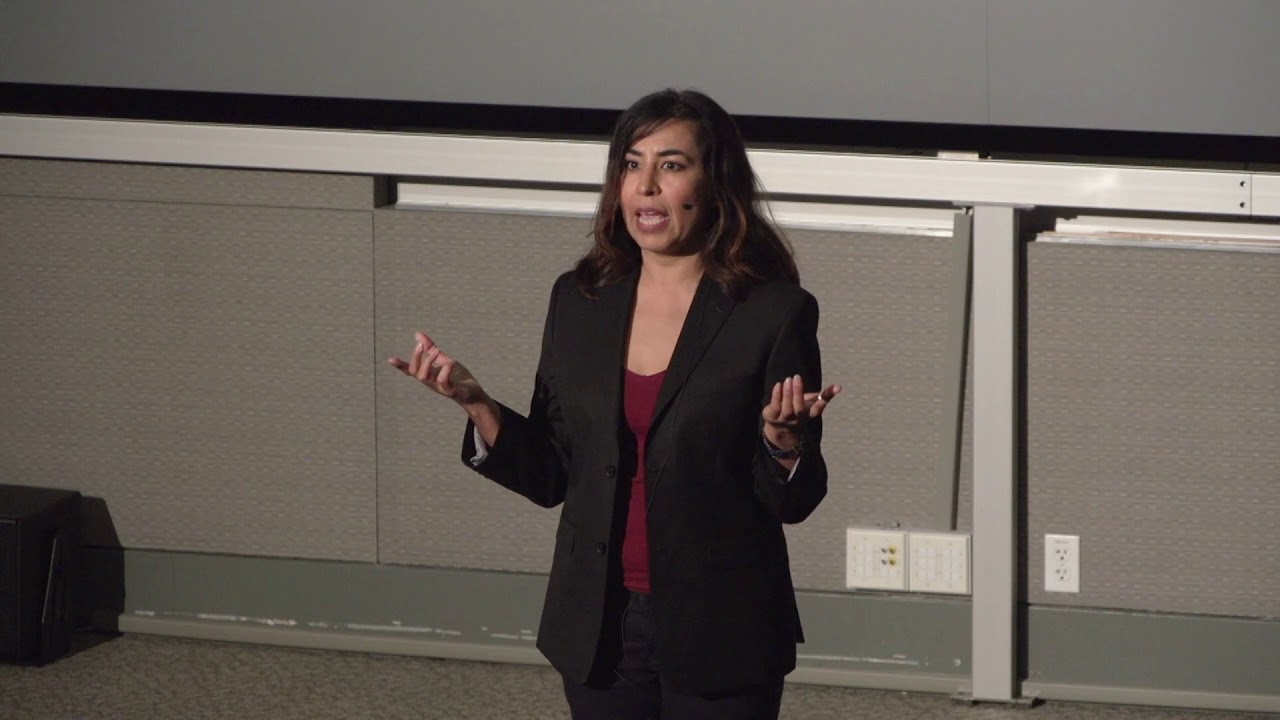
Each Friday in Elements, meet one of 12 early career scientists who competed in the 2019 SLAM pitch contest. This week, watch and read Patricia Valdespino’s pitch on “Matilde, the Holobiant.” https://slam.lbl.gov/2019-slam/2019-finalists/patricia-valdespino
Mapping the Big Bang’s Relic Afterglow
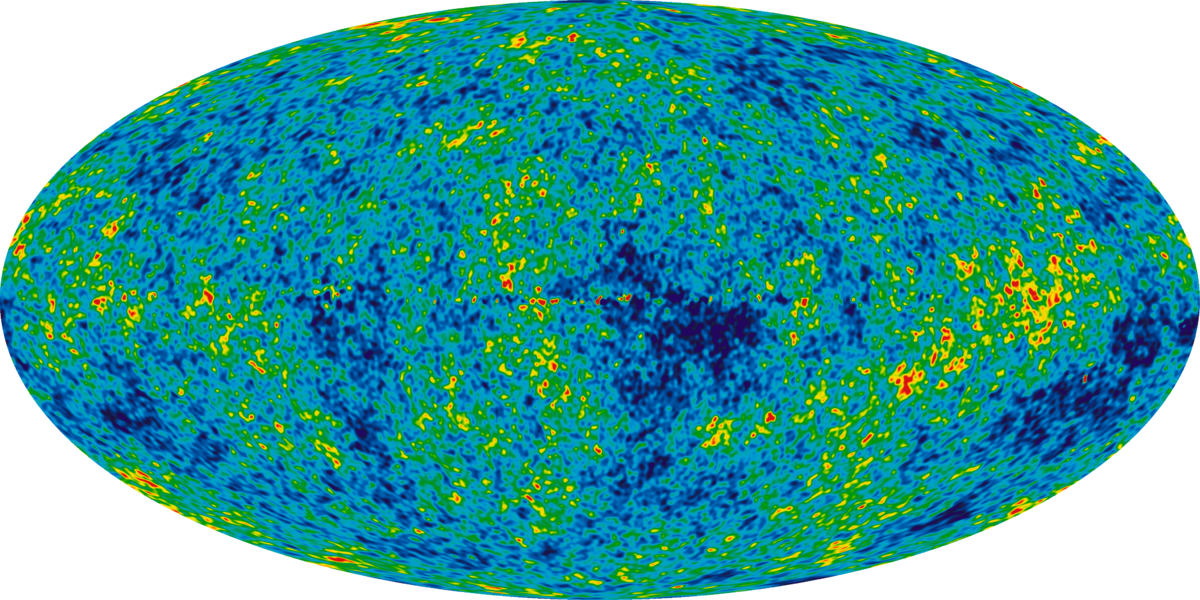
Ground-based experiments designed to study the Cosmic Microwave Background, comprised of escaped, post-Big Bang photons, have gotten larger and more sophisticated over time. Now, nearly 200 scientists — including the Lab’s Julian Borrill — have joined forces to propose an experiment called CMB-S4. https://www.symmetrymagazine.org/article/scientists-combine-forces-to-study-first-light
Lab’s Birgitta Whaley Joins White House Science Council
Birgitta Whaley of Berkeley Lab’s Chemical Sciences Division and co-director of the Berkeley Quantum Information and Computation Center has been appointed to the U.S. President’s Council of Advisors on Science and Technology (PCAST), the White House announced yesterday (Oct. 22). https://news.berkeley.edu/2019/10/22/quantum-expert-birgitta-whaley-appointed-to-white-house-science-advisory-council/
X-Rays Reveal Lithium-Ion’s Mysteries
Scientists are working to understand why and when lithium-ion batteries in phones, plug-in electric vehicles, and other applications lose charge or fail. One of their best tools for this investigation is x-rays from the DOE light sources, including Berkeley Lab’s Advanced Light Source. https://www.energy.gov/science/articles/peering-batteries-x-rays-reveal-lithium-ion-s-mysteries
New Hydrogen Storage Materials Are on the Horizon
The Hydrogen Materials Advanced Research Consortium (HyMARC), of which Berkeley Lab is a member, is developing two types of hydrogen storage materials to meet federal energy density targets. These advances will help build the infrastructure required for advances in hydrogen-powered vehicles. https://techxplore.com/news/2019-10-materials-capacity-efficiency-bar-hydrogen.html