The Lab aims to adhere to the highest standards of research integrity and ethical behavior. Listen in as Joerg Heber, the Lab’s new Research Integrity Officer and Deputy Lab Director, Research, Horst Simon, discuss their thoughts on the Lab’s plans for the Research Integrity Office. https://youtu.be/GQPjVsvpvpo
Applying Quantum Computing to a Particle Process
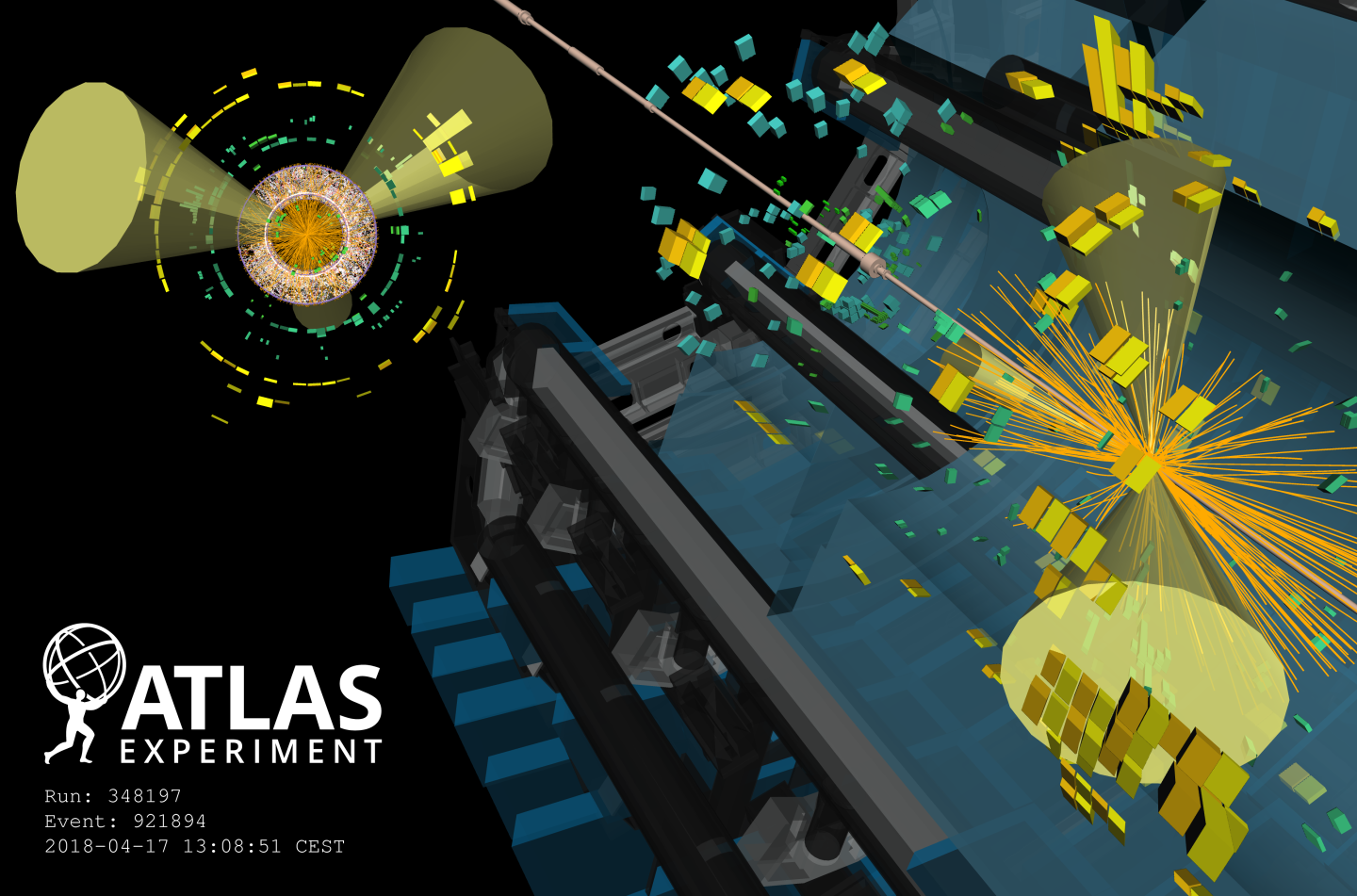
A team of researchers at Berkeley Lab used a quantum computer to successfully simulate an aspect of particle collisions that is typically neglected in high-energy physics experiments, such as those that occur at CERN’s Large Hadron Collider. https://newscenter.lbl.gov/2021/02/12/applying-quantum-computing-to-a-particle-process/
LDRD Sparks Success wIth the Thermal Energy Group
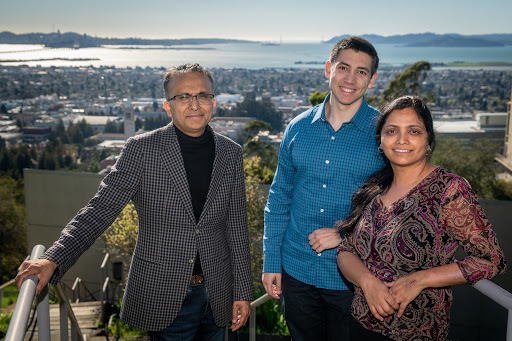
The Lab Directed Research and Development (LDRD) program is one of the principal means at the Lab to seed innovative science and new research directions. As the Lab begins a new LDRD program cycle, Ravi Prasher contemplates how it sparked the success of an idea he had many years ago. https://research.lbl.gov/2021/01/26/the-thermal-energy-group-success-sparked-by-the-ldrd-program/
COVID Research Leverages Superfacility Model
As part of a global effort to end the pandemic, scientists working at NERSC and SLAC’s LCLS have teamed up to capture images of the SARS-CoV-2 virus and leverage the superfacility model, a framework for integrating experimental and observational instruments with computational and data facilities. https://cs.lbl.gov/news-media/news/2021/superfacility-model-brings-covid-research-into-real-time/
AI Finds More Than 1,200 Gravitational Lensing Candidates
A research team has used artificial intelligence to identify more than 1,200 possible gravitational lenses – objects that can be powerful markers for dark matter distribution. If all of the candidates turn out to be lenses, it would more than double the number of known gravitational lenses. https://newscenter.lbl.gov/2021/02/02/ai-finds-more-than-1200-gravitational-lensing-candidates
Does Ozonation Help Remediate Thirdhand Smoke?
ETA scientist Hugo Destaillats and colleagues designed a room-sized chamber study to determine the effects of ozonation on the concentration of chemical compounds typically found in thirdhand smoke. Their results were published recently in the journal Environmental Research. https://newscenter.lbl.gov/2021/01/14/ozone-generators-may-help-remediate-contamination-caused-by-thirdhand-smoke/
New Framework for Lowering Building’s Energy Needs
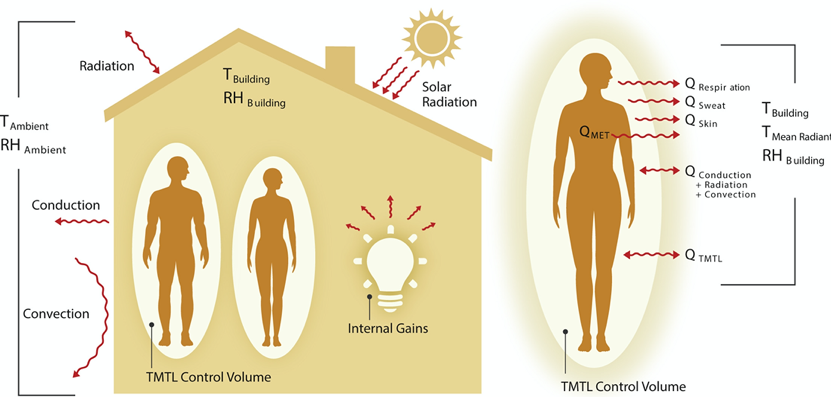
Researchers from Berkeley Lab, NREL, and UC Berkeley have pioneered a new framework that determines the minimum thermal energy required to keep building occupants comfortable. Their study makes a case for using this framework to lower heating and cooling energy needs in buildings. https://newscenter.lbl.gov/2021/02/02/pioneering-framework-could-reduce-energy-demand-in-buildings
Einsteinium Research Attracts Media Attention
A recent report in the journal Nature by Rebecca Abergel on the basic chemical properties of einsteninum is capturing the attention of the popular and science news media, including The New York Times. https://www.nytimes.com/2021/02/07/science/einsteinium-chemistry-elements.html
First-Ever Measurements Taken of Einsteinium
Since its 1952 discovery at Berkeley Lab, scientists have performed few experiments on einsteinium because it is hard to create and it is exceptionally radioactive. Scientists have overcome these obstacles to better understand the remaining transuranic elements of the actinide series. https://newscenter.lbl.gov/2021/02/03/discoveries-at-the-edge-of-the-periodic-table-first-ever-measurements-of-einsteinium/
Are Gut Microbes the Key to Unlocking Anxiety?
The prevalence of anxiety disorders, already the most common mental illness in many countries and the U.S., has surged during the novel coronavirus pandemic. A study led by Biosciences Area researchers provides evidence that taking care of our gut microbiome may help mitigate some of that anxiety. https://newscenter.lbl.gov/2021/02/02/gut-microbes-anxiety-genes/