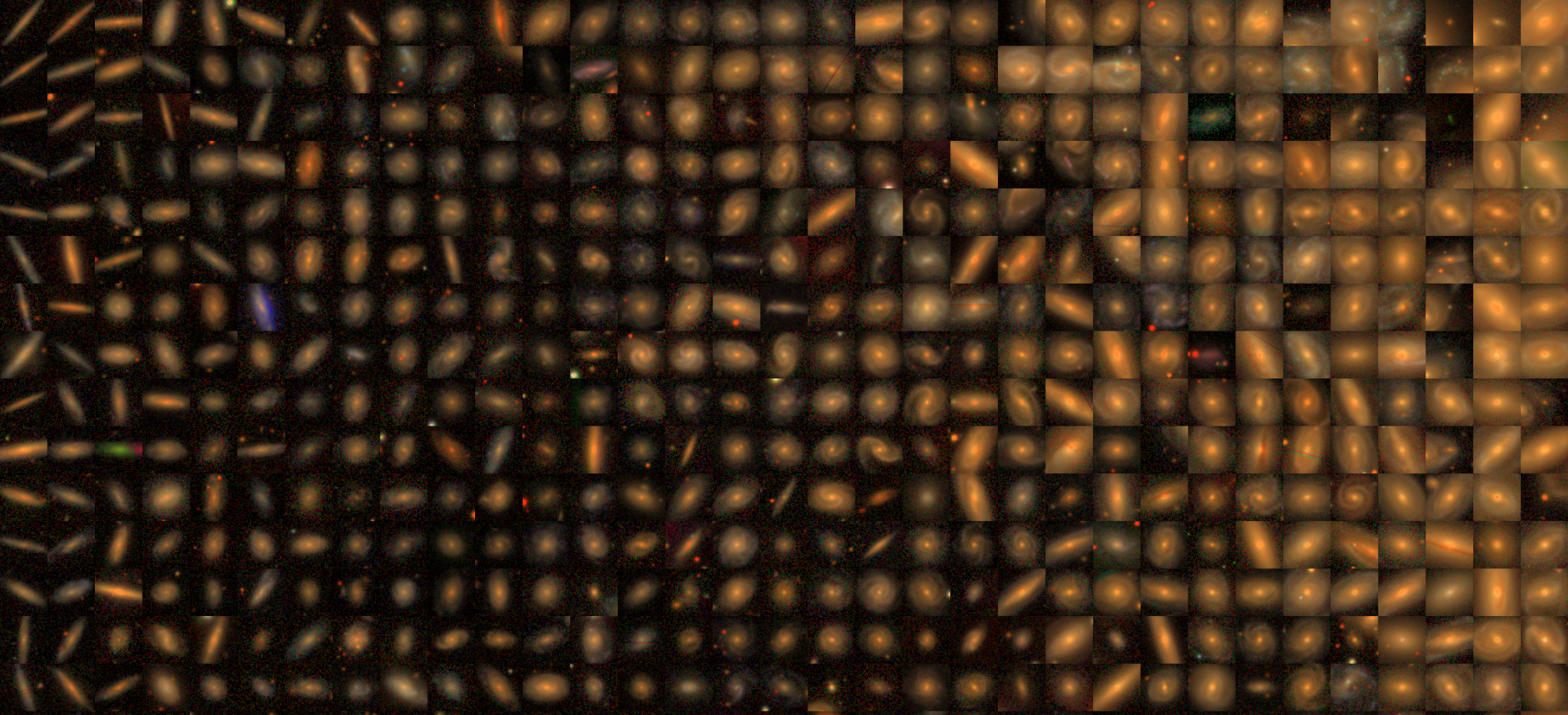
Sky surveys are invaluable for exploring the universe, but they are also one of the largest data generators in science. A team of researchers from Berkeley Lab is finding success in a new approach: self-supervised representation learning, a machine-learning technique with a twist. https://cs.lbl.gov/news-media/news/2021/self-supervised-machine-learning-adds-depth-breadth-and-speed-to-sky-surveys/
DESI Begins Quest To Map The Universe
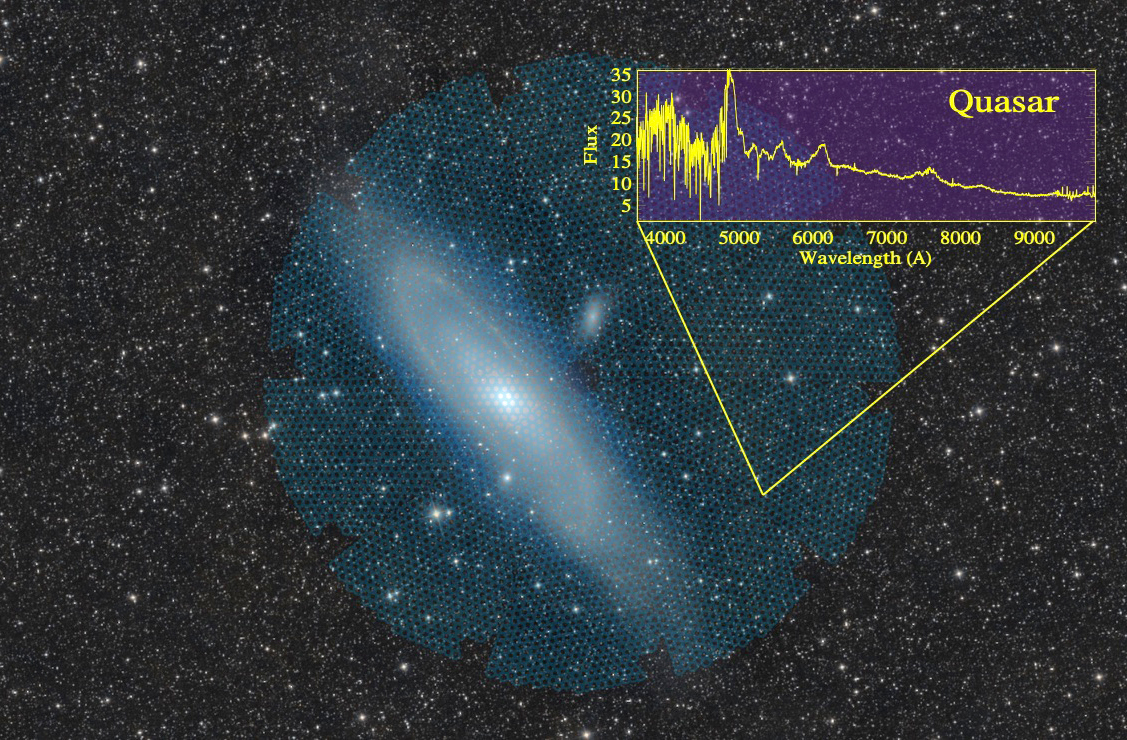
A five-year quest to map the universe and unravel the mysteries of “dark energy” officially began on May 17. The Dark Energy Spectroscopic Instrument (DESI) will capture and study the light from tens of millions of galaxies and other distant objects in the universe. https://newscenter.lbl.gov/2021/05/17/start-of-dark-energy-survey/
Graphene Outperforms in 2D Semiconductors
Graphene performs ten times better than metal in transmitting current to and from 2D semiconductors. ALS experiments provided a deeper understanding of why that is, which will be key to continuing the pace of improvements in device performance. https://als.lbl.gov/graphene-outperforms-metal-junctions-for-2d-semiconductors/
Door Opens for 3D Imaging of Neutrinos
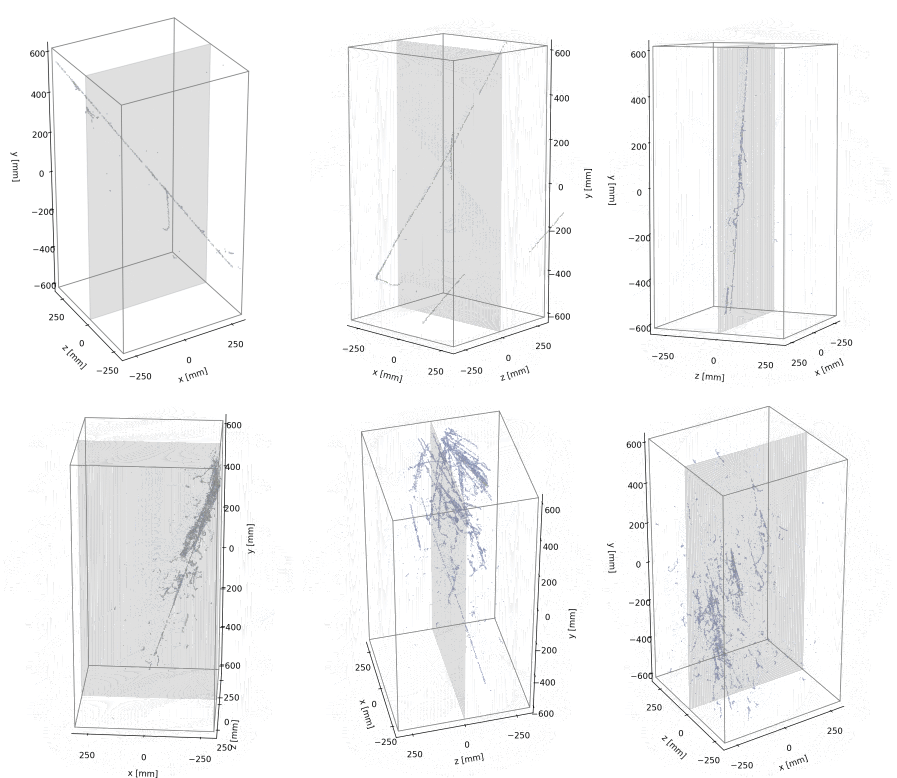
LArPix, a detector technology developed at Berkeley Lab, is yielding unprecedented 3D images as well as opening the door to a far larger application to study neutrinos. https://newscenter.lbl.gov/2021/05/13/detector-technology-developed-at-berkeley-lab/
Celebrate the Past: Energy Technologies Area
Energy-related research has been an important part of Berkeley Lab, beginning with its pioneering work in energy efficiency in the early ’70s and ’80s. Take a look at some of the highlights in its history. https://berkeleylab.exposure.co/celebrate-the-past-eta?source=share-berkeleylab
Experience the Present: Energy Technologies Area
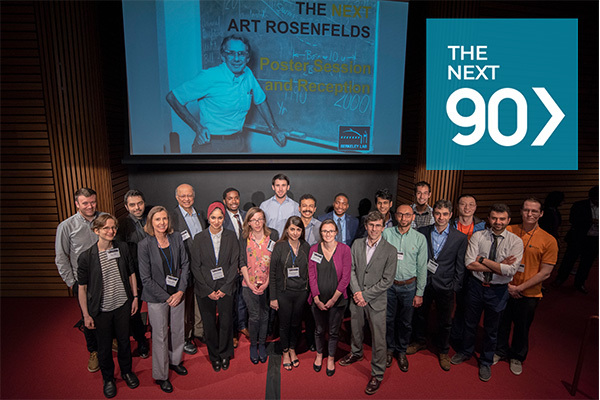
Energy technologies research has a storied past at Berkeley Lab, including pioneering work in energy efficiency research and early research that led to the development of the lithium-ion battery. Ravi Prasher, the associate lab director for ETA, discusses the Area’s mission and priorities. https://sites.google.com/lbl.gov/the-next-90/experience-the-present/energy-technologies-area
Imagine the Future: Energy Technologies Area
Natalie Popovich, a project scientist in ETA, combines her background in race and ethnic studies with her work in resource economics to build sustainable and equitable transportation networks. She shares her thoughts and plans for the future. https://sites.google.com/lbl.gov/the-next-90/imagine-the-future/energy-technologies-area
Celebrating IceCube’s First Decade of Discovery
Ten years ago, the IceCube Neutrino Observatory fully opened its eyes for the first time. The goal of this unconventional telescope? To detect signals from passing astrophysical neutrinos — mysterious, tiny, extremely lightweight particles — in the hope of revealing hidden parts of the universe. https://newscenter.lbl.gov/2021/05/13/icecubes-decade-of-discovery/
Bakar BioEnginuity Hub Launches in Berkeley
UC Berkeley is launching the Bakar BioEnginuity Hub in the fall, which will rent space to science-based startups with a goal of transforming academic research into viable companies that will improve the world. No affiliation with UC Berkeley is required. https://news.berkeley.edu/2021/05/11/bakar-bioenginuity-hub-berkeleys-bold-new-home-for-innovation-entrepreneurship/
New JGI Podcast on Bio-Based Economy
In this Genome Insider episode, get the scoop on how Aindrila Mukhopadhyay and Steve Singer at the Joint BioEnergy Institute are harnessing a versatile bacterium to break down biomass and help bring about a more sustainable, bio-based economy. https://jgi.doe.gov/genome-insider-s2ep3-better-living-through-bioenergy/