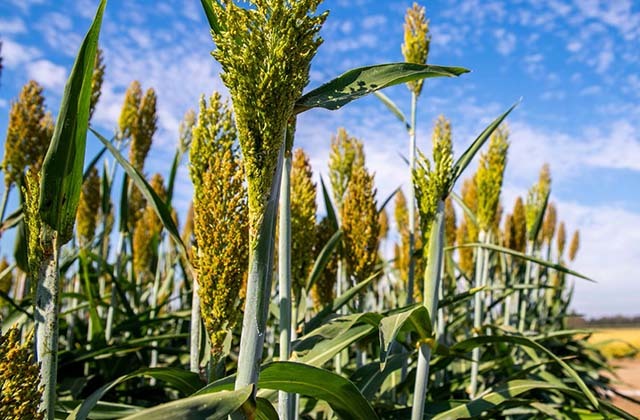
A Berkeley Lab-hosted workshop, convened to identify barriers to wider adoption of key biosciences technologies, released its report in December. Removing these barriers could increase discoveries not available through more conventional technologies. https://biosciences.lbl.gov/2021/12/20/report-from-second-plant-single-cell-solutions-for-energy-and-the-environment-workshop-available/
Lab’s Top 10 Science Stories of 2021
While the COVID-19 pandemic continued to be ubiquitous in science headlines in 2021, the urgency of the ongoing climate crisis became impossible to ignore. Batteries, magnets, and exotic elements also captured the imagination this year. See the complete list. https://www.google.com/url?q=https%3A%2F%2Fnewscenter.lbl.gov%2F2021%2F12%2F21%2Fberkeley-labs-top-10-science-stories-of-2021%2F&sa=D&ust=1640457090253000&usg=AOvVaw1QZXqYLzDRnR1cZTfYSXH2
New Device Advances Commercial Viability of Solar Fuels
A Lab research team has developed a new artificial photosynthesis device with remarkable stability and longevity. It selectively converts sunlight and carbon dioxide into two promising sources of renewable fuels – ethylene and hydrogen. https://newscenter.lbl.gov/2021/12/17/new-device-advances-solar-fuels/
New Smart-Roof Coating Enables Year-Round Energy Savings
Scientists have developed an all-season smart-roof coating that keeps homes warm during the winter and cool during the summer – without consuming natural gas or electricity. Research findings, published in the Dec. 17 issue of the journal Science, point to a groundbreaking technology. https://newscenter.lbl.gov/2021/12/16/roof-year-round-energy-savings/
AQT Prepares the New Quantum Workforce
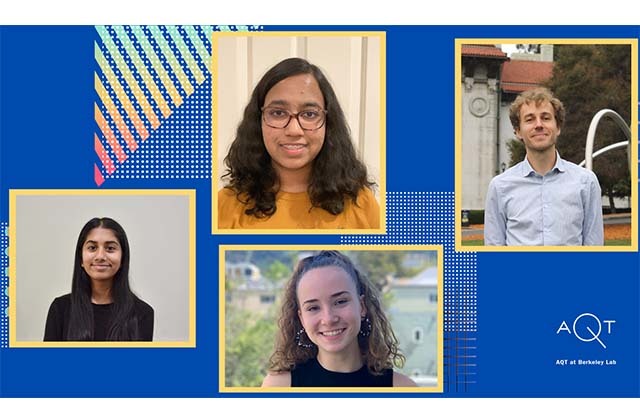
New generations of students and researchers are being trained in quantum information science and technology every day at the Advanced Quantum Testbed at Berkeley Lab. Read how. https://aqt.lbl.gov/how-the-advanced-quantum-testbed-prepares-the-new-quantum-workforce/
JGI Team Innovates Protocol For Understanding Gene Regulation
Developed by JGI’s Ronan O’Malley, DAP-seq is a tool researchers can apply to study the transcription factors that control how genes are turned on. In Nature Methods, JGI researchers led by co-first authors Leo Baumgart and Juna Lee developed two approaches that build upon DAP-seq technology. https://jgi.doe.gov/dap-seq-enlarging-windows-into-understanding-gene-functions/
Strategies for Reducing Platinum Waste in Fuel Cells
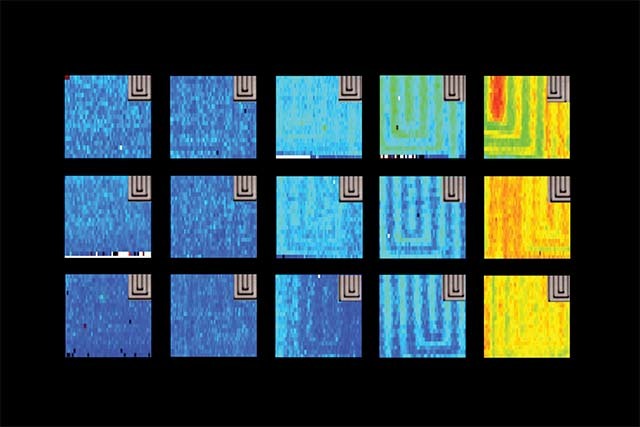
Industry and university researchers used the ALS to explore why platinum used as a catalyst in hydrogen fuel cells degrades unevenly. The resulting knowledge has enabled the development of simple, effective strategies to reduce the waste of precious catalyst material. https://als.lbl.gov/strategies-for-reducing-platinum-waste-in-fuel-cells/
AQT’s Breakthrough in Quantum Error Mitigation
Researchers at the Advanced Quantum Testbed demonstrated that an experimental error mitigation method known as randomized compiling (RC) could dramatically reduce error rates in quantum algorithms and lead to more accurate and stable quantum computers. https://crd.lbl.gov/news-and-publications/news/2021/crucial-leap-in-quantum-error-mitigation/
Doubling India’s Clean Power Target
Dramatic cost reductions over the last decade in battery storage and wind and solar energy position India to leapfrog to a more sustainable system for delivering affordable and reliable power to serve near a doubling in electricity demand by 2030, according to a new study by Lab researchers. https://newscenter.lbl.gov/2021/12/09/indias-clean-power-target-will-double-electricity-supply-economically-if-low-cost-storage-is-deployed/
Plants Buy Us Time to Slow – But Not Stop – Climate Change
In a study published in Nature, researchers at the Lab and UC Berkeley were able to show that plants are photosynthesizing more in response to more carbon dioxide in the atmosphere, but not enough to stop climate change. https://newscenter.lbl.gov/2021/12/08/plants-buy-us-time-to-slow-climate-change-but-not-enough-to-stop-it/