The health of humans is shaped in part by a body’s gut microbiome. Genome sequences are critical for characterizing microbes and understanding their roles, but only 50 percent of species in the gut microbiome have been sequenced, in part because many species have not yet been cultivated for study. https://newscenter.lbl.gov/2019/03/14/uncovering-uncultivated-microbes-in-the-human-gut/
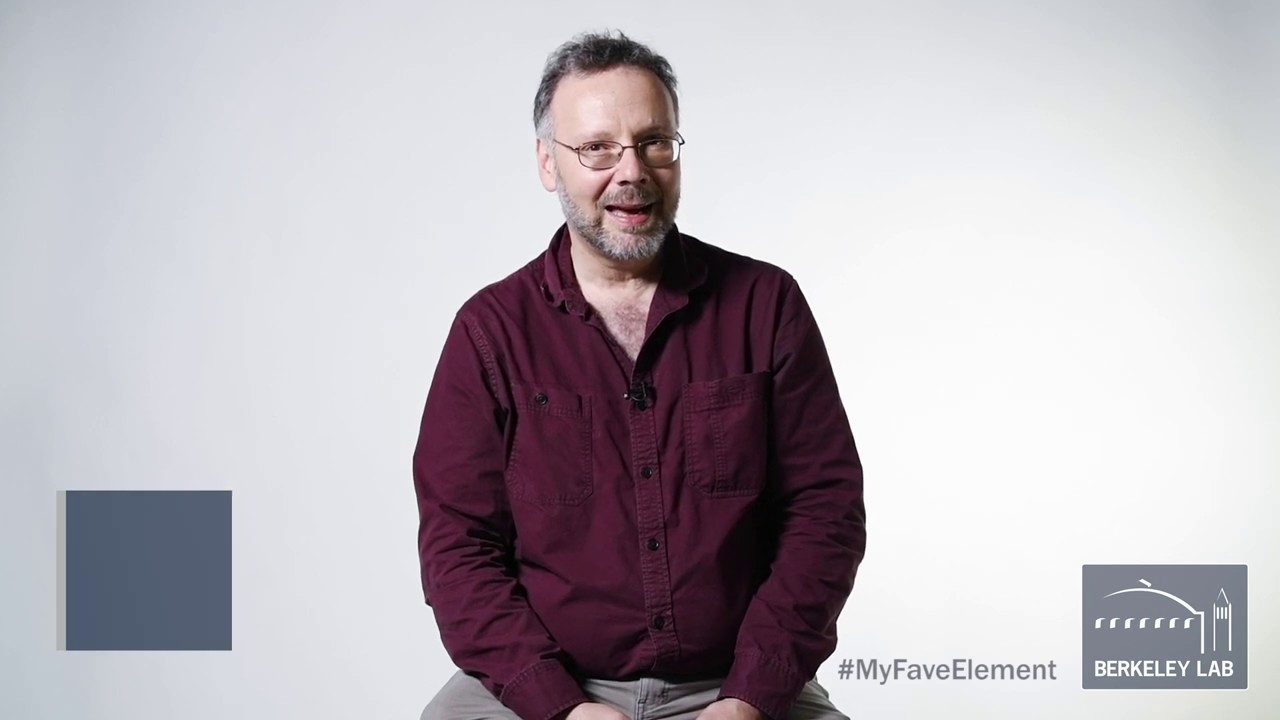
What’s Your Favorite Element? Lee Bernstein Answers
Lee Bernstein, nuclear physicist and Nuclear Data Group Leader at Berkeley Lab, shares his favorite element: actinium. He is working with other researchers on a new process to produce a form of actinium that, when coupled with other compounds, can fight cancer in a highly targeted way.
Engineering Living ‘Scaffolds’ for Building Materials
Berkeley Lab researchers have developed a platform that uses living cells as “scaffolds” for building self-assembled composite materials. The technology could open the door to self-healing materials and other advanced applications in bioelectronics, biosensing, and smart materials. https://newscenter.lbl.gov/2019/03/14/engineering-living-materials/
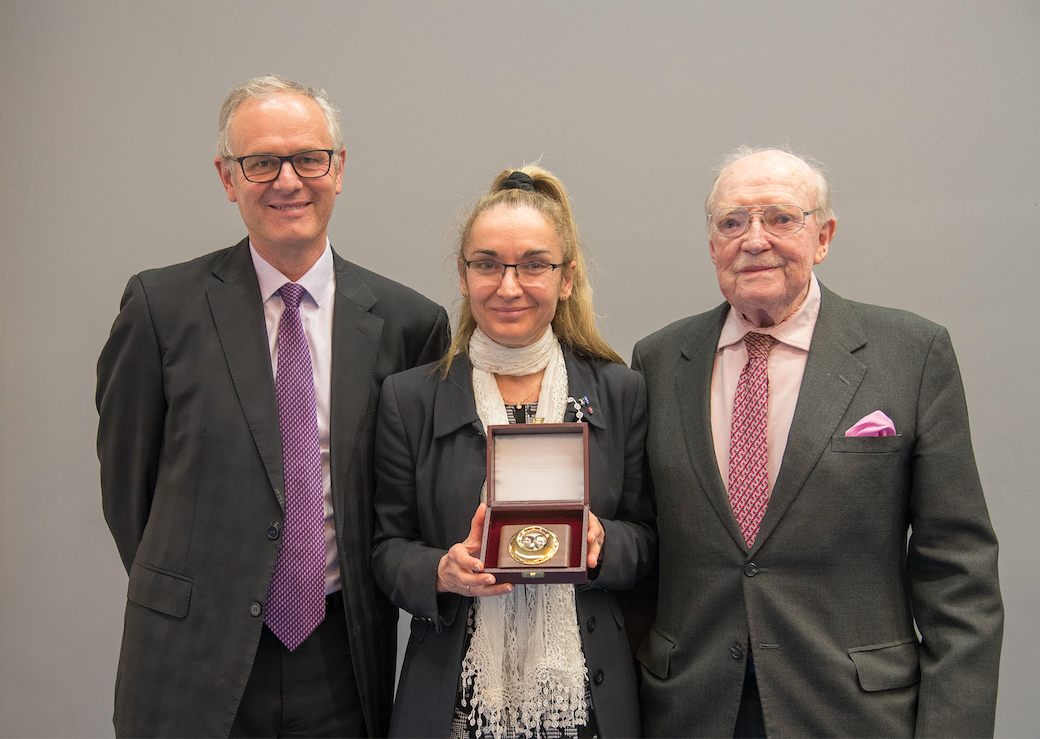
Biosciences Eva Nogales Receives 2019 Grimwade Medal
During the annual Lorne Conference on Protein Structure and Function in Australia last month, Ian van Driel of the University of Melbourne presented Eva Nogales with the Grimwade Medal for Biochemistry for “visualizing the molecular dance at the heart of human gene expression.” https://biosciences.lbl.gov/2019/03/07/nogales-receives-2019-grimwade-medal/
A Deep Dive into the Imperfect World of 2D Materials
Researchers have learned how nanoscale defects can enhance the properties of tungsten disulfide, a 2D material. https://newscenter.lbl.gov/2019/03/08/scientists-deep-dive-imperfect-world-2d-materials/
ATAP’s Cameron Geddes Wins Particle Accelerator Prize
Cameron Geddes of the Lab’s Accelerator Technology and Applied Physics Division is a recipient of the U.S. Particle Accelerator School 2019 prize. The prize honors outstanding achievements over the full range of accelerator physics and technology. http://uspas.fnal.gov/about/prize/2019-winners.shtml
Nature’s Own Biorefinery
New research from the Lab shows how an insect common to the Eastern U.S., the long-horned passalid beetle, has a hardy digestive tract with microbes to thank for turning its woody diet into energy, food for its young, and nutrients for forest growth. https://newscenter.lbl.gov/2019/03/11/natures-own-biorefinery/
Computational Biosciences Group to Build on Lab Strengths, Break Down Barriers
A new group in Berkeley Lab’s Computational Research Division aims to tap into the Lab’s expertise in both computing and biosciences, crossing organizational lines to create an integrated team to develop new tools for addressing a range of scientific problems. https://crd.lbl.gov/news-and-publications/news/2019/new-computational-biosciences-group/
A Window into the Abyss: Verifying Quantum Information Scrambling in Black Holes
A recent study describes using quantum teleportation to simulate the scrambling of information inside a black hole, which could lead to a better understanding of mysterious interiors of black holes and provide useful insights for the future development of quantum computing or quantum simulation. https://news.berkeley.edu/2019/03/06/can-entangled-qubits-be-used-to-probe-black-holes/
When Semiconductors Stick Together, Materials Go Quantum
A team of researchers led by Berkeley Lab has developed a method that could turn ordinary semiconducting materials into quantum devices. https://newscenter.lbl.gov/2019/03/07/semiconductors-go-quantum/