Research at the Advanced Light Source may open a new chapter in the mystery of high-temperature superconductors, suggesting that new, unexplored interactions and mechanisms might be at play. https://als.lbl.gov/spin-momentum-locking-in-cuprate-high-temperature-superconductors/
Lab Research Pioneer Set a Gold Standard for Ultrasensitive Particle Detectors
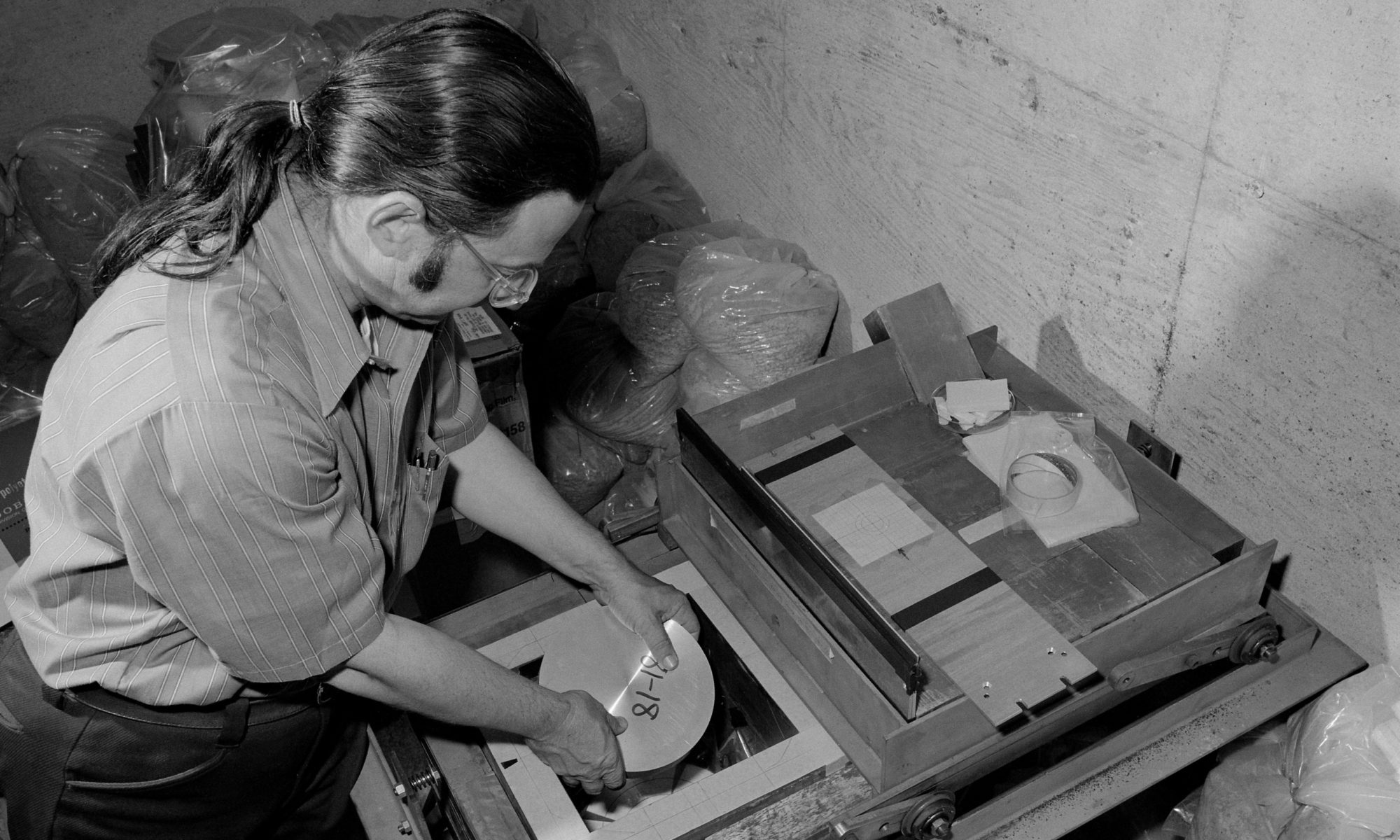
Lab retiree Alan “Al” Smith blazed a trail in the development of ultrasensitive detectors that can see ever-fainter signatures of particle interactions. Click to read a retrospective of his research career. https://newscenter.lbl.gov/2019/03/19/a-pioneer-in-ultrasensitive-particle-detectors/
Apply by Friday for I-Corps Short Course
Explore pathways to market your technology at IPO’s I-Corps Short Course, offered over three evenings in April. The course covers the customer discovery process and business model concepts needed to begin the lab-to-market journey. This course is limited to Lab staff. Signup deadline is Friday. https://ipo.lbl.gov/blic/
Pioneering Cancer Researcher Mina Bissell Receives Two Top Honors
The American Philosophical Society has chosen Bissell as the recipient of the Jonathan E. Rhoads Gold Medal for Distinguished Service to Medicine. The Weizmann Institute of Science selected Bissell as one of two recipients of the 2019 Weizmann Women & Science Award. https://newscenter.lbl.gov/2019/03/19/mina-bissell-two-awards/
Bright Skies for Plant-Based Jet Fuels
The global aviation sector is incredibly energy-intensive and almost entirely reliant on petroleum-based fuels, and can’t be easily shifted to renewable energy sources. But a new analysis shows that sustainable plant-based bio-jet fuels could be competitive with conventional petroleum fuels. https://newscenter.lbl.gov/2019/03/19/bright-skies-for-biojet-fuels/
Salt in the Amazon Air Comes from Local Fungi
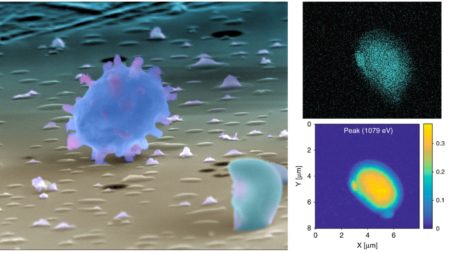
Salt in the atmosphere above the Amazon basin has long been attributed to the Atlantic Ocean. But now, scientists using the ALS have found much of it originates from fungal spores in nearby rainforests. This finding will improve climate models and scientist’s understanding of rainforest ecosystems. https://als.lbl.gov/salt-in-the-amazon-air-comes-from-local-fungi/
Sea Quark Surprise: Deeper Complexity in Proton Spin Puzzle
New data from the STAR experiment at the Relativistic Heavy Ion Collider (RHIC) add detail – and complexity – to an intriguing puzzle that scientists have been seeking to solve: how the building blocks that make up a proton contribute to its spin. https://newscenter.lbl.gov/2019/03/14/sea-quark-surprise-reveals-deeper-complexity-in-proton-spin-puzzle/
Rising Sun Center for Opportunity Highlights Partnership with Berkeley Lab
Berkeley Lab’s committment to training the next generation of scientists and engineers is exemplified by the Lab’s relationship with the Rising Sun Center for Opportunity, which works to empower individuals to achieve environmental and economic sustainability for themselves and their communities. https://risingsunopp.org/rising-sun-sustainer-lawrence-berkeley-national-laboratory/
EESA Expert Aids First High-Res Measurement of Induced Seismicity, Fault Slip
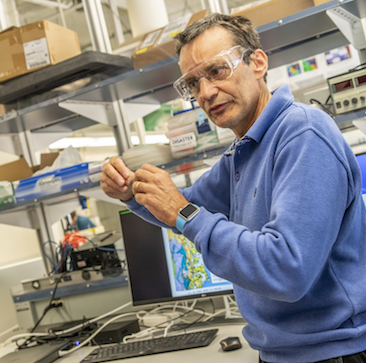
EESA’s Yves Guglielmi joined an international team of researchers in replicating the impact of fluid injection on fault slip both in a natural fault in the deep subsurface and on core samples in the research laboratory. Their work is described in a new paper in the journal Science Advances. https://eesa.lbl.gov/eesa-experts-participate-in-first-high-resolution-field-measurements-of-induced-seismicity-and-fault-slip/
New Website for Data Analysis of Commercial Buildings
The Lab’s Energy Management and Information Systems group uses data from performance monitoring and optimization tools to help building owners improve efficiency and save money. The group works with industry, Lab colleagues, and other national labs to evaluate and improve these technologies. https://buildings.lbl.gov/emis/building-energy-information-systems