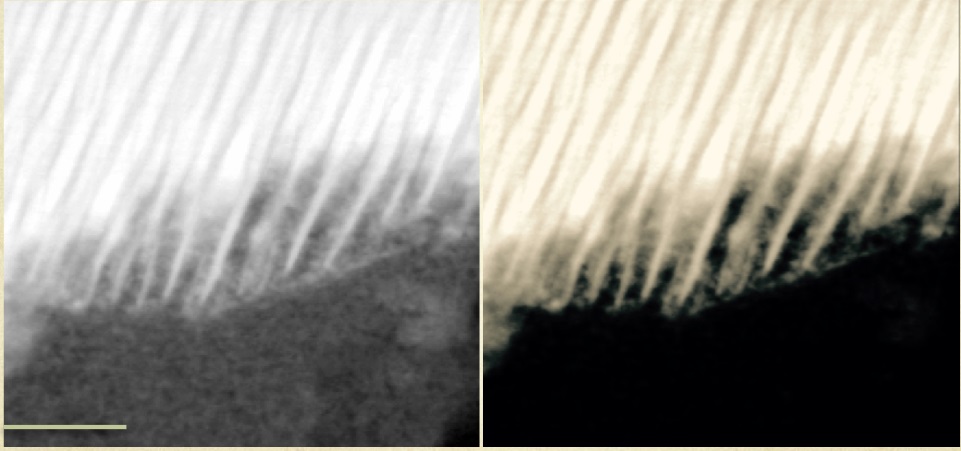
Nanoscale analyses of Martian meteorites at the ALS suggest that organic carbon on Mars may have been formed by electrochemical reactions between briny liquids and volcanic minerals, as might occur in a galvanic cell. https://als.lbl.gov/meteorites-suggest-galvanic-origins-for-martian-organic-carbon/
In Memoriam: Margaret Alston-Garnjost, Lab Bubble Chamber Researcher
As Women’s History Month comes to a close, a special shout-out to Lab physicist and bubble chamber researcher Margaret Alston-Garnjost, who collaborated with Lab Nobel Prize winners Luis Alvarez and Donald Glaser. She passed away Feb. 7. Stay tuned for a more in-depth profile next month. https://m.legacy.com/obituaries/sfgate/obituary.aspx?n=margaret-alston-garnjost&pid=191709331&referrer=0&preview=false
Berkeley Lab Participates in National Lab Congressional Briefing
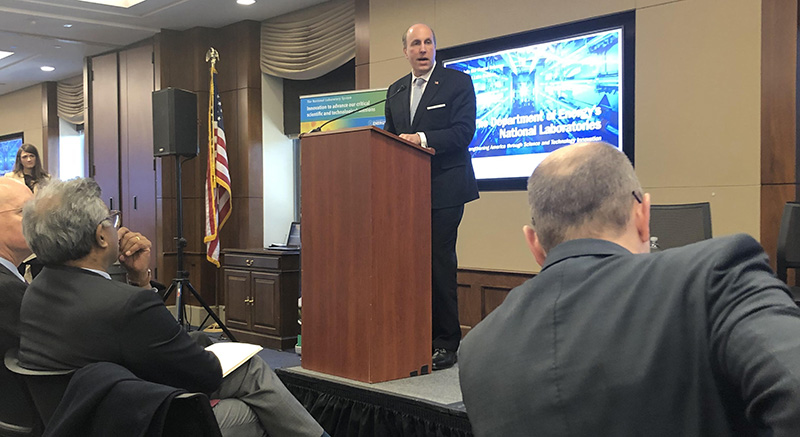
On March 27, the House Science and National Labs Caucus sponsored a Congressional briefing and reception to highlight how the Department of Energy’s national laboratories strengthen America through science and technology innovation. https://stratcomm-elements.lbl.gov/2019/03/28/berkeley-lab-participates-in-national-lab-congressional-briefing/
Ice Sheet Modeling Probes Antarctic Vulnerabilities
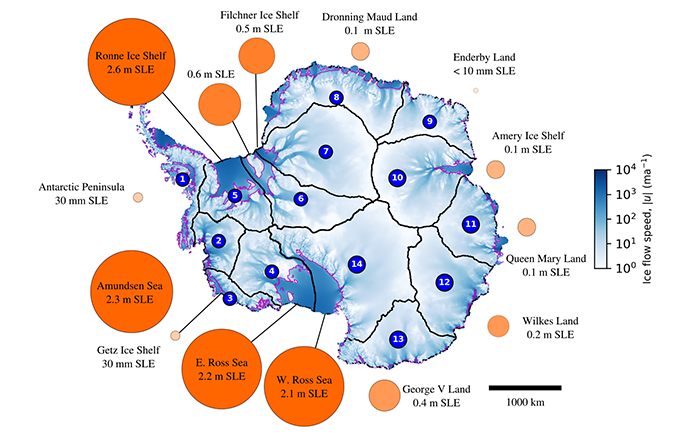
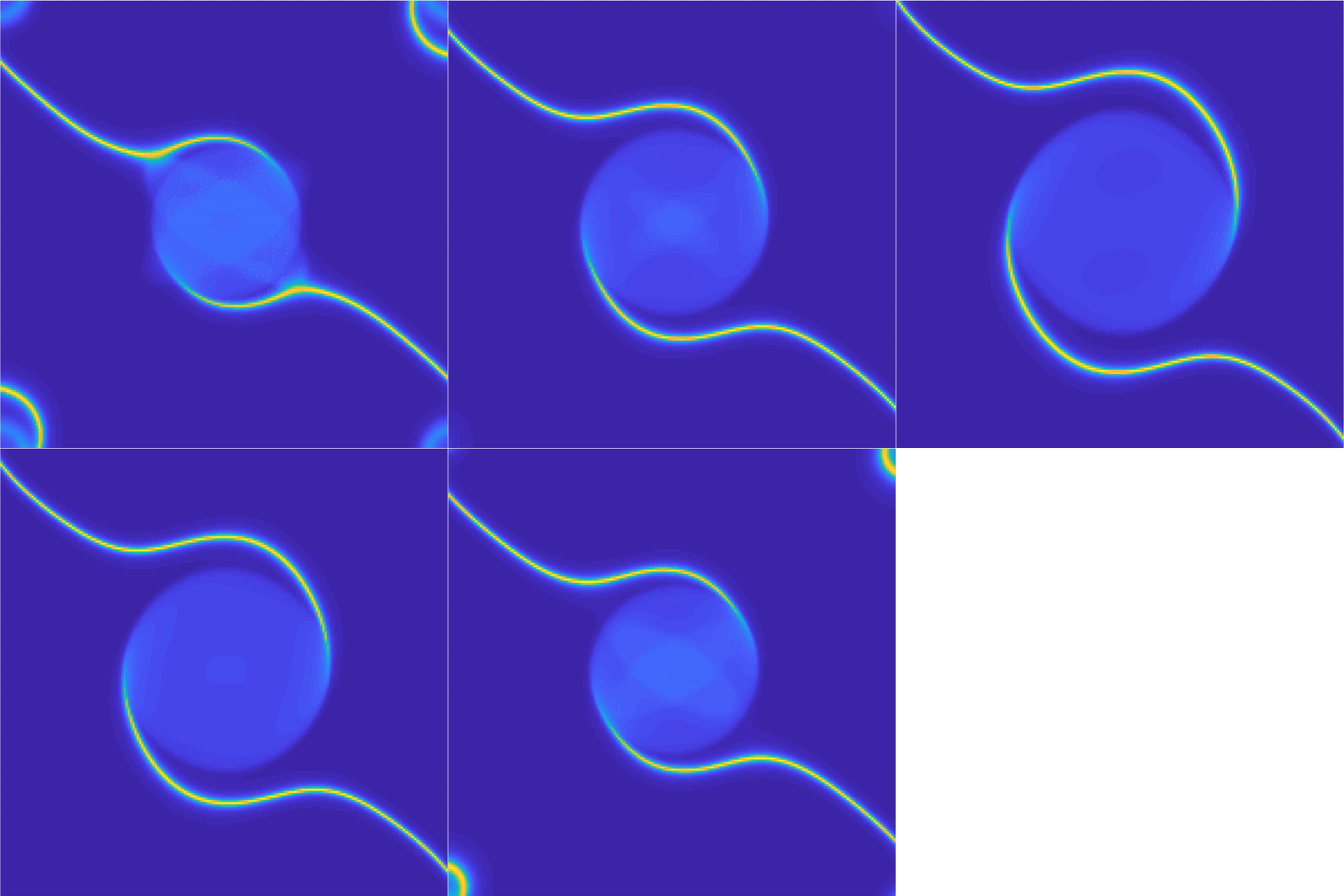
The BISICLES ice sheet model uses high performance computing resources at NERSC to systematically examine where the Antarctic Ice Sheet is vulnerable and the resulting potential for large contributions to sea level rise. https://cs.lbl.gov/news-media/news/2019/crds-ice-sheet-modeling-tool-probes-antarctic-vulnerabilities/
Biosciences’ Louise Glass Receives Metzenberg Award
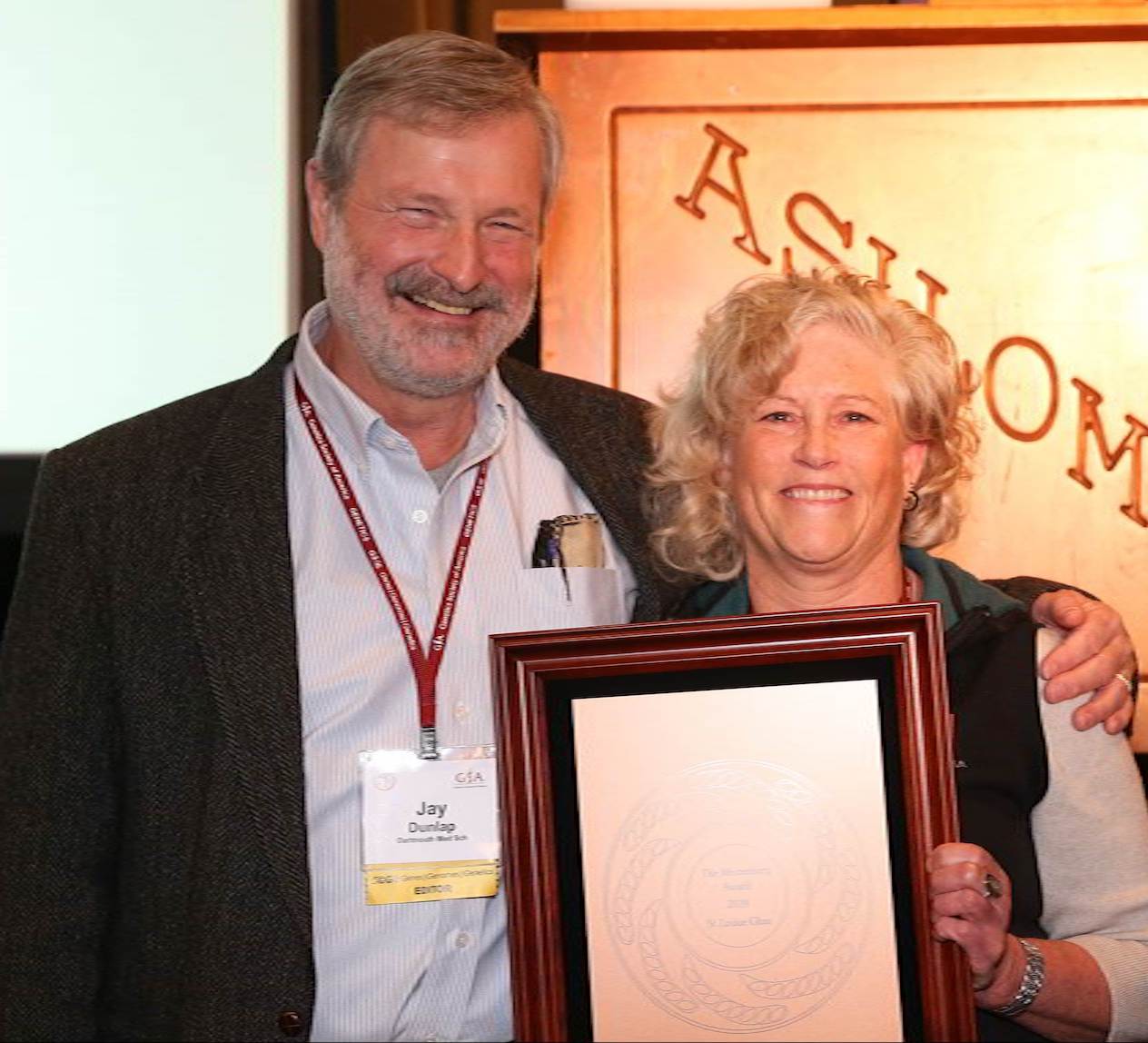
Louise Glass received the Robert L. Metzenberg Award during the Fungal Genetics Conference held March 12–17. Established by the Neurospora research community, the award is given to researchers whose innovative achievements have significantly advanced the understanding of biology. https://biosciences.lbl.gov/2019/03/25/louise-glass-receives-metzenberg-award/
Judges Sought for April 6 Bioengineering Design Competition
Lab researchers are sought to serve as judges for BioEHSC, a seven-week competition that exposes high school students to bioengineering/biomedical engineering research. Winners of the competition will be determined at an April 6 event on campus. Click post for more information and to volunteer. https://bioehs.berkeley.edu/bioehsc/
Getting to the Bottom of a Metal/Acid Interface
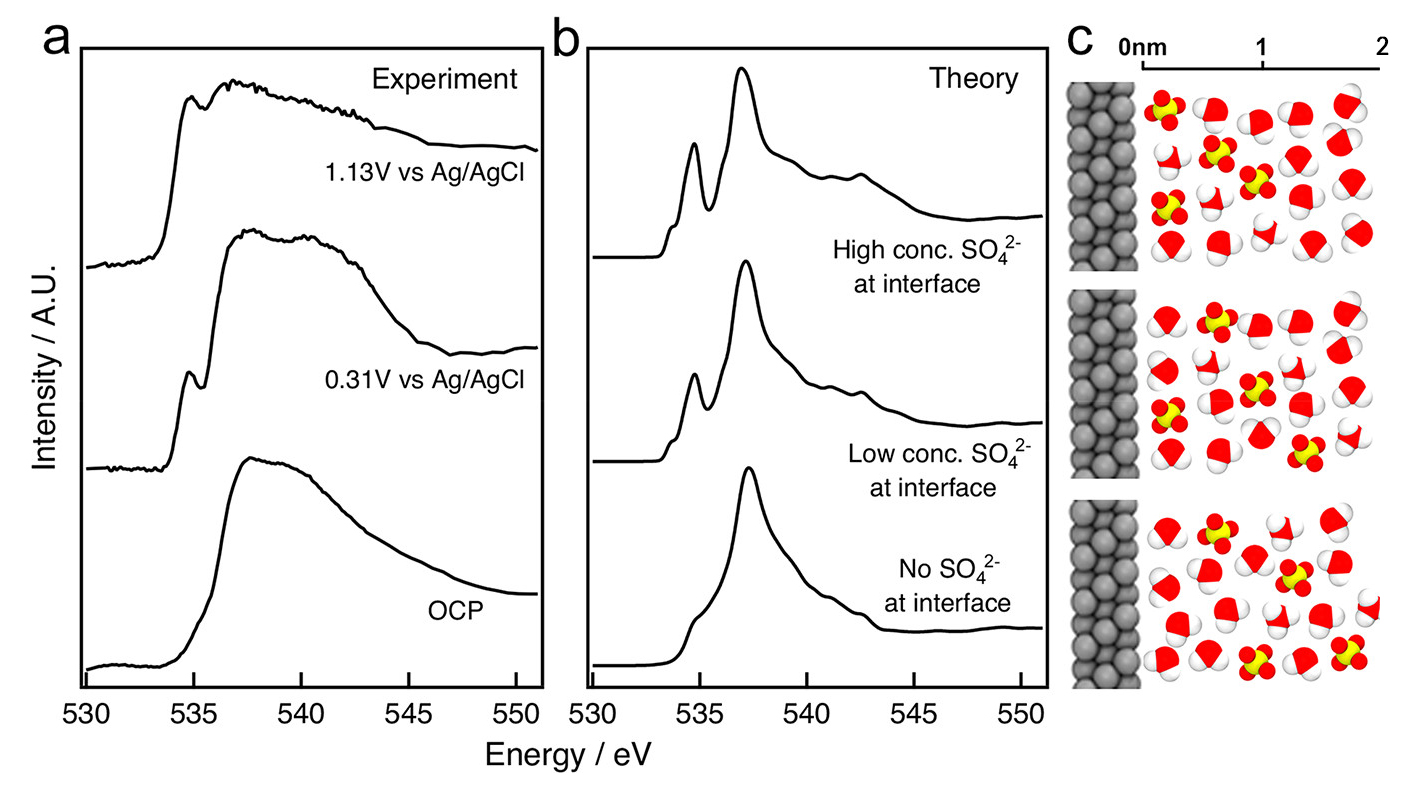
Research at the ALS has identified the molecules that collect at the interface between a platinum electrode and an acidic electrolyte under an applied voltage. This knowledge is key to understanding topics such as corrosion, geochemistry, electrocatalysis, and energy storage. https://als.lbl.gov/getting-to-the-bottom-of-a-metal-acid-interface/
Mouse Study Yields Long-Awaited Insights into Human Stomach Cancer
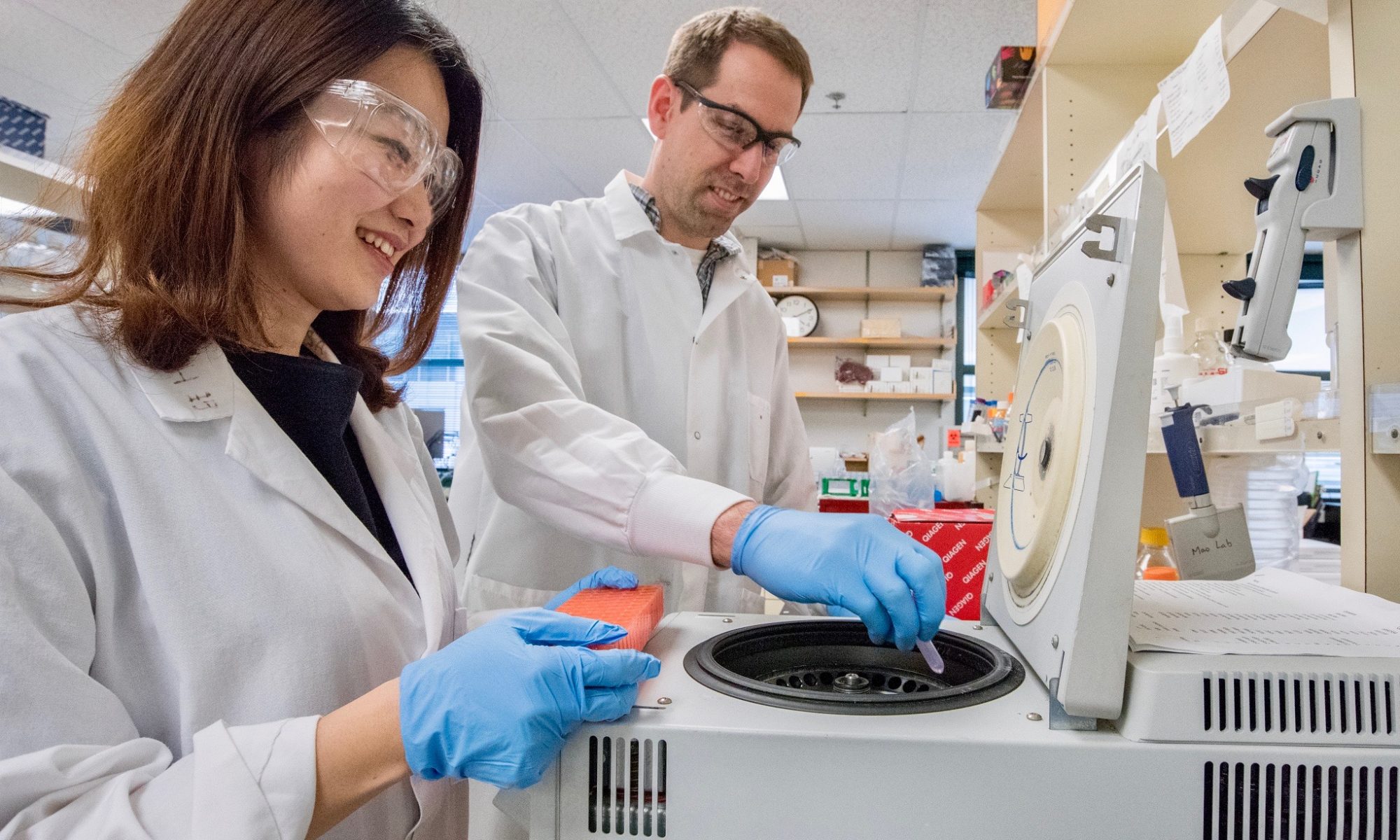
Mice have been instrumental in the study of cancer, but for stomach cancer in particular, mice have historically been regarded as poor research organisms because rodents rarely develop spontaneous stomach tumors. But results from a new study are about to shake up the paradigm. https://newscenter.lbl.gov/2019/03/22/stomach-cancer-insights/
Foundry Industry Users Win Big at 2019 Hello Tomorrow Global Challenge
Molecular Foundry industry users Coreshell Technologies and X-Therma Inc. were two of twelve winners awarded for their technological innovations out of 4,500 applications from 119 countries around the world. http://foundry.lbl.gov/#/news/2019-03-19_A.html
Spiraling Crystal Is the Key to Topological Discovery
A team of researchers working at Berkeley Lab has discovered the strongest topological conductor yet, in the form of thin crystal samples that have a spiral-staircase structure. https://newscenter.lbl.gov/2019/03/20/the-best-topological-conductor-yet-spiraling-crystal-key-to-discovery/