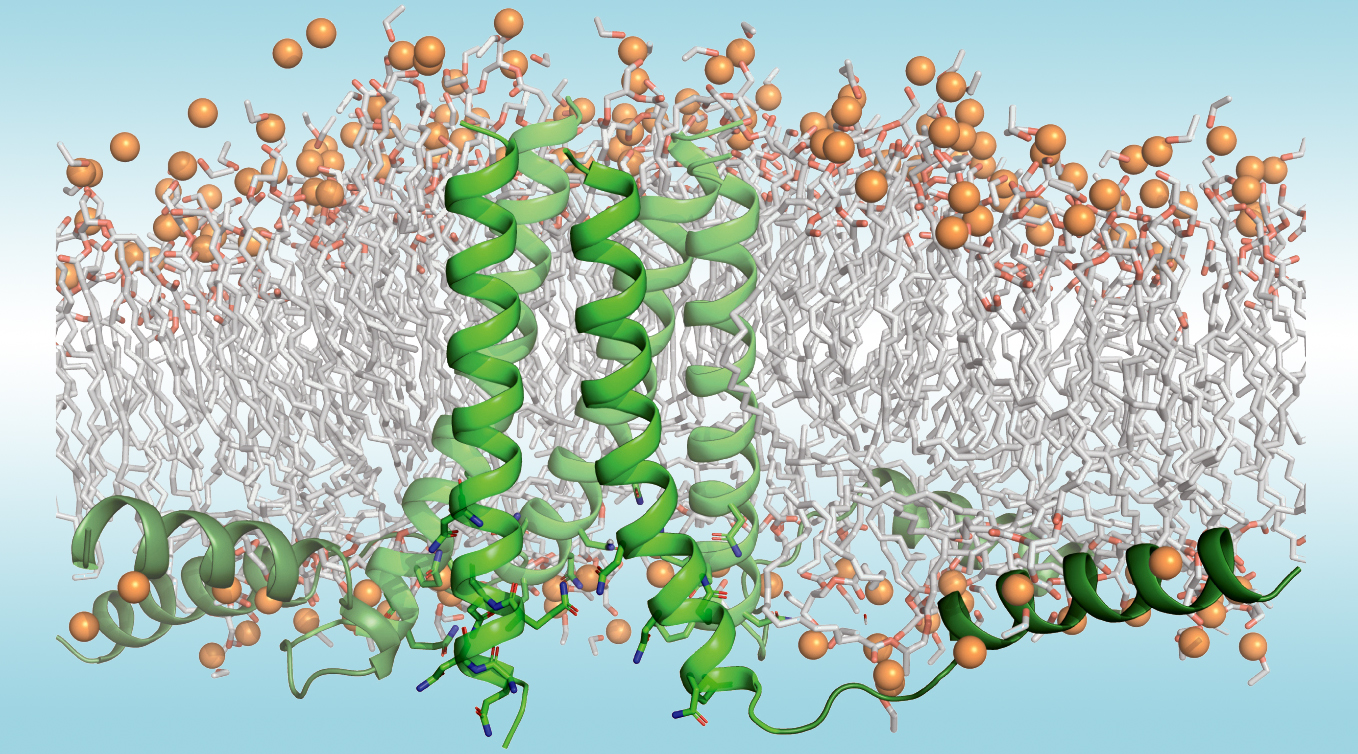
At the ALS, scientists characterized designed membrane proteins to better understand the forces that stabilize these structures. The results necessitate a rethinking of membrane-protein biophysics and could lead to better therapies for related illnesses as well as engineering applications. https://als.lbl.gov/breakthrough-in-membrane-protein-design-settles-long-standing-debate/
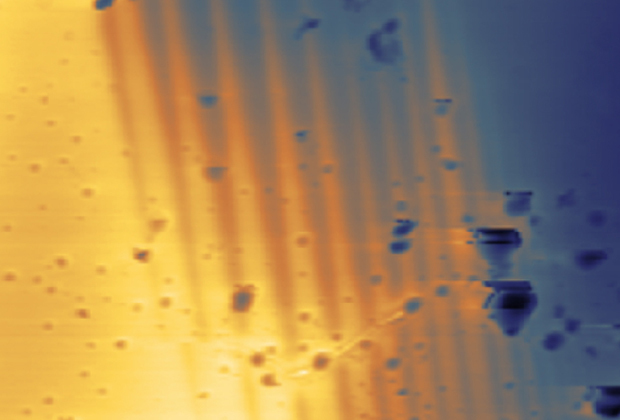
Infrared Light Reveals Microstripes at Insulator-Metal Transition
In material with an electrically driven insulator-to-metal transition, a distinctive stripe pattern forms at the phase boundary under infrared light — a clue to the material’s crystallographic structure. The phenomenon holds promise for applications in energy-efficient memory and transistor devices. https://als.lbl.gov/infrared-light-reveals-microstripes-at-insulator-metal-transition/
FLEXLAB Tests New City of Berkeley Building
Berkeley Lab’s unique and innovative FLEXLAB® facility recently helped test a new City of Berkeley “Zero Net Energy” building before it was built, saving time, energy, and money. Read about it in this featured blog. https://elsarch.com/idea/zero-net-energy-historic-preservation-turning-building-past-model-future/
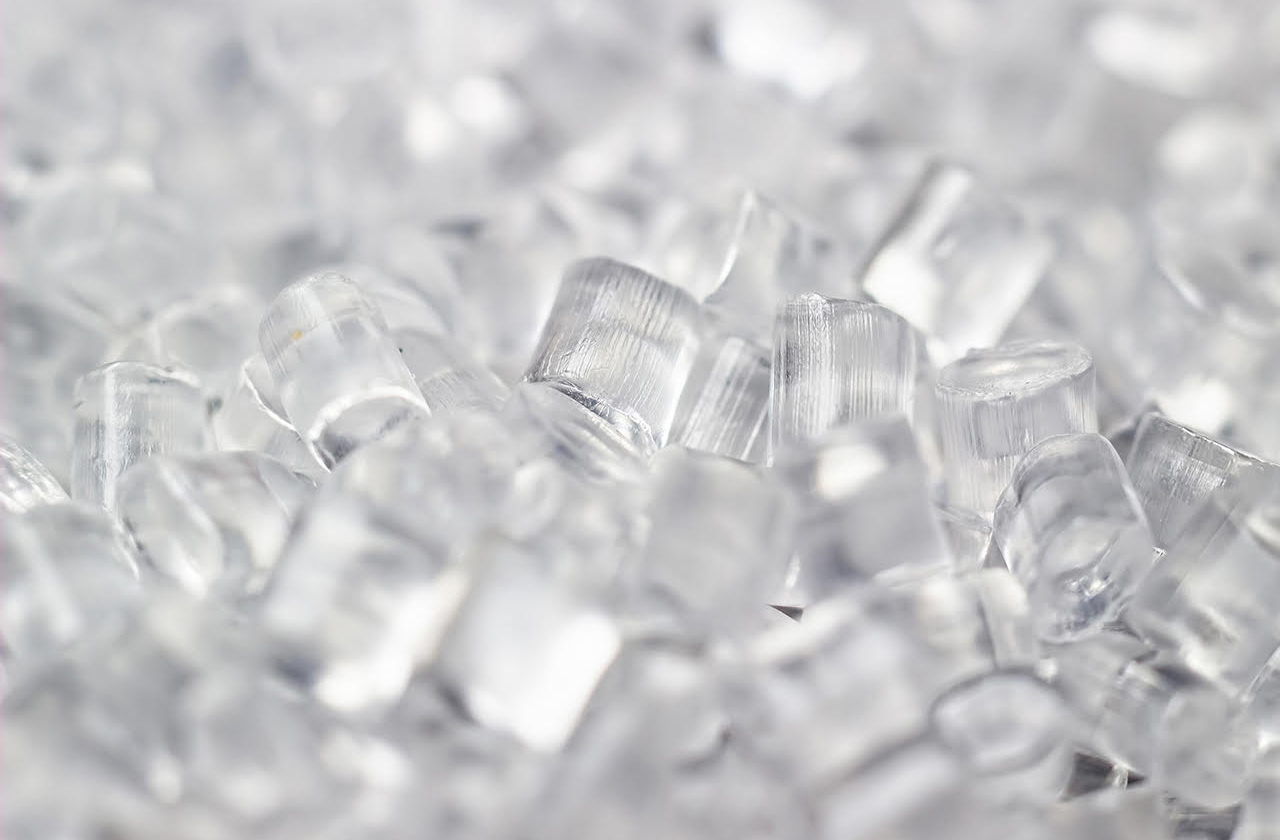
Pulsed Electron Beams Shed Light on Plastics Production
A new technique developed at Berkeley Lab is providing atomic-resolution details about magnesium chloride, a material involved in the production of the most common plastic, polyethylene, which could help to create a path toward sustainable plastics. https://newscenter.lbl.gov/2019/06/11/pulsed-electron-beams-shed-light-on-plastics-production
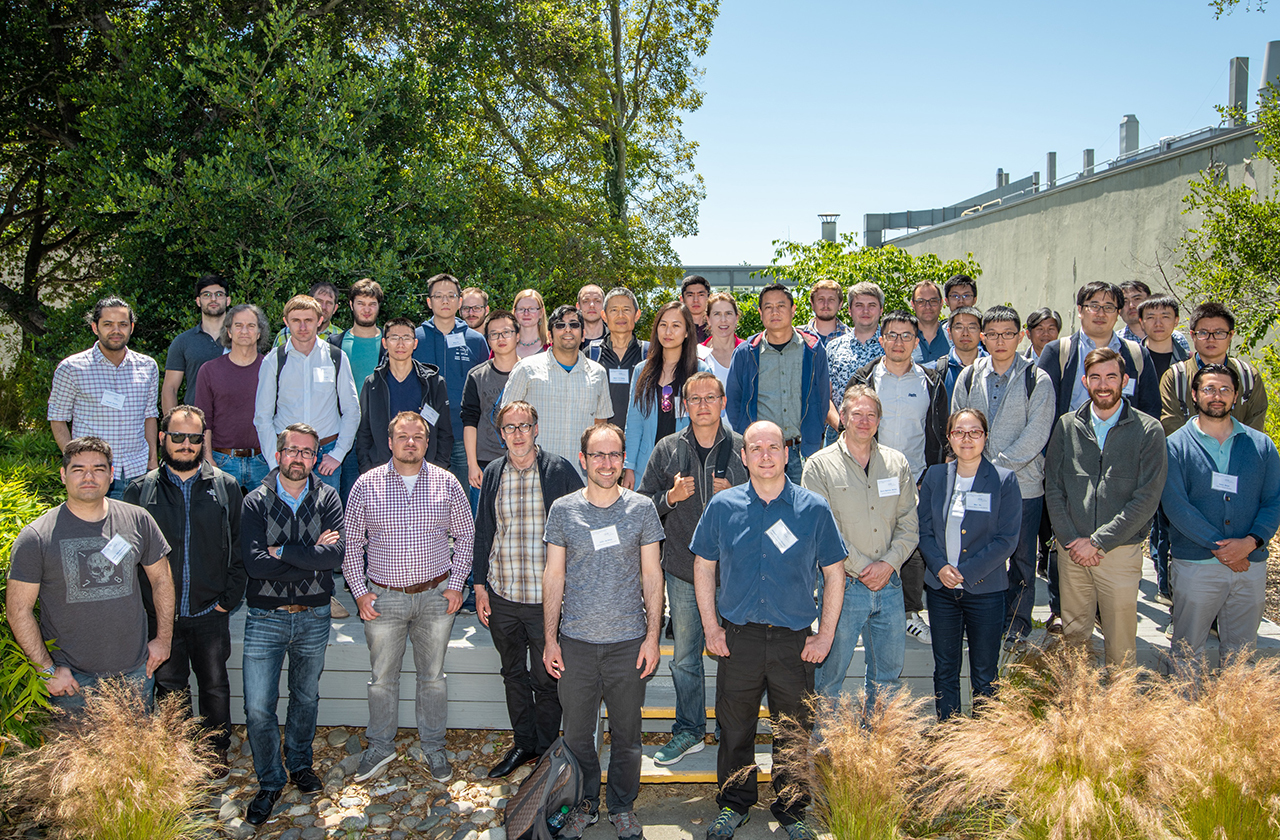
Ptycho Developer Conference Held at Lab
An international workshop was held at the Lab recently on ptychography, an imaging technique that achieves unprecedented resolutions using data and computationally intensive techniques. Participants discussed a range of topics from advanced mathematics and optics to HPC solutions. https://sites.google.com/lbl.gov/ptycho-developer-2019/
What if Dark Matter is Lighter? Small Experiments to Broaden the Hunt
Lab scientists are designing new and nimble experiments to search for dark matter using untested methods. It’s like casting many tiny “nets” to find elusive particles that evaded previous studies. https://newscenter.lbl.gov/2019/06/10/small-dark-matter-experiments-broaden-hunt/
Mirror, Mirror, in the Optimal Spot
At the ALS, X-ray beams are focused onto samples by precisely curved mirrors. Researchers have now developed a fast, systematic way to optimize mirror performance in a beamline. The system does in a day what used to take many days by combining precise surface metrology with computer analysis. https://als.lbl.gov/mirror-mirror-in-the-optimal-spot/
Working With Industry to Save Energy
Industry leaders learned the latest techniques and technologies to save energy and water during a recent event at Berkeley Lab hosted by the Department of Energy’s Better Buildings, Better Plants program. The program helps industrial partners achieve voluntary energy performance improvement goals. https://buildings.lbl.gov/news/article/working-industry-save-energy
Superconductor Exhibits ‘Glassy’ Electronic Phase
Electrons in a high-temperature superconductor can exhibit a new type of collective behavior that is more “glassy” (disordered) than expected, a valuable insight into the nature of collective electron behaviors and how they relate to high-temperature superconductivity. https://als.lbl.gov/superconductor-exhibits-glassy-electronic-phase/
Faster Technique to Purify Elements Developed
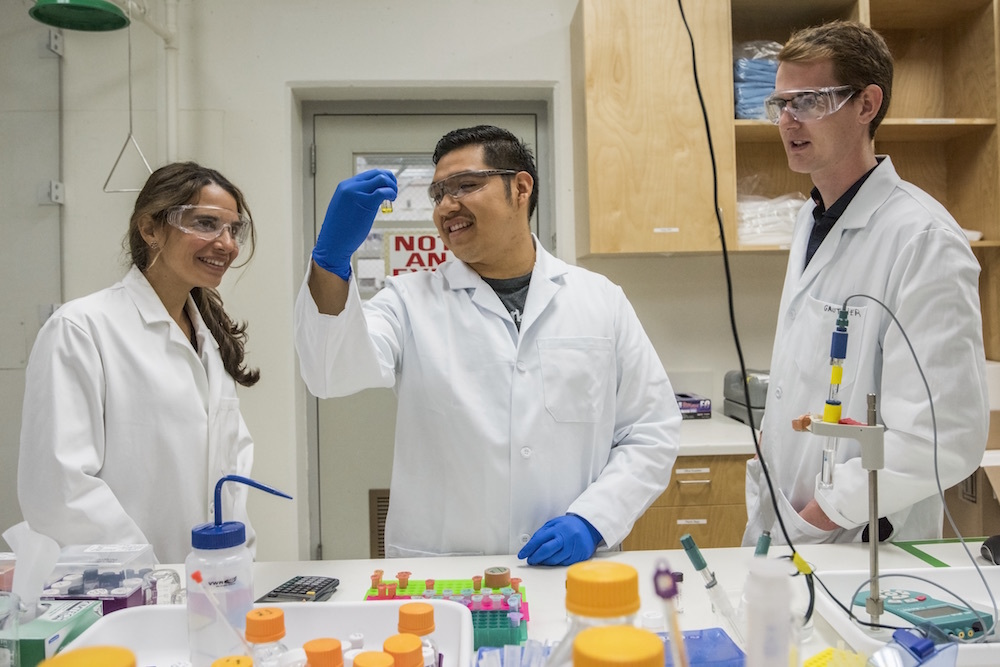
A new chemical separation method was developed that is vastly more efficient than conventional processes, opening the door to faster discovery of new elements, easier nuclear fuel reprocessing, and a better way to attain actinium-225, a promising therapeutic isotope for cancer treatment. https://newscenter.lbl.gov/2019/06/04/separation-anxiety-no-more-a-faster-technique-to-purify-elements/