The study analyzed tens of millions of U.S. patents and scientific papers and found that patenting’s reliance on federal science has increased over the past 90 years. Those patents that arise from federally-funded science are more highly cited, renewed, and novel than others, the analysis found. https://news.berkeley.edu/story_jump/government-funding-increasingly-fuels-innovation/?utm_source=Berkeleyan&utm_campaign=7fd5601395-berkeleyan&utm_medium=email&utm_term=0_99ee3800d7-7fd5601395-388726225
Video Highlights Efforts to Make Water Cleanup Viable
The National Alliance for Water Innovation, a consortium led by Berkeley Lab, was formed to examine the critical technical barriers and research needs to radically lower the cost and energy of desalination. Explore more at www.nawihub.org.
Scientists Capture Atomic Motion in 4D for the First Time
Using the TEAM electron microscope at the Molecular Foundry, scientists have gained a never-before-seen view of nucleation, capturing how the atoms rearrange at 4D atomic resolution. Nucleation is an unsolved problem in many fields, but this research could enable pathways to control the process. https://newscenter.lbl.gov/2019/06/26/scientists-capture-atomic-motion-in-4d-for-the-first-time/
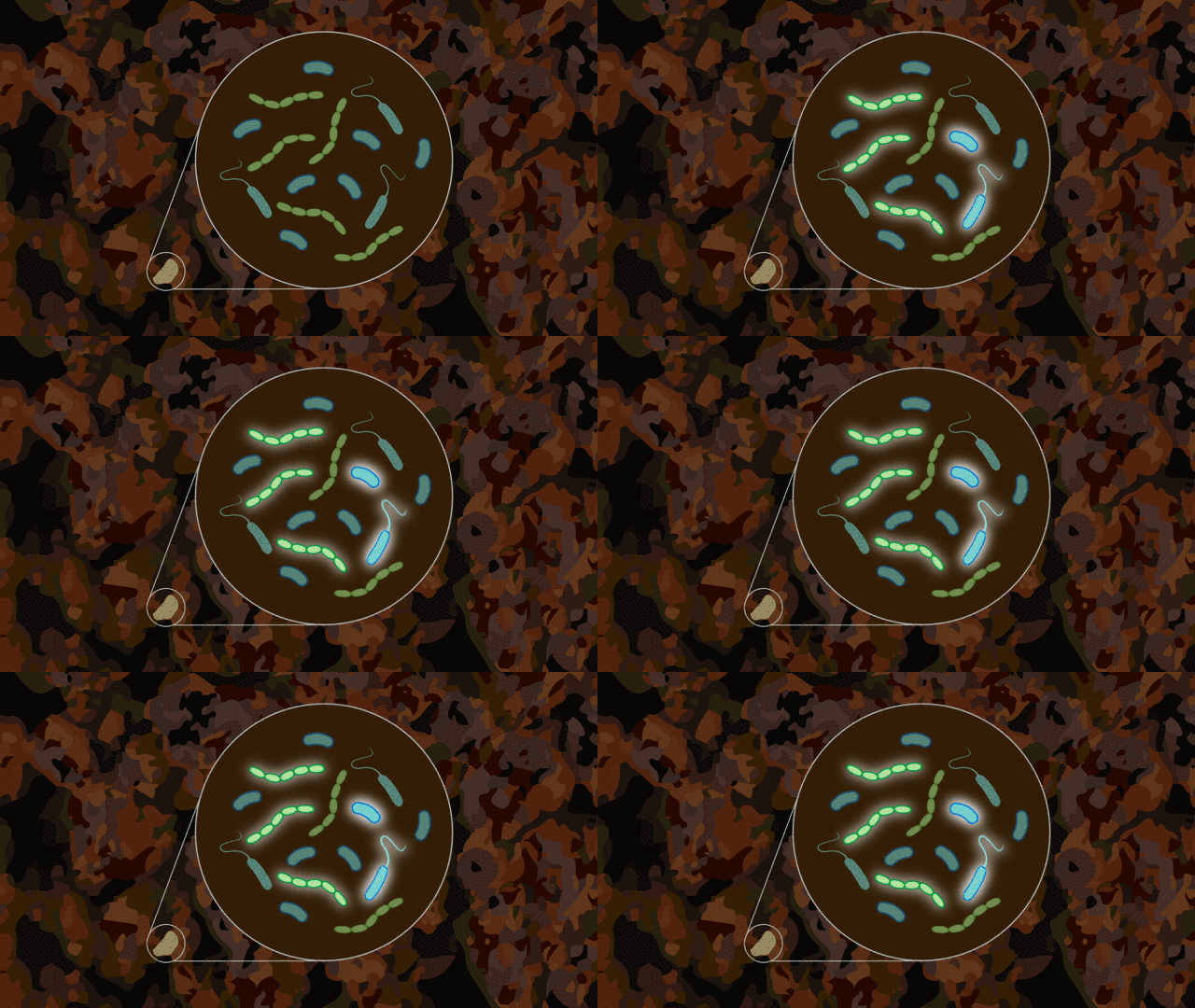
Hitting Pay Dirt With New Microbial Research Technique
A new study details how an improved method for studying microbes in the soil will help scientists understand both fine-grained details and large-scale cycles of the environment. https://newscenter.lbl.gov/2019/06/24/new-microbial-research-technique/
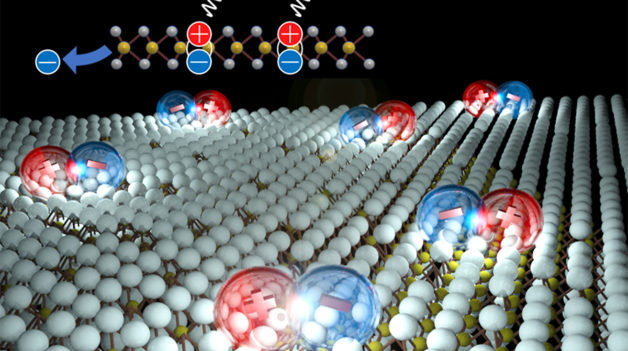
You Don’t Have to Be Perfect for TMDCs to Shine Bright
Atomically thin semiconductors (TMDCs) can help make light-emitting diodes, lasers, and solar cells operate more efficiently, but they’re difficult to create without defects that dampen their performance. Lab scientists have developed a technique to improve TMDCs’ photoluminescence quantum yield. https://newscenter.lbl.gov/2019/06/17/you-dont-have-to-be-perfect-to-shine-bright/
Video Highlights Biosciences’ I-Corps Adventure
Six Biosciences Area teams participated in the recent I-Corps Short Course. In this video, select participants share how the course gave them a deeper understanding of the ecosystems around their technology, and introduced them to the customer discovery process and business model concepts.
New Tool Will Aid Decisions on Pumping Groundwater
The overpumping of groundwater in California has led to near environmental catastrophe in some areas. But Berkeley Lab researchers believe machine learning could be part of the solution to restoring groundwater to sustainable levels and quality. https://newscenter.lbl.gov/2019/06/03/to-pump-or-not-to-pump-new-tool-will-help-water-managers-make-smarter-decisions/
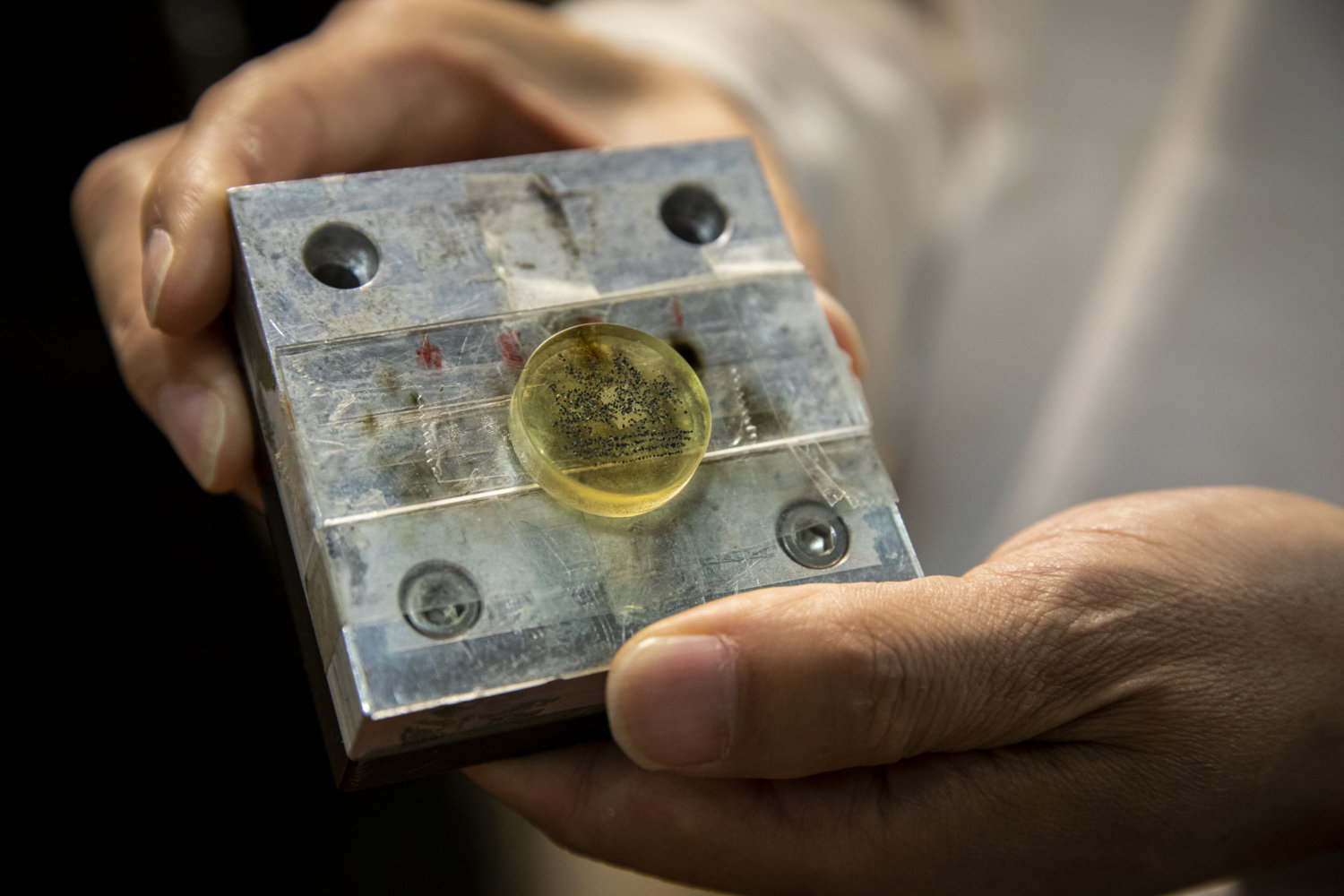
Engineered Fungi Could Help Turn Textile Industry Green
A new pathway developed at the Joint BioEnergy Institute could provide a sustainable alternative to conventional synthetic blue dye. The highly efficient fungi-based platform may also open the door for producing many other valuable biological compounds that are currently very hard to manufacture. https://newscenter.lbl.gov/2019/06/21/blue-pigment-from-fungi/
ALS Helps Confirm Discovery of New Mineral
A single crystal grain measuring just tens of millionths of a meter – found in a borehole sample drilled in Central Siberia – had an unexpected chemical makeup. And a specialized X-ray technique confirmed the sample’s uniqueness, paving the way for its recognition as a new mineral: ognitite. https://newscenter.lbl.gov/2019/06/19/mineral-discovery-made-easier-with-xray-technique/
Access to Current Elsevier Journals Ends in June
Because no contract agreement was reached between UC and Elsevier, the UC system including Berkeley Lab will lose access to all 2019 and later Elsevier content at the end of June. Access to most older content is not impacted. Information on alternate access is available on the Lab Library website. https://go.lbl.gov/elsevier