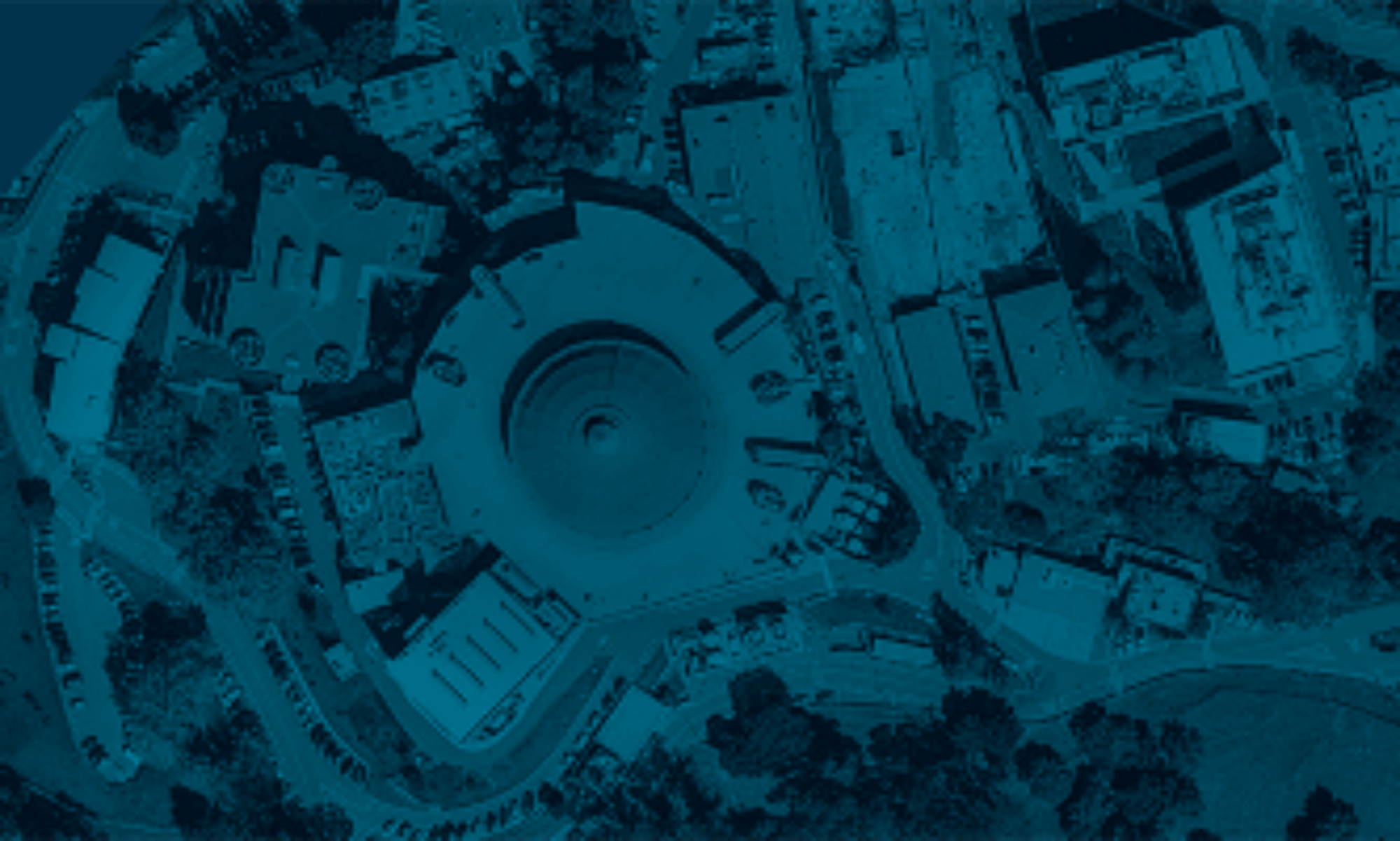
David Richardson’s job is literally to make sure the light stays on. But it’s not just any light – it’s a very special X-ray light that could play a crucial role in an eventual treatment for COVID-19. Richardson, an ALS operator, is among the essential workers supporting COVID-19 research. https://newscenter.lbl.gov/2020/05/15/masks-on-ready-to-work-meet-the-people-supporting-covid-19-science/
Scientists Make Quantum ‘Waves’ in Ultrathin Materials
A team of researchers has observed unusually long-lived wavelike electrons called “plasmons” in a new class of electronically conducting material. Plasmons are important for determining the optical and electronic properties of metals for the development of new sensors and communication devices. https://newscenter.lbl.gov/2020/05/14/plasmon-waves-ultrathin-materials/
Researching Airborne Virus Transmission in Buildings
As society prepares to reopen indoor spaces and ease back into some sense of normalcy during the COVID-19 pandemic, a team of researchers at Berkeley Lab is launching a study of the risk of airborne transmission of viruses within buildings and how to mitigate those risks. https://newscenter.lbl.gov/2020/05/13/new-research-launched-on-airborne-virus-transmission-in-buildings/
Underground Experiment Carries on Despite Pandemic
As the COVID-19 outbreak took hold in Italy, researchers working on a nuclear physics experiment called CUORE at an underground laboratory in central Italy scrambled to keep the ultrasensitive experiment running and launch new tools and rules for remote operations. https://newscenter.lbl.gov/2020/05/12/cuore-experiment-in-italy-carries-on-despite-covid-pandemic/
Register Now for JGI’s Next IMG Webinar Series
The next round of webinars highlighting the features and capabilities of JGI’s Integrated Microbial Genomes & Microbiomes (IMG/M) system takes place May 19 at 11 a.m. This session will explore how to compare sequences of interest to IMG genomes and metagenomes using BLAST and LAST searches. https://mgm.jgi.doe.gov/img-webinar-series/
Direct Imaging of Fracture Closure in Reservoir Shales
At the ALS, researchers characterized microscale factors affecting fluid flow through shale fractures propped open with sand or ceramic spheres. A better understanding of propped fractures can lead to safer and more efficient recovery of hard-to-reach oil and gas resources. https://als.lbl.gov/direct-imaging-of-fracture-closure-in-reservoir-shales/
Porous Electrolyte Frameworks for All-Solid-State Batteries
With ALS help, researchers developed a porous electrolyte framework that they used to construct a working all-solid-state battery. Such batteries potentially offer a higher energy density, longer cycle life, and better inherent safety than state-of-the-art lithium-ion batteries. https://als.lbl.gov/porous-electrolyte-frameworks-for-all-solid-state-batteries/
Faces of STEM: Maria Zurek
DOE’s STEM Rising program is an initiative to inspire, educate, and spark an interest in STEM careers. As part of the effort to educate students during the shelter-in-place, scientists from the national labs were asked to share their science. Here is the Lab’s Maria Zurek on her love for physics. https://youtu.be/XDVaT0U5E0A
Could Dark Matter’s Secrets Be Hiding in Existing Data?
In the hunt for dark matter, experiments have searched for signs of particles knocking into atomic nuclei, which produces tiny flashes of light and other signals. A new study suggests new paths for catching the signals of dark matter particles that have their energy absorbed by these nuclei. https://newscenter.lbl.gov/2020/05/04/study-could-dark-matter-be-hiding-in-existing-data/
Check Out JGI’s Latest Progress Report
The 2019 JGI Progress Report is now available, featuring a perspective from Director Nigel Mouncey, JGI-enabled user science highlights, and facts about the Integrative Genomics Building (IGB). Download an electronic copy or request a print version. https://jgi.doe.gov/about-us/progress-report/
