Researchers have discovered how to use ion beams to create long strings of “color center” quantum bits, or qubits, in a diamond lattice. Coupling large numbers of qubits has been one of quantum computing’s challenges. Someday, these strings could be made at facilities like the Lab’s BELLA Center. https://newscenter.lbl.gov/2021/04/27/ion-beams-mean-a-quantum-leap-for-color-center-qubits/
Easing the Strain on Precious Battery Materials
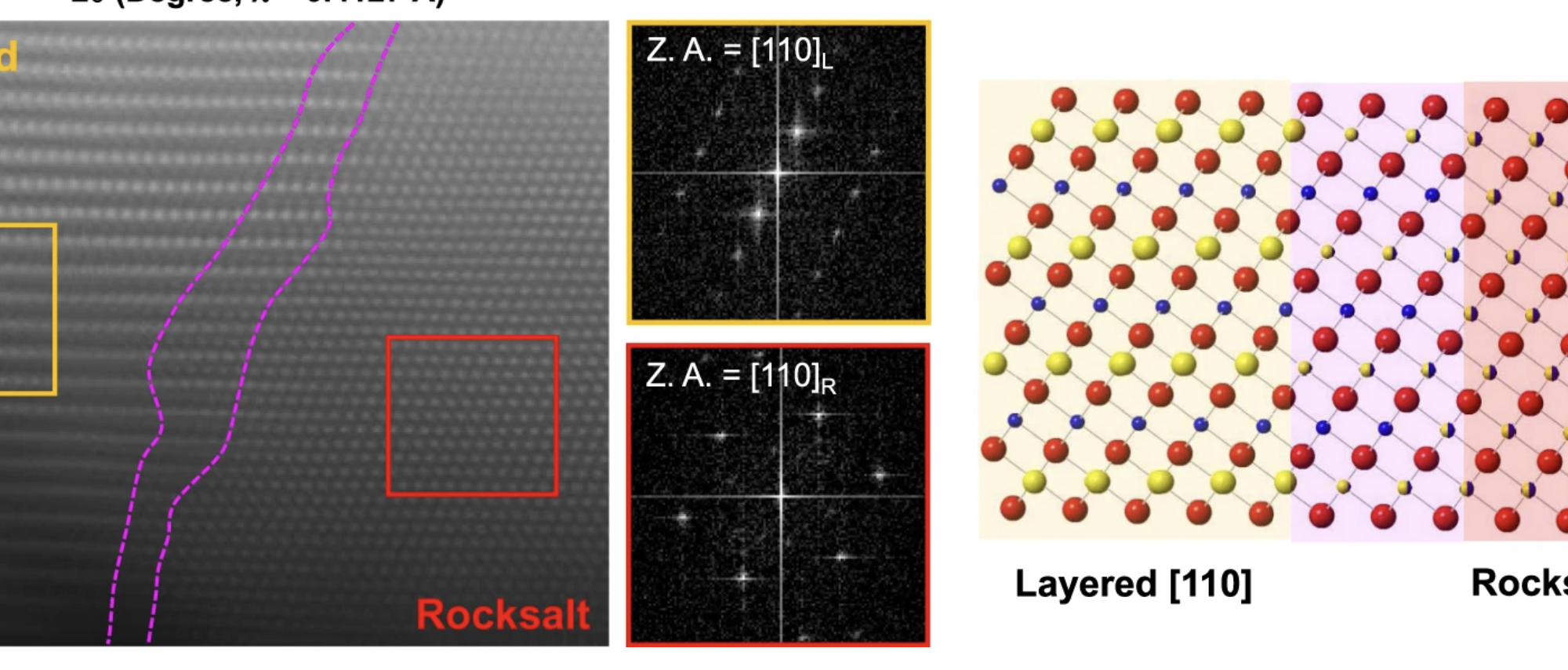
Dependence on lithium-ion batteries increases the need for advanced cathode materials. A new concept of layered-rocksalt intergrown structure, which enables nearly zero-strain operation upon high-capacity cycling, offers tremendous opportunities for designs that ease the need for cathode materials. https://www.nature.com/articles/s41467-021-22527-z
Going Beyond Qubits With Qutrits
A Berkeley Lab and UC Berkeley team observed the scrambling of quantum information — thought to underlie the behavior of black holes — using qutrits: quantum units that can represent three separate states at the same time. This effort paves the way for qutrits-based quantum information processors. https://newscenter.lbl.gov/2021/04/26/going-beyond-quibits/
Q&A With Hanna Breunig on Negative Emissions Tech
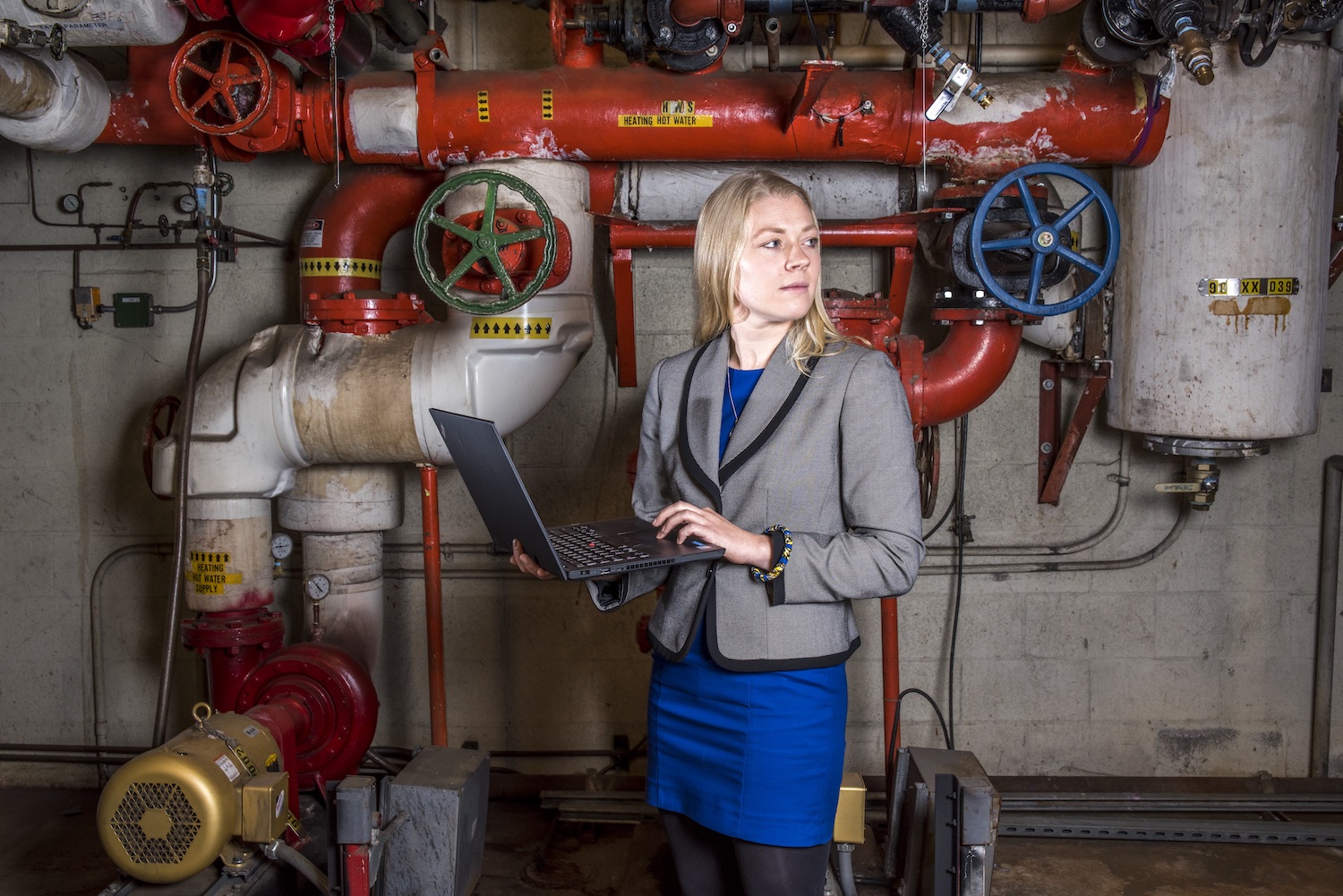
Lab researcher Hanna Breunig uses techno-economic analysis of negative emissions technologies (NET) to make them more competitive and impactful. Read more in this Q&A. https://newscenter.lbl.gov/2021/04/22/how-techno-economic-analysis-can-improve-energy-technologies/
Nature Offers Clues for Compostable Plastics
Scientists at Berkeley Lab and UC Berkeley have designed an enzyme-activated compostable plastic that could diminish microplastics pollution. Household tap water or soil composts break the hybrid plastic material down to small molecules, called monomers, in just a few days or weeks. https://newscenter.lbl.gov/2021/04/21/compostable-plastic-nature/
The Social Cost of Methane Emissions
A study by a team, including Berkeley Lab and UC Berkeley researchers, reports that the social cost of methane — a greenhouse gas 30 times as potent as carbon dioxide in its ability to trap heat — varies by as much as an order of magnitude between industrialized and developing regions of the world. https://newscenter.lbl.gov/2021/04/21/in-calculating-the-social-cost-of-methane-equity-matters/
Hydrogen a Boon to Long-Haul Trucking Industry
Hydrogen fuel cells are widely seen as a viable, zero-emission option to power trucks, trains, ferries, and passenger vehicles. In a recent study, the Million-Mile Fuel Cell Truck Consortium examined the state of hydrogen fuel-cell technology for heavy-duty vehicle applications. https://newscenter.lbl.gov/2021/04/08/hydrogen-offers-promising-future-for-long-haul-trucking-industry/
New Technique for Materials Design Developed
A theoretical technique developed by Berkeley Lab researchers could be widely used in the future to design new materials such as optoelectronics, thermoelectrics, and photovoltaics. The method, AMSET, allows scientists to calculate the electronic properties of existing and new materials. https://www.nature.com/articles/s41467-021-22440-5
Experts’ Predictions for Future Wind Energy Costs
Technology and commercial advancements are expected to continue to drive down the cost of wind energy, according to a survey led by Berkeley Lab of the world’s foremost wind power experts. Experts anticipate cost reductions driven by bigger and more efficient turbines and other advancements. https://newscenter.lbl.gov/2021/04/15/experts-predictions-for-future-wind-energy-costs-drop-significantly/
Lab Celebrates Innovators’ Contributions to Industry
The Lab recently celebrated more than 250 Lab inventors and software developers and collaborators at a “Royal-T” event hosted by the Intellectual Property Office. Industry and other entities paid millions in royalties to the Lab in FY20. Read more and watch the event video. https://ipo.lbl.gov/berkeley-lab-celebrates-innovators-contributions-to-industry/