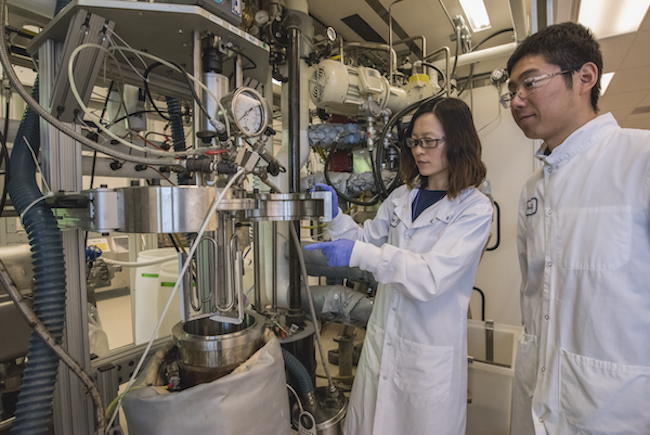
Berkeley Lab researchers are blending municipal solid waste — including non-recyclable paper and grass clippings — and biomass (corn stover and switchgrass), then using an ionic liquid-based process to convert these blends into methyl ketones. These compounds can be used as diesel fuel precursors. https://newscenter.lbl.gov/2019/10/10/trash-to-treasure-scientists-convert-municipal-waste-to-biofuel-precursors/
A Road Map for Groundwater Quality & Quantity
A new paper from the Earth and Environmental Sciences Area can help grounwater managers avoid inadvertently contaminating water supplies while complying with California’s Sustainable Groundwater Management Act. Groundwater management activities can affect both the quantity and quality of grounwater. https://eesa.lbl.gov/how-groundwater-management-activities-can-affect-water-quantity-and-quality/
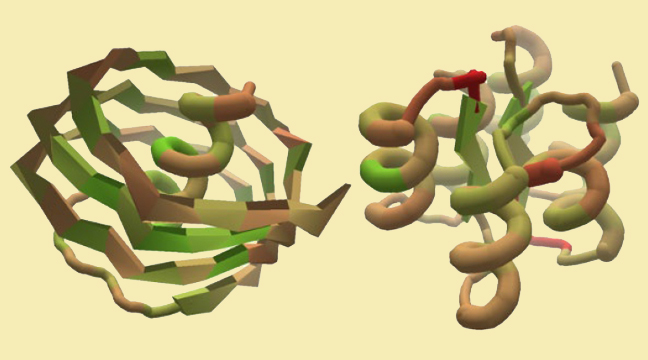
A Citizen-Science Computer Game for Protein Design
By playing the computer game “Foldit,” citizen scientists designed new proteins whose structures were verified at the ALS. The designs were more structurally diverse than those generated by computer, showing the potential of crowd-based creativity in the design of proteins for fighting disease. https://als.lbl.gov/a-citizen-science-computer-game-for-protein-design/
Call for FY20 DOE Commercialization Funding
DOE has issued its solicitation for FY20 Technology Commercialization Fund (TCF) proposals. Eligibility declarations are due Oct. 10. The TCF program offers opportunities for industry to partner with national labs to commercialize energy technologies and intellectual property. https://ipo.lbl.gov/TCF_2020
Legacy of César Lattes and His Impact on the Lab
A Symmetry magazine story features Brazilian scientist César Lattes, who helped develop photographic plates that led to the discovery of the pion particle. In 1948, he brought that knowledge to the Rad Lab (now Berkeley Lab), conducting research that prompted E.O. Lawrence to build the Bevatron. https://www.symmetrymagazine.org/article/the-legacy-of-cesar-lattes
Notes From AI XLab Summit in Chicago
Berkeley Lab’s Kristin Persson of the Energy Technologies Area (second from left) speaks Wednesday as part of an AI for advanced materials design and discovery panel discussion during DOE’s AI-focused InnovationXLab event in Chicago, hosted by Argonne National Lab. http://blogs.anl.gov/aixlab/
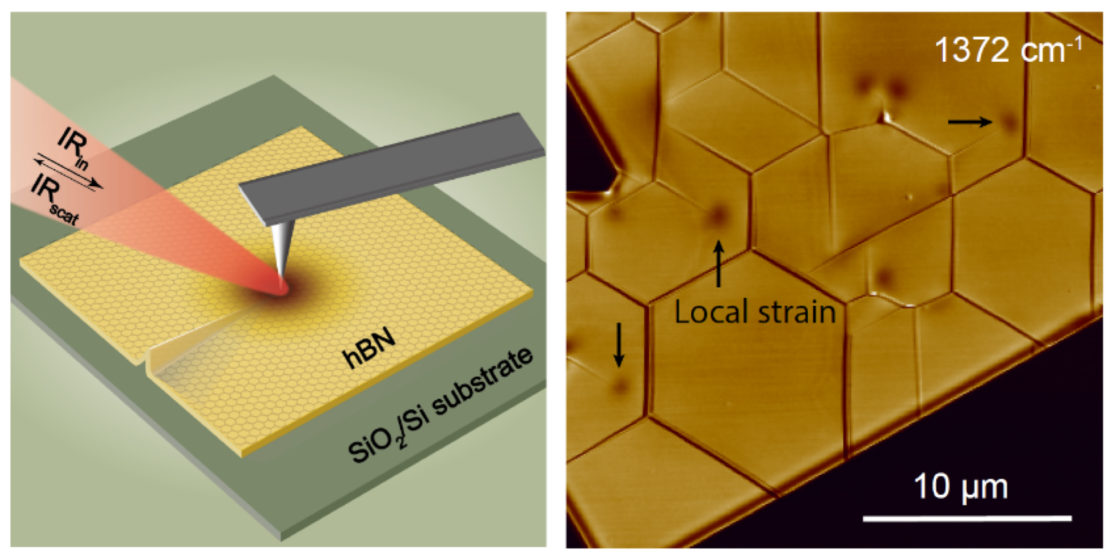
Infrared Nano-Mapping of Local Strain in 2D Materials
An innovative way to use infrared light to measure nanoscale strain in atomically thin films was demonstrated at the Advanced Light Source. The technique could be a promising tool for the examination of low-dimensional materials of interest for electronic and photonic devices. https://als.lbl.gov/infrared-nano-mapping-of-local-strain-in-2d-materials/
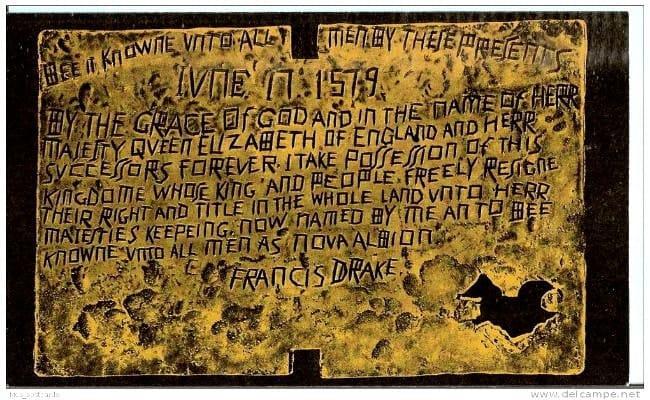
Lab Helped Debunk Sir Francis Drake Hoax
A “Plate of Brasse” marking Sir Francis Drake’s landing near current-day San Francisco was discovered in 1937 at a site not far from Drakes Bay. However, Berkeley Lab researchers subjected the plate to rigorous testing and concluded that the artifact was made using modern materials and techniques. https://www.smithsonianmag.com/history/did-francis-drake-really-land-california-180973219/
Climate Change’s Effect on Mountainous Watersheds
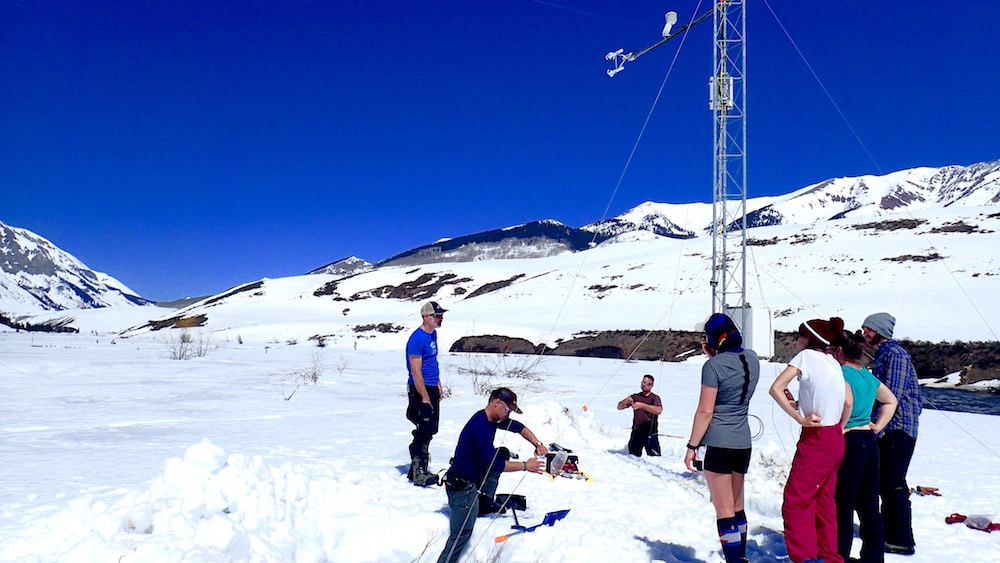
A recent study sponsored by the DOE’s Watershed Function Scientific Focus Area project, which is led by Berkeley Lab, explored how reduced snowpack and earlier snowmelt caused by climate change can impact water supply in high-mountain areas. https://newscenter.lbl.gov/2019/09/30/how-does-climate-change-affect-mountainous-watersheds-that-give-us-our-water/
Video Highlights Lab’s Dark Energy Research
Berkeley Lab’s David Schlegel and Claire Poppett were featured in a video produced by the science website Seeker on efforts to build DESI — a massive dark energy hunting machine to probe the far reaches of the universe for clues of this mysterious force. https://youtu.be/s0P9hj1R_Zw