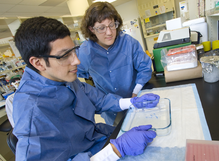
Of the 52 talented graduate students selected to conduct research at the national labs, 14 will head to Berkeley Lab for their research this fall and winter. The DOE Office of Science Graduate Student Research Program prepares graduate students for STEM careers by providing research opportunities. https://science.osti.gov/wdts/scgsr/SCGSR-Awards
Turning Plants into Biofactories for New Molecules
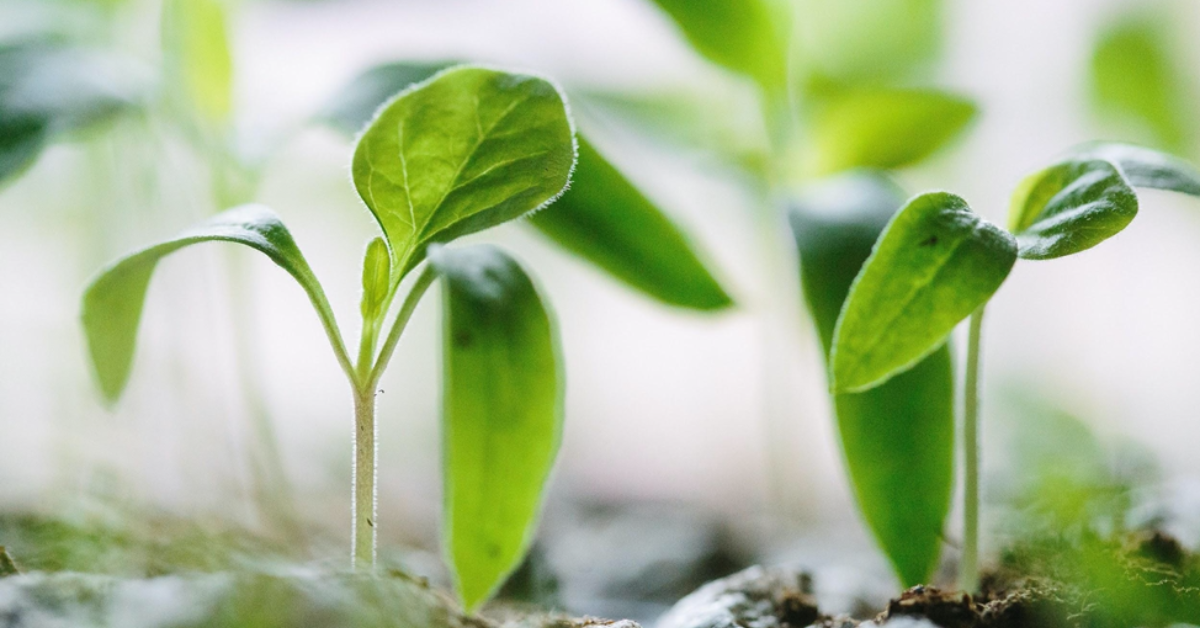
Scientists at the Joint BioEnergy Institute (JBEI) are using synthetic biology to give plants the ability to create new classes of chemical compounds, some of which have anti-cancer properties. https://newscenter.lbl.gov/2020/09/30/plants-biofactories-new-molecules/
Rewriting the Rules for 2D Electronics
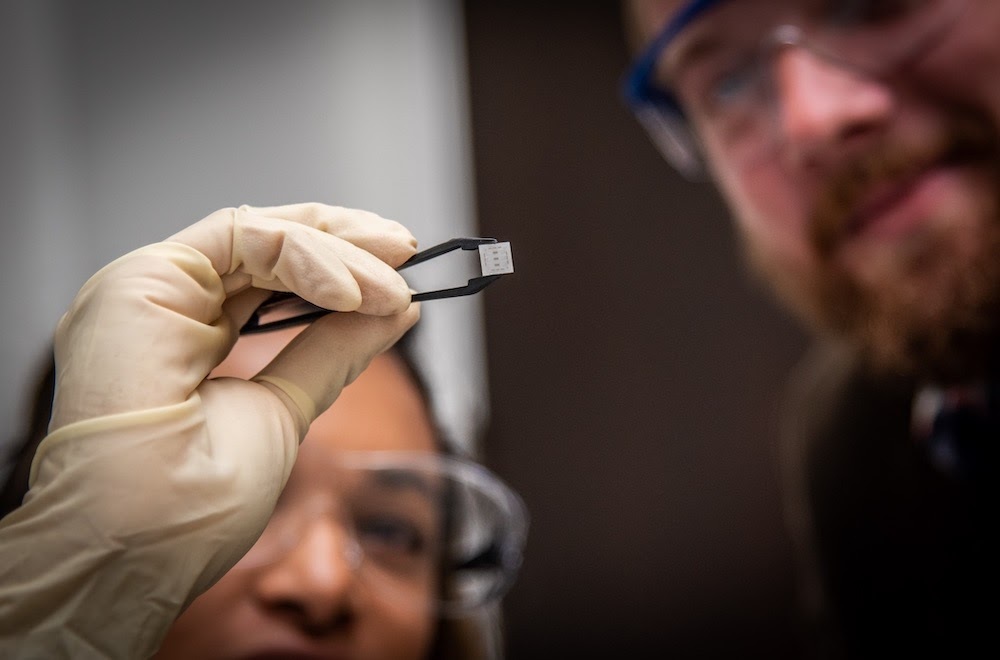
A team led by Alex Zettl, senior faculty scientist in Berkeley Lab’s Materials Sciences Division and UC Berkeley professor of physics, has developed a new technique for fabricating tiny circuits from ultrathin materials for next-generation electronics, such as rewritable, low-power memory circuits. https://newscenter.lbl.gov/2020/09/30/rewrite-rules-for-2d-electronics/
SLAM Friday: Seeing Through the Future of Batteries
Yang Ha of the Advanced Light Source uses the soft X-ray facility at the ALS to better understand chemical reactions in batteries. Watch Yang’s SLAM presentation to find out more about his research. https://slam.lbl.gov/2020-slam/2020-slam-finalists/yang-ha
Cyclotron Road Application Period Now Open
Applications are open for Cyclotron Road, which supports entrepreneurial scientists and engineers developing technology solutions to society’s urgent needs. Fellows receive startup training and embed at Berkeley Lab while transforming a concept into a product. Applications are due Oct. 30. https://www.cyclotronroad.org/apply
Snapshots of Electrons Harvesting Light
Scientists led by Berkeley Lab have gained important new insight into electrons’ role in the harvesting of light in artificial photosynthesis systems. Their findings can help researchers develop more efficient material combinations for the design of high-performance solar fuel devices. https://newscenter.lbl.gov/2020/09/30/capture-electrons-harvesting-light/
Tarantula Toxins and Ion Channels
In recent work by a team of Molecular Foundry users and staff, a tarantula toxin combined with an environment-sensitive chemical is used to image the different conformations of an ion channel in a live cell. The researchers plan to use this tool to understand the role of these channels in neurons. https://foundry.lbl.gov/2020/09/28/colorful-tarantula-toxins/
S&T Risk Matrix Designed to Protect U.S. Interests
The new DOE Science and Technology Risk Matrix restricts access to certain national lab research by individuals and governments of identified countries of risk. Consult with your Area and Division leadership about collaborative research with these countries. https://stratcomm-elements.lbl.gov/2020/09/29/does-science-and-technology-matrix-collaborating-with-international-researchers-while-protecting-u-s-interests/
Shhh! Tests To Enable Quieter Search for Dark Matter
The subatomic world just got a lot quieter for the LUX-ZEPLIN (LZ) dark matter experiment. The LZ collaboration has completed 1,200 tests that describe the levels of radioactive decay of the LZ detector components and help to ensure a low level of background “noise” from unwanted particle signals. https://newscenter.lbl.gov/2020/09/28/shhh-these-tests-will-enable-quieter-dark-matter-search/
Machine Learning Takes On Synthetic Biology
We have vegan burgers that taste like meat and synthetic collagen to enhance beauty thanks to synthetic biology. It’s a field rife with potential — such as engineering microbes to help fight cancer — but current bioengineering methods are slow and laborious. Machine learning could help that process. https://newscenter.lbl.gov/2020/09/25/machine-learning-takes-on-synthetic-biology-algorithms-can-bioengineer-cells-for-you/