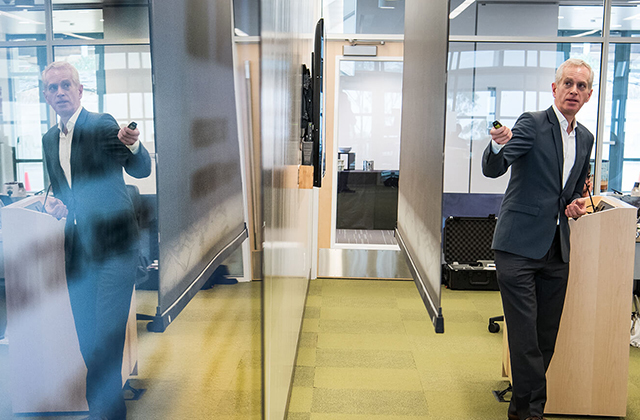
The director of the Climate and Ecosystem Sciences Division, Bill Collins, has been named a 2020 American Geophysical Union Fellow, one of 62 individuals named to this year’s class. The AGU Fellows program recognizes members who have made exceptional contributions to the Earth and space sciences. https://eesa.lbl.gov/bill-collins-named-agu-fellow/
Understanding Electronic Structure in MXenes
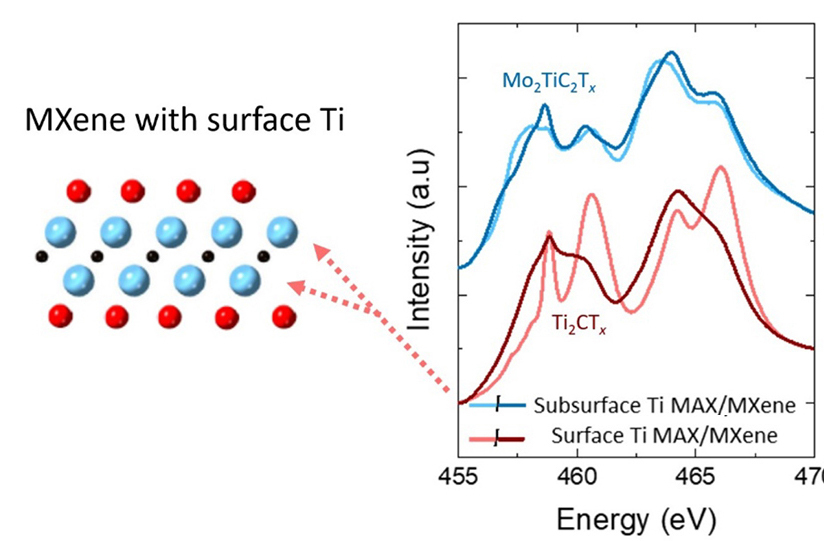
MXenes (pronounced “maxenes”) are tunable 2D materials of interest for use in applications ranging from energy storage to water purification. ALS experiments on titanium-based MXenes helped identify a path toward engineering them for desired electronic, magnetic, or topological properties. https://als.lbl.gov/understanding-electronic-structure-in-mxenes-one-atomic-layer-at-a-time/
Experimental Drug Targets HIV in a Novel Way
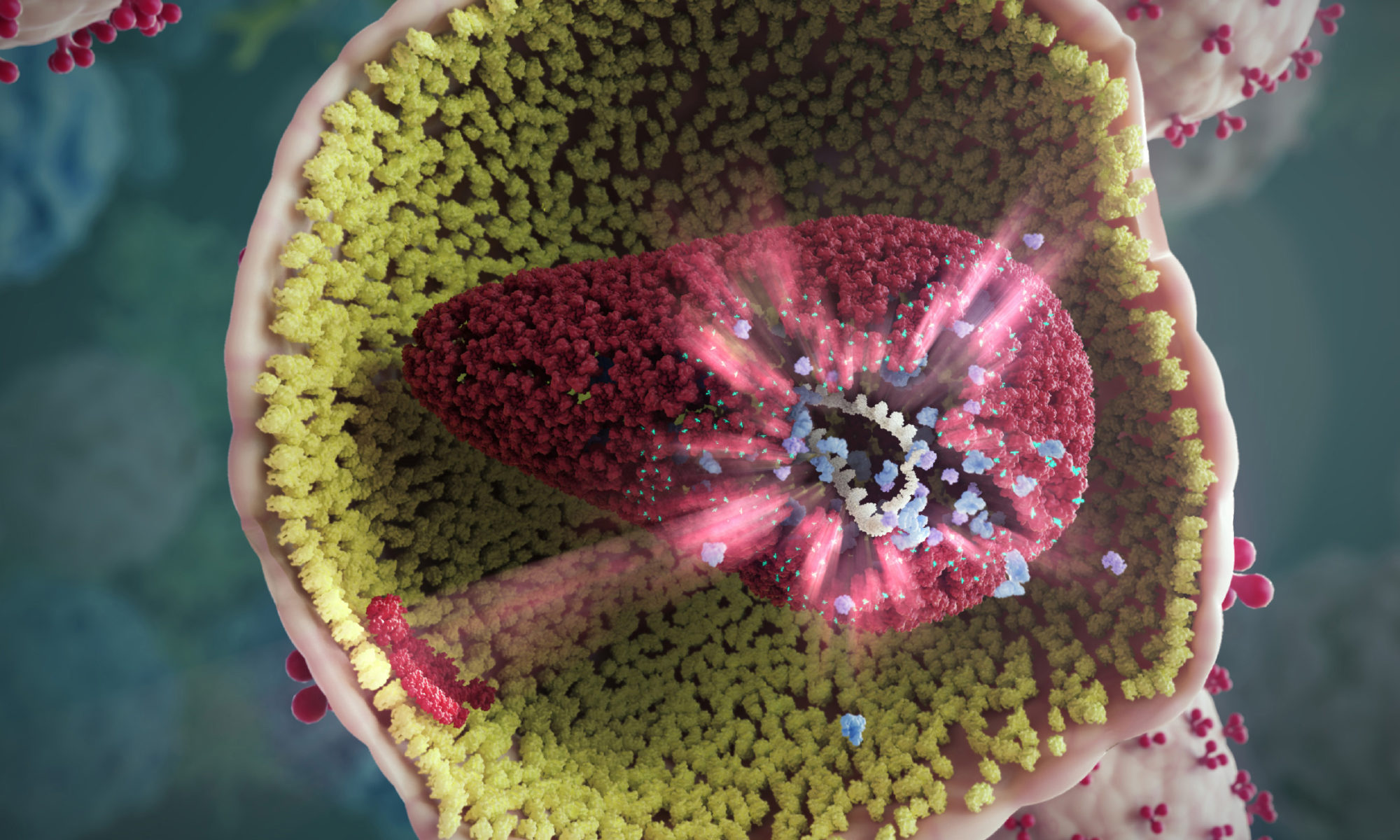
At the ALS, researchers studied how an experimental HIV drug targets a type of protein that forms a shield around the viral RNA. The work could lead to a long-lasting HIV treatment that overcomes the problem of drug resistance and avoids the need for daily pill-taking. https://als.lbl.gov/experimental-drug-targets-hiv-in-a-novel-way/
Taking Magnetic Memory by Storm
A team co-led by Molecular Foundry scientists published a study on nanoscale magnetic structures called skyrmions that could put a new spin on tomorrow’s memory and logic devices. They created and stabilized magnetic skyrmions at room temperature without applying an external magnetic field. https://foundry.lbl.gov/2020/09/18/skyrmions/
Methane-Eating Microbes Help Reduce Greenhouse Gas
Scientists have determined the structure of a unique enzyme produced by a species of methane-eating bacteria that converts the greenhouse gas into methanol – a highly versatile liquid fuel and industrial product ingredient. Their new study is the first to report the structure of the enzyme. https://newscenter.lbl.gov/2020/11/13/methane-eating-microbe-enzyme/
SLAM Friday: Where Water Comes From
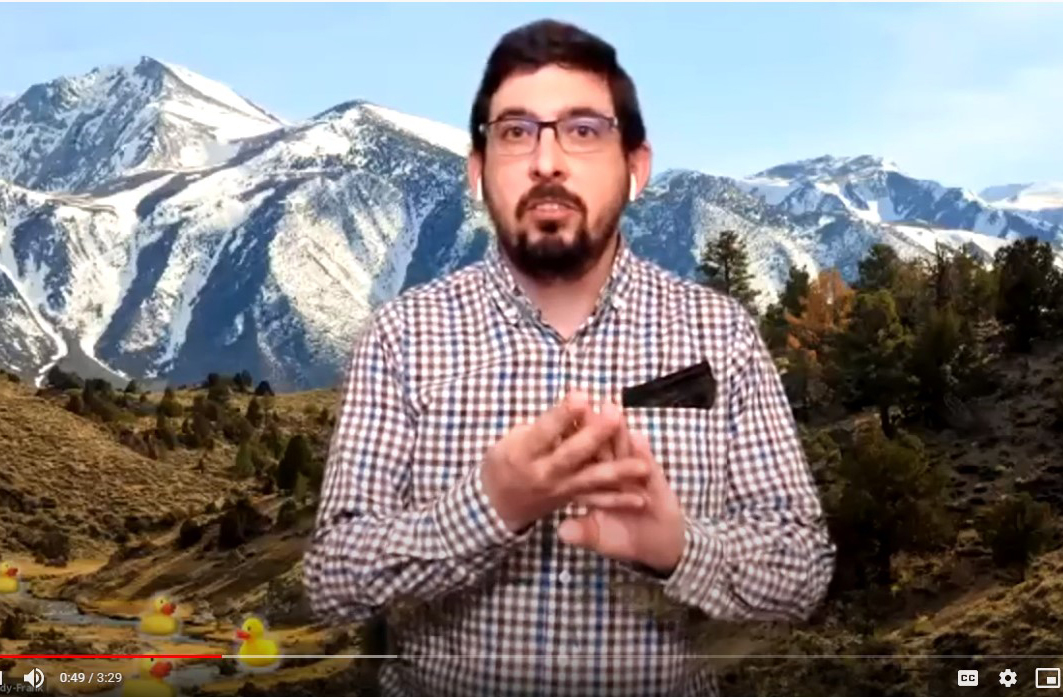
James Dennedy-Frank, of the Earth and Environmental Sciences Area, researches how watersheds function to ensure reliable water resources as a changing climate alters landscapes. Watch James’ SLAM presentation to find out more. https://slam.lbl.gov/2020-slam/2020-slam-finalists/p-james-dennedy-frank
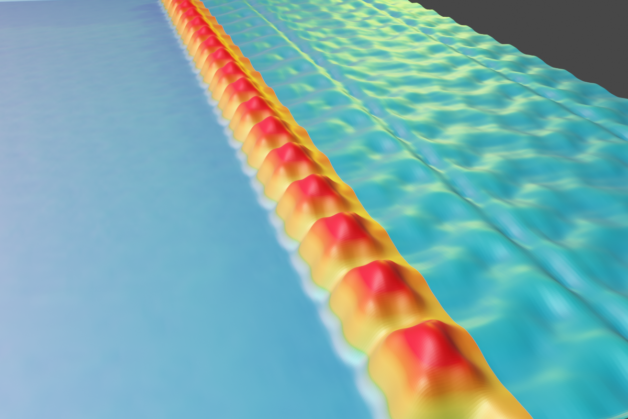
Charges Cascading Along a Molecular Chain
A team of researchers led by Berkeley Lab has developed a method to fabricate a one-dimensional array of individual molecules and to precisely control its electronic structure. https://newscenter.lbl.gov/2020/11/12/charges-cascading-molecular-chain/
Increasing the Efficiency of CO Catalytic Conversion
Using a combination of tools at the ALS and elsewhere, researchers probed the mechanisms affecting the catalytic conversion of carbon monoxide to carbon dioxide. The work brings us closer to the rational design of more effective catalysts for cleaning up toxic carbon monoxide exhaust. https://als.lbl.gov/increasing-the-efficiency-of-co-catalytic-conversion/
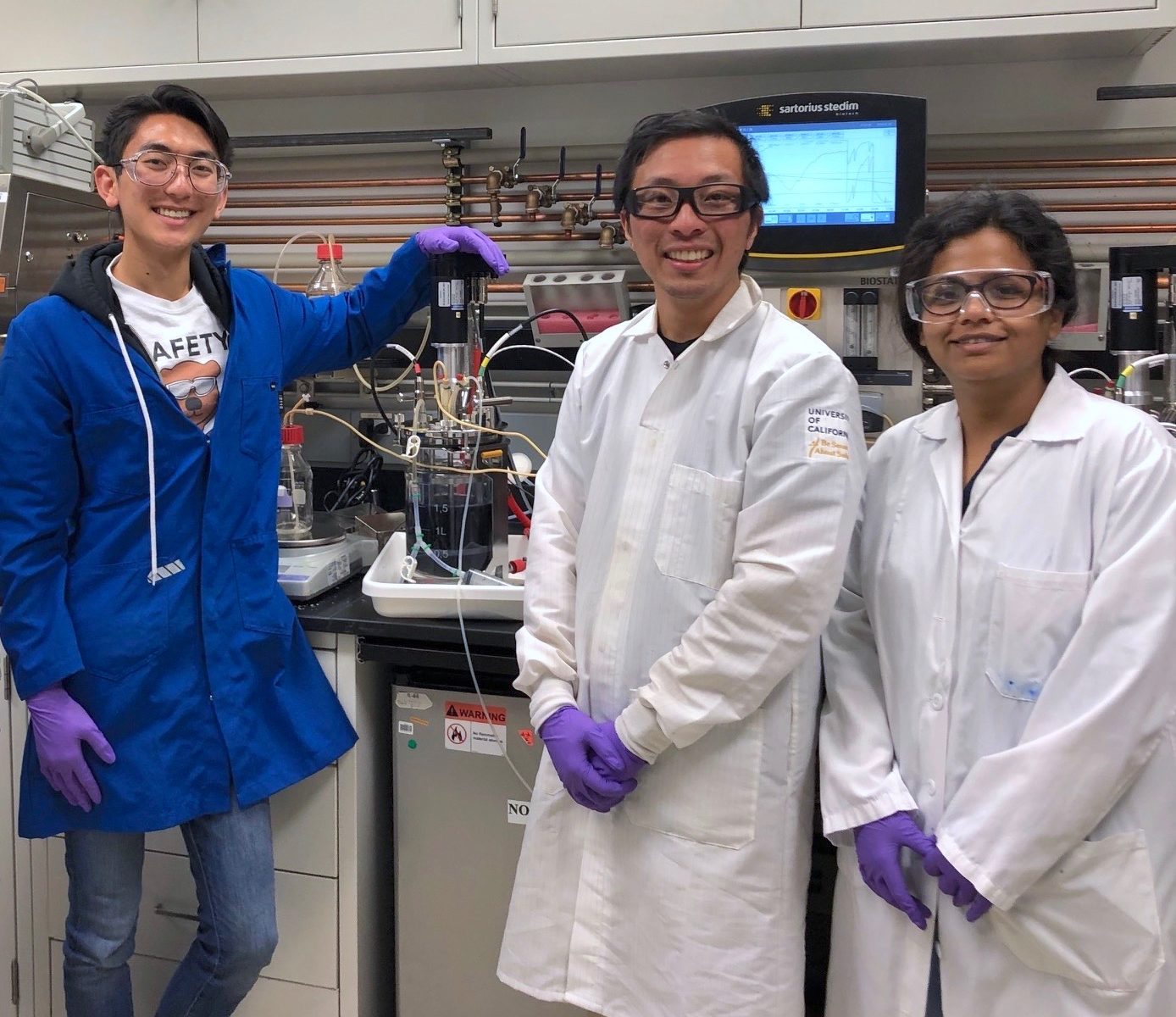
Rewiring’ Technique Promises Biomanufacturing Boom
Researchers achieved unprecedented success in modifying a microbe to produce a compound of interest using a computational model and CRISPR-based gene editing. This could speed up R&D for advanced bio-based products, such as sustainable fuels and plastic alternatives, and speed time to market. https://newscenter.lbl.gov/2020/11/10/microbe-rewiring-biomanufacturing/
How to Accelerate Solar Adoption for the Underserved
As rooftop solar prices have fallen, households at all income levels can now save money by going solar. But low- and moderate-income households remain less likely to adopt solar than high-income households. Lab researchers examined if policy and business models could improve adoption equity. https://newscenter.lbl.gov/2020/11/09/how-to-accelerate-solar-adoption-for-the-underserved/