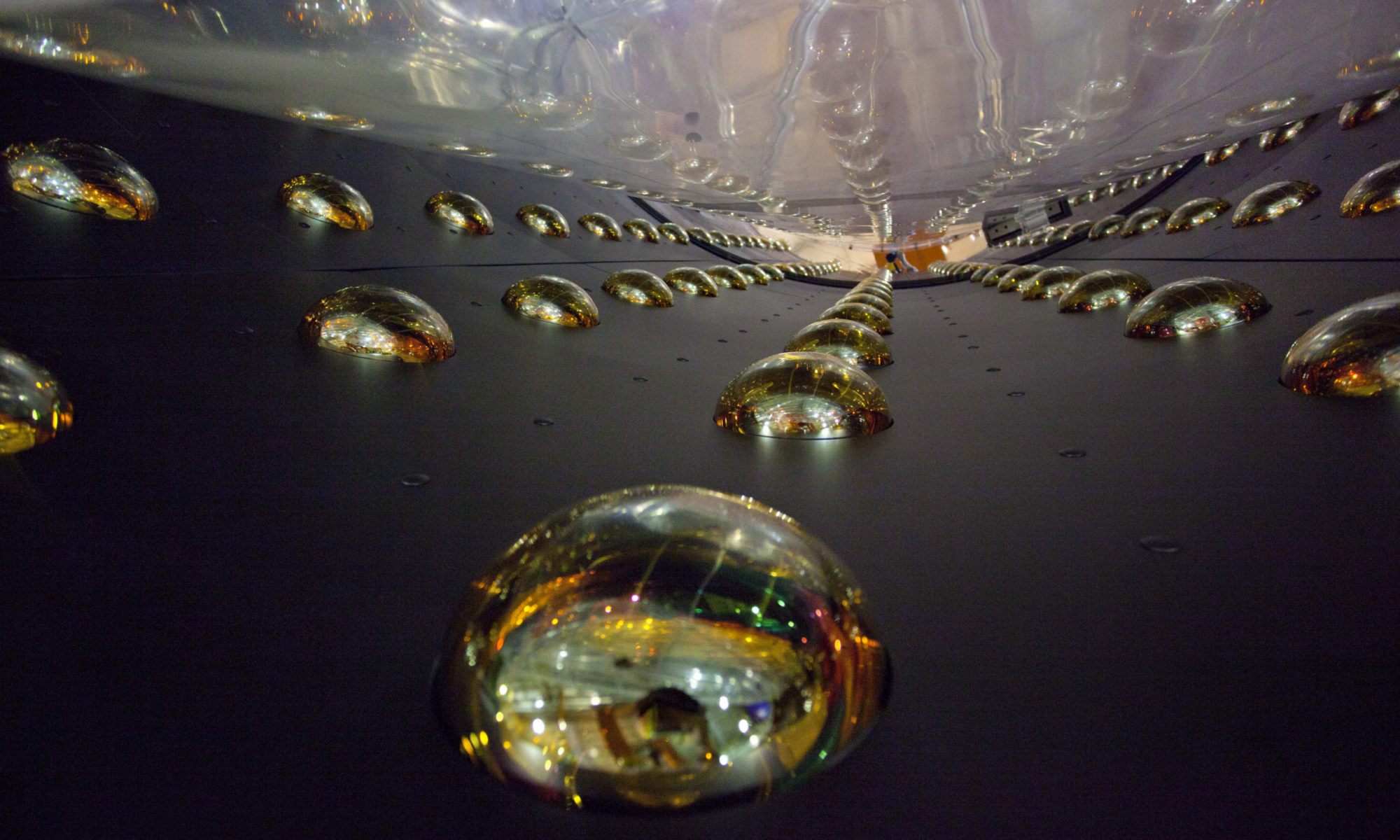
The Daya Bay Reactor Neutrino Experiment – which made a precise measurement of an important neutrino property eight years ago, setting the stage for a new round of experiments and discoveries about these hard-to-study particles – has finished taking data, and analysis of these measurements begins. https://newscenter.lbl.gov/2020/12/11/scientists-say-farewell-to-daya-bay-site-proceed-with-final-data-analysis/
SLAM Friday: Peering at Matter With an Electron Eye
From Energy Sciences, Khalid Siddiqui uses ultrashort lasers and electron beams (durations on the order of 10s of a millionth of a billionth of a second) to study how fundamental interactions occur inside materials. Watch Khalid’s SLAM presentation to find out more. https://slam.lbl.gov/2020-slam/2020-slam-finalists/khalid-siddiqui
Gaining Insight Into Phage-Microbe Interactions
A new approach for studying phage-bacteria interactions will help scientists study the intricate offensive and defensive chemical tactics used by parasites and hosts. These microscopic battles have implications for medicine development, agricultural research, and climate science. https://newscenter.lbl.gov/2020/12/10/phages-natures-hidden-arsenal/
This Anti-COVID Mask Breaks the Mold
To address PPE shortages during the pandemic, scientists at Berkeley Lab and UC Berkeley are developing a rechargeable, reusable, anti-COVID N95 mask and a 3D-printable silicon-cast mask mold. https://newscenter.lbl.gov/2020/12/09/anti-covid-mask-breaks-mold/
NMDC Seeks Feedback on Microbiome Data Science
The Berkeley Lab-led National Microbiome Data Collaborative (NMDC) — which supports collaborative microbiome data exploration and discovery — is surveying to understand how the microbiome research community works with microbiome data to guide their work. Share your perspective. https://singuser55b31234.sjc1.qualtrics.com/jfe/form/SV_5pYLd5CS7ouEul7
AI for More Efficient Flying Qubits
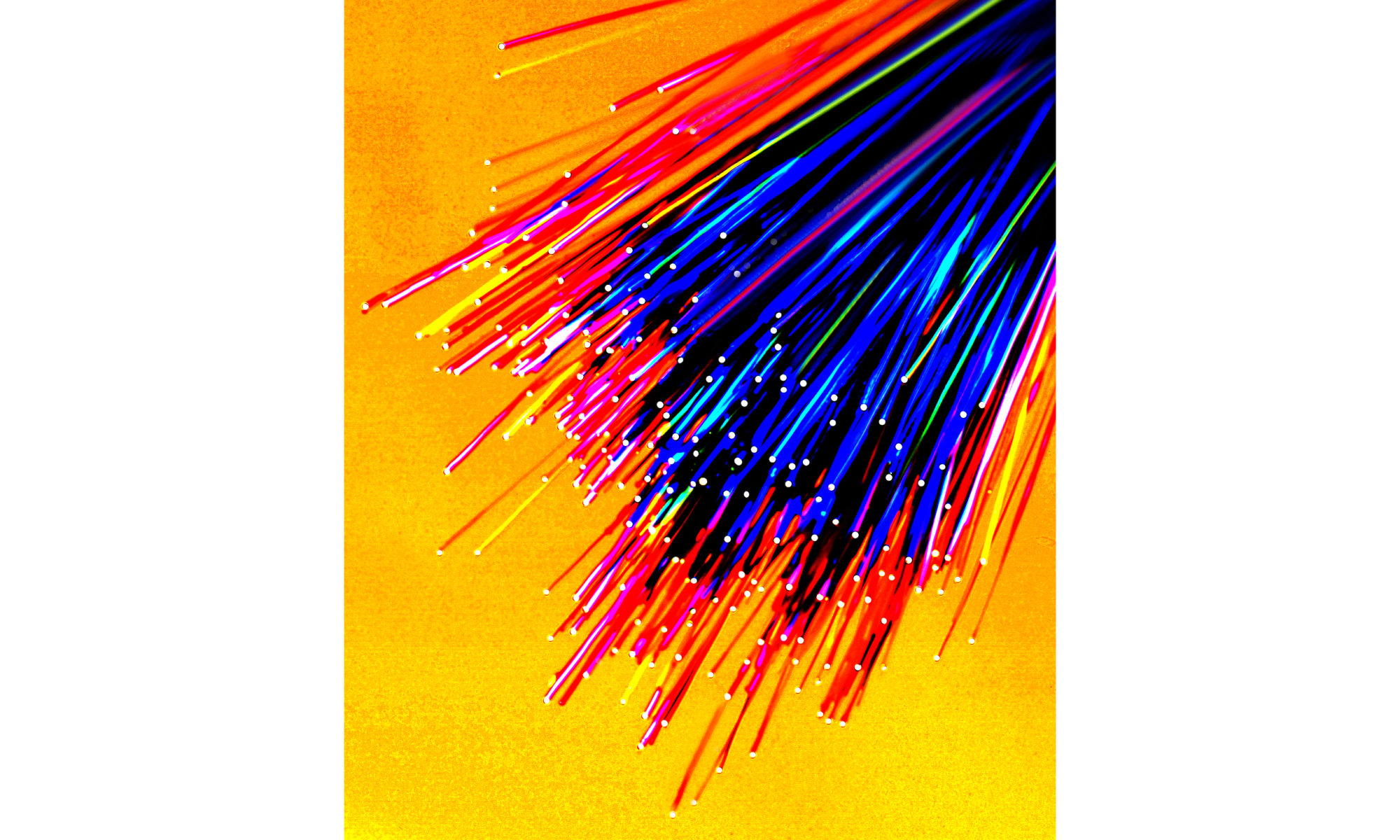
Berkeley Lab researchers use AI to help solve a key challenge to the widespread adoption of quantum computers: connecting them via fiber optic cabling efficiently. https://cs.lbl.gov/news-media/news/2020/ai-for-efficient-flying-qubits/
Neutrino Detection Snags Nature Cover Story
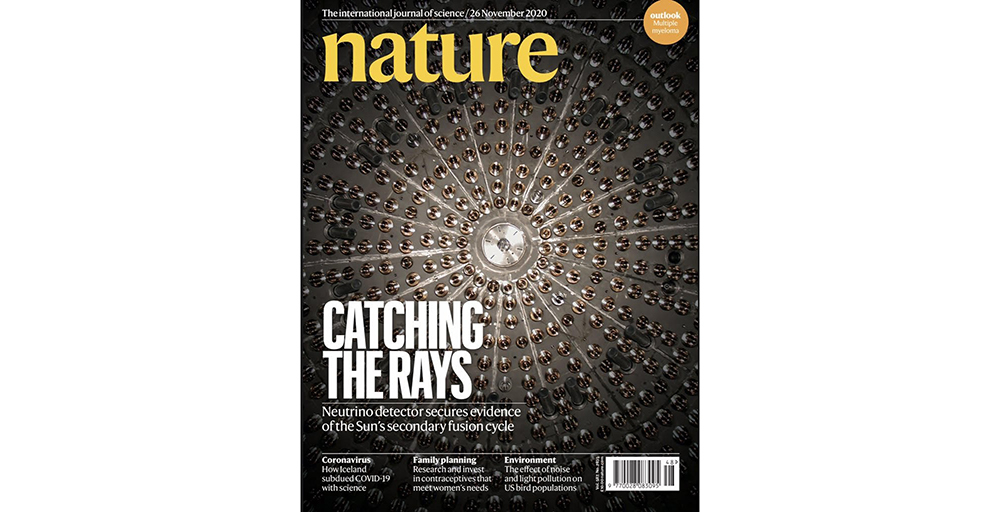
A recent Nature cover story on the first detection of neutrinos produced by the Sun’s secondary solar-fusion cycle features contributions by Nuclear Science’s Zara Bagdasarian, and peer review and article by Gabriel Orebi. This research sheds light on the Sun’s structure and massive star formation. https://www.nature.com/articles/d41586-020-03238-9
Designing Optical Properties With Machine Learning
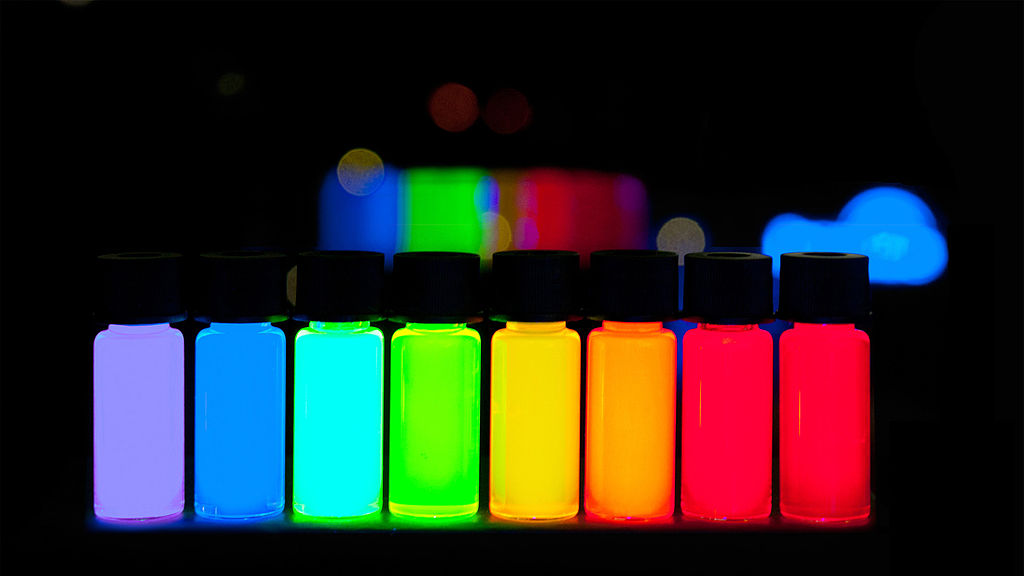
Lab scientists have developed a machine learning model that can calculate optical properties of a known structure and, inversely, design a structure with desired optical properties. Understanding how matter interacts with its optical properties is critical for energy and biomedical technologies. https://newscenter.lbl.gov/2020/12/02/a-machine-learning-solution-for-designing-materials-with-desired-optical-properties/
90 Years of Neutrino Science
The Lab has a long history of participating in neutrino experiments and discoveries, from a site 1.3 miles deep at a nickel mine in Ontario, Canada, to an underground research site near a nuclear power complex northeast of Hong Kong, to a neutrino observatory buried in ice near the South Pole. https://newscenter.lbl.gov/2020/12/04/90-years-of-neutrino-science/
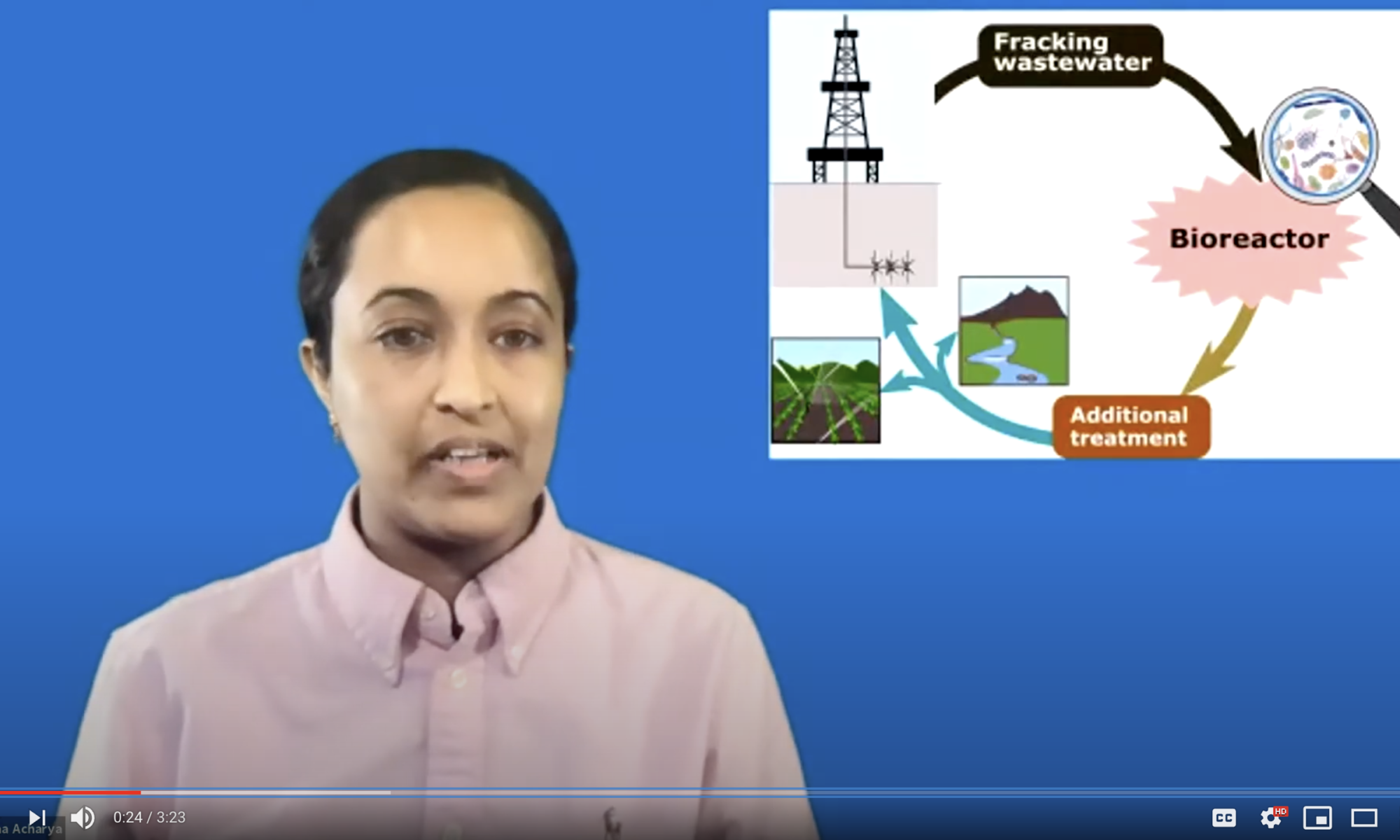
SLAM Friday: How Microbes Clean Fracking Wastewater
Shwetha Acharya of the Joint Genome Institute studies treating wastewater from hydraulic fracturing processes using microbes to promote reuse. Watch Acharya’s SLAM presentation to find out more. https://slam.lbl.gov/2020-slam/2020-slam-finalists/shwetha-acharya