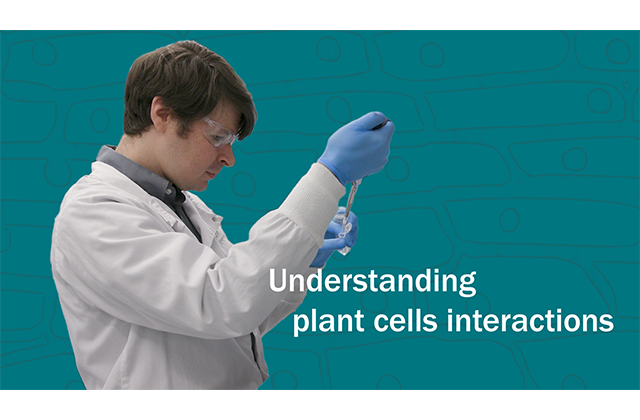
Plants might look simple, but there is a complex universe of cellular activity going on inside their roots, shoots, and leaves. Biologist Benjamin Cole is digging into a new frontier that combines genetic techniques, computer modeling, and experiments to study plant cells’ sophisticated interactions. https://vimeo.com/724622019/f4c6fdcaca
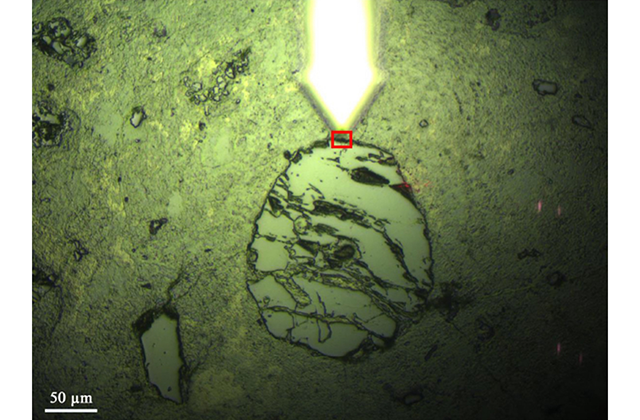
Nanoscale Infrared Study of Meteorite Mineralogy
At the ALS, researchers used infrared light to study the evolution of minerals in a meteorite at the nanoscale. The work sheds light on conditions in the early solar system. It lays the groundwork for analyzing pristine asteroid samples to be returned to Earth by NASA’s OSIRIS-REx mission in 2023. https://als.lbl.gov/nanoscale-infrared-study-of-meteorite-mineralogy/
Bacteria for Blastoff: Using Microbes to Make Supercharged New Rocket Fuel
Biofuel scientists used an oddball molecule made by bacteria to develop a new class of biofuels predicted to have greater energy density than any petroleum product, including the leading aviation and rocket fuels, JetA and RP-1. https://newscenter.lbl.gov/2022/06/30/bacteria-for-blastoff/
First Experiment by Facility for Rare Isotope Beams (FRIB) Is a Success
The first experiment at FRIB — which studied the beta-decay of calcium-48 fragments that are so unstable that they exist for mere fractions of a second — concluded successfully. The Lab’s Heather Crawford led the experiment at Michigan State University. https://frib.msu.edu/news/2022/first-experiment.html?utm_medium=email&utm_source=govdelivery
Robot Wranglers in Biosciences
The EcoBOT, an all-in-one experimental station, is helping Biosciences Area researchers understand the mechanics of plant and microbe interactions. The EcoBOT will eventually use artificial intelligence to analyze experimental data and decide the logical next steps to guide future experiments. https://biosciences.lbl.gov/2022/03/07/behind-the-breakthroughs-pete-andeer/
Data Management Platform Strengthens Wildland Fire Science
Researchers need to store, manage, and harmonize relevant data to better understand and predict wildland fire hazards, risks, and behaviors. Researchers at the Computing Science Area at the Lab are doing just that. https://eesa.lbl.gov/strengthening-wildland-fire-science-and-scientific-collaboration-through-new-data-management-platform/
QPIXL Transforms Quantum Processing of Image-Based Science Data
Quantum computing offers the possibility of analyzing petabytes of images produced by complex experiments, instruments, and simulations. A Lab team recently introduced QPIXL. The quantum image framework outperforms other quantum image representations. https://crd.lbl.gov/news-and-publications/news/2022/innovation-transforms-quantum-processing-of-image-based-scientific-data/
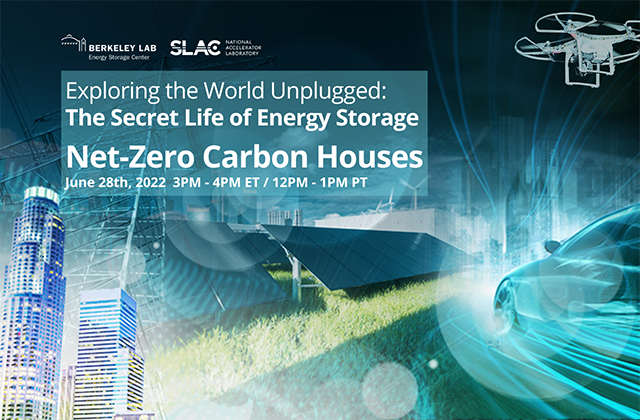
Net-Zero Carbon Houses – The Secret Life of Energy Storage
On June 28, join the Energy Storage Center & SLAC for a virtual tour of a net-zero carbon house. Learn about the role energy storage plays, how to scale up, and what the future of buildings may look like with a new generation of energy storage technologies like thermal energy storage. http://secretlifeofenergystorage.lbl.gov/
Simulations at NERSC Drive Progress Toward Nuclear Fusion
Scientists hope to harness nuclear fusion, the process that produces light and heat in stars, to produce clean, safe, renewable energy on Earth. Using simulations performed at the National Energy Research Scientific Computing Center (NERSC), researchers have made new progress toward that goal. https://cs.lbl.gov/news-media/news/2022/simulations-at-nersc-drive-progress-toward-nuclear-fusion/
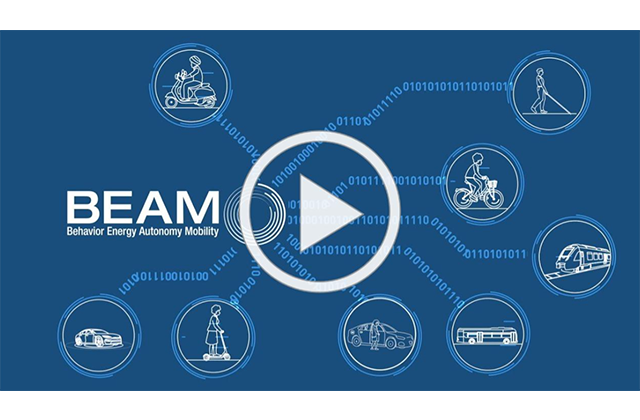
BEAM Modeling Tool Assists Transportation Planning Decisions
BEAM, an agent-based modeling tool, can assess strategies before transportation policies or services are rolled out. Watch how BEAM can guide the sustainable and equitable deployment of new mobility technologies at scale. https://transportation.lbl.gov/beam/#beam-video