Buildings consume 75 percent of electricity in the U.S. A recently published Lab study finds that more energy-efficient and flexible buildings could be a substantial resource for the electric grid and help avoid the need to build coal- or gas-fired power plants. https://newscenter.lbl.gov/2021/07/21/how-managing-building-energy-demand-can-aid-the-clean-energy-transition/
Main Attraction: Scientists Create World’s Thinnest Magnet
Discovered by scientists at the Lab and UC Berkeley, an ultrathin magnet that operates at room temperature could lead to new applications in computing and electronics – such as high-density, compact spintronic memory devices – and new tools for the study of quantum physics. https://newscenter.lbl.gov/2021/07/20/worlds-thinnest-magnet/
Tuning Semimetallicity Using Thin Films and Interfaces
With ALS data, scientists gained insight into a semimetal’s unusual electronic behavior. The work laid out a basic strategy for engineering the electronic properties of semimetallic materials, which are useful for applications ranging from thermoelectrics to solar cells and semiconductor devices. https://als.lbl.gov/tuning-semimetallicity-using-thin-films-and-interfaces/
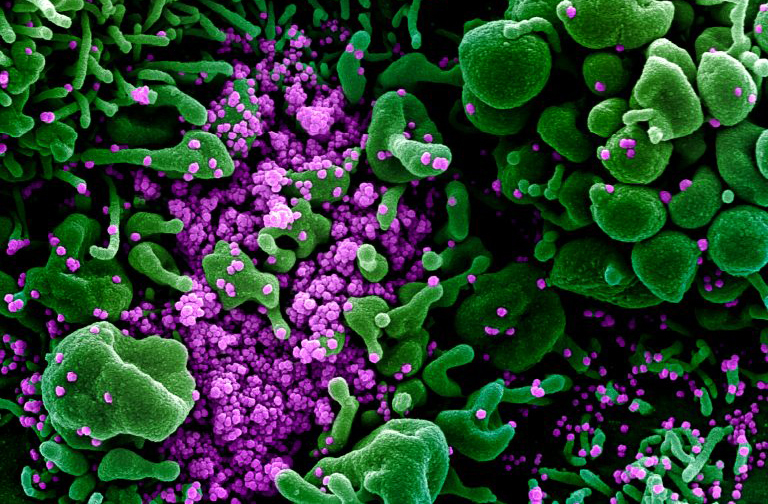
Deconstructing the Infectious Machinery of COVID-19
A recently published study co-authored by Lab staff scientist Greg Hura, which included scientists and support from three national labs, may help reveal potential weak spots of the SARS-CoV-2 virus for drug development. https://newscenter.lbl.gov/2021/07/19/infectious-machinery-of-covid19/
EGD Prepares to Track San Andreas Fault Movement
Energy Geosciences Division (EGD) researchers are preparing to deploy new instrumentation developed at the Lab’s Geosciences Measurement Facility across portions of the San Andreas Fault. The goal of the project is to document the complex interplay of plate boundary tectonics. https://eesa.lbl.gov/egd-researchers-prepare-to-track-movement-along-san-andreas-fault/
What If We Could Give Viruses a One-Two Punch?
Researchers at the Lab’s Molecular Foundry are helping a Stanford researcher design virus-fighting molecules that could treat herpes and COVID-19. The researchers are encouraged by results from peptide-like molecules they created, called “peptoids,” that can inactivate viruses. https://berkeleylab.exposure.co/what-if-we-could-give-viruses-a-onetwo-punch
NERSC Resources Power Advances in Solar Cell Efficiency
New research out of the University of California, Santa Barbara (UCSB), leveraging supercomputing resources at the National Energy Research Scientific Computing Center (NERSC), could help solar energy pick up the pace by improving the efficiency of a new type of solar cell. https://cs.lbl.gov/news-media/news/2021/nersc-resources-power-advances-in-solar-cell-efficiency/
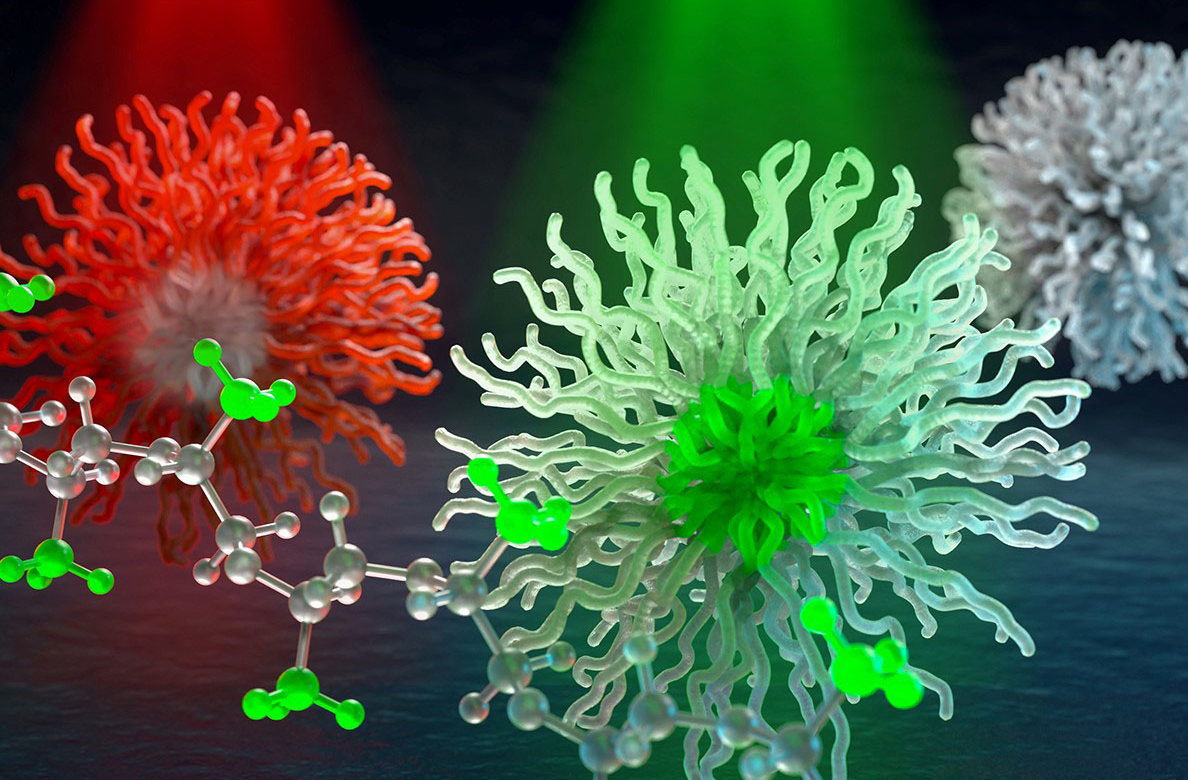
Label-Free Characterization of Organic Nanocarriers
An experimental technique developed at the Advanced Light Source provides crucial information about organic nanocarriers — molecules that encapsulate other molecules. The results will enable faster development of new technologies, ranging from targeted drug delivery to oil-spill remediation. https://als.lbl.gov/label-free-characterization-of-organic-nanocarriers/
EESA Leads Research on the Future of Tropical Forests
Researchers in the Earth and Environmental Sciences Area (EESA) are leading the Next Generation Ecosystem Experiments (NGEE)-Tropics project, which strives to better understand and predict the ability of tropical forests to exchange carbon, water, and energy amid environmental and land-use changes. https://storymaps.arcgis.com/stories/1355e117d1524d73b6236733759f9fd1
Lab Invention Spotlight: Turning CO2 into Valuable Carbon Products
Carbon dioxide can be reduced into valuable products through electrochemical catalysis, but today’s methods are very inefficient. An ESA team combined biological catalysts with molecular catalysts to create a new iron-based catalyst that is small, tunable, efficient, and highly productive. https://ipo.lbl.gov/metal-ligand-exchange-coupling-for-electrochemical-co2-reduction/