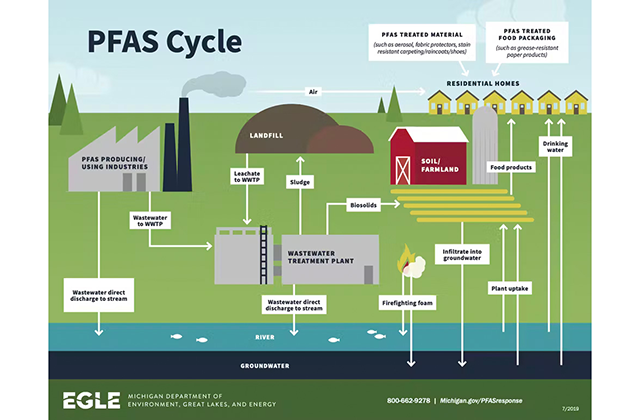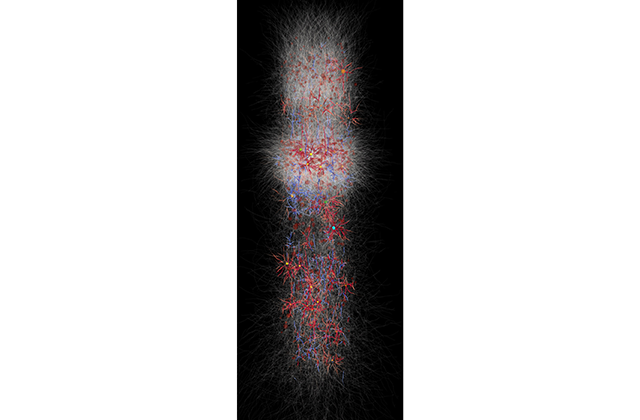
With the growing awareness about the risks posed by “forever chemicals” in our water, soil, and plants, researchers are making new inroads into understanding how PFAS substances function and how we might be able to mitigate their harmful effects. A recent study used NERSC simulations to learn more. https://www.nersc.gov/news-publications/nersc-news/science-news/2022/simulations-run-at-nersc-target-forever-chemicals-in-soils/
Machine Learning Paves Way for Smarter Particle Accelerators
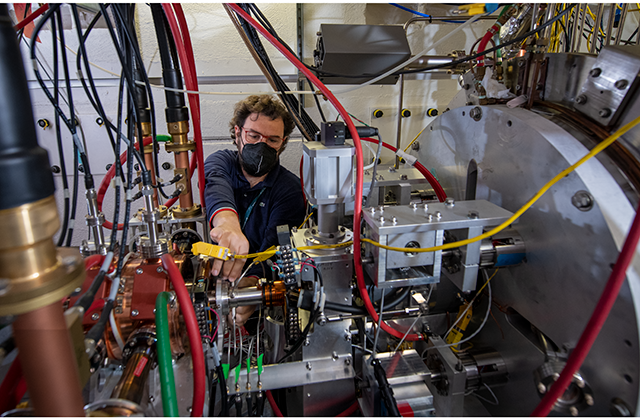
Scientists have developed a new machine-learning platform that makes algorithms that control particle beams and lasers smarter than before. Their work could help lead to the development of new and improved particle accelerators that will help scientists unlock the secrets of the subatomic world. https://newscenter.lbl.gov/2022/07/19/ml-particle-accelerators/
Neuroscience Simulations at NERSC Shed Light on Origins of Human Brain Recording
Where does electrical activity recorded on the surface of the brain come from? What determines which electrical signals get recorded? Using simulations run at the National Energy Research Scientific Computing Center (NERSC), researchers at the Lab have zeroed in on answers to these questions. https://www.nersc.gov/news-publications/nersc-news/science-news/2022/neuroscience-simulations-at-nersc-shed-light-on-origins-of-human-brain-recordings/
Video: Celebrating the JGI’s 25th anniversary: Building a Better Bean
The 2014 publishing of the original genome sequence for the common bean by the Joint Genome Institute fueled research into disease tolerance, stress resistance, and nitrogen fixation. Hear from Phil McClean and Jeremy Schmutz about how it all came together and the implications of a better bean. https://jgi.doe.gov/jgi-at-25-building-a-better-bean/
July 21: Midday Science Cafe – Combating Climate Change Using CRISPR
Learn how scientists are putting the gene-editing tool, CRISPR, to work by tackling the causes of climate change in a Midday Science Cafe on Thursday, July 21 at noon. Some examples are reducing dependence on fossil fuels and counteracting its effects on industries such as agriculture. https://gcr.lbl.gov/community/midday-cafe
Removing Nitrogen from Wastewater Using Horizontal Levees
Nitrogen in treated municipal wastewater has been linked to algal blooms that can devastate coastal ecosystems. Studies done at ALS helped scientists to better understand nitrogen removal from wastewater in horizontal levees — gently sloping strips of land used for subsurface water treatment. https://als.lbl.gov/removing-nitrogen-from-wastewater-using-horizontal-levees/
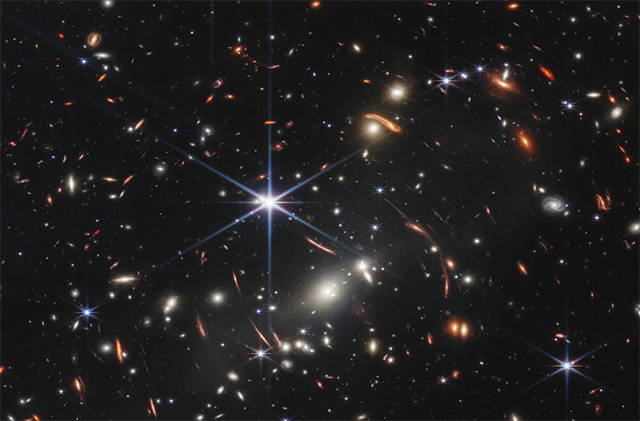
First Images from Webb Telescope Released; Lab’s 88-Inch Cyclotron Played a Part
NASA’s James Webb Space Telescope is releasing images today providing the sharpest infrared image of the distant universe to date. Components for the telescope were tested at the Lab’s 88″ cyclotron with heavy ions, testing memory chips, resolver-to-digital converters, and power components. https://www.nasa.gov/webbfirstimages
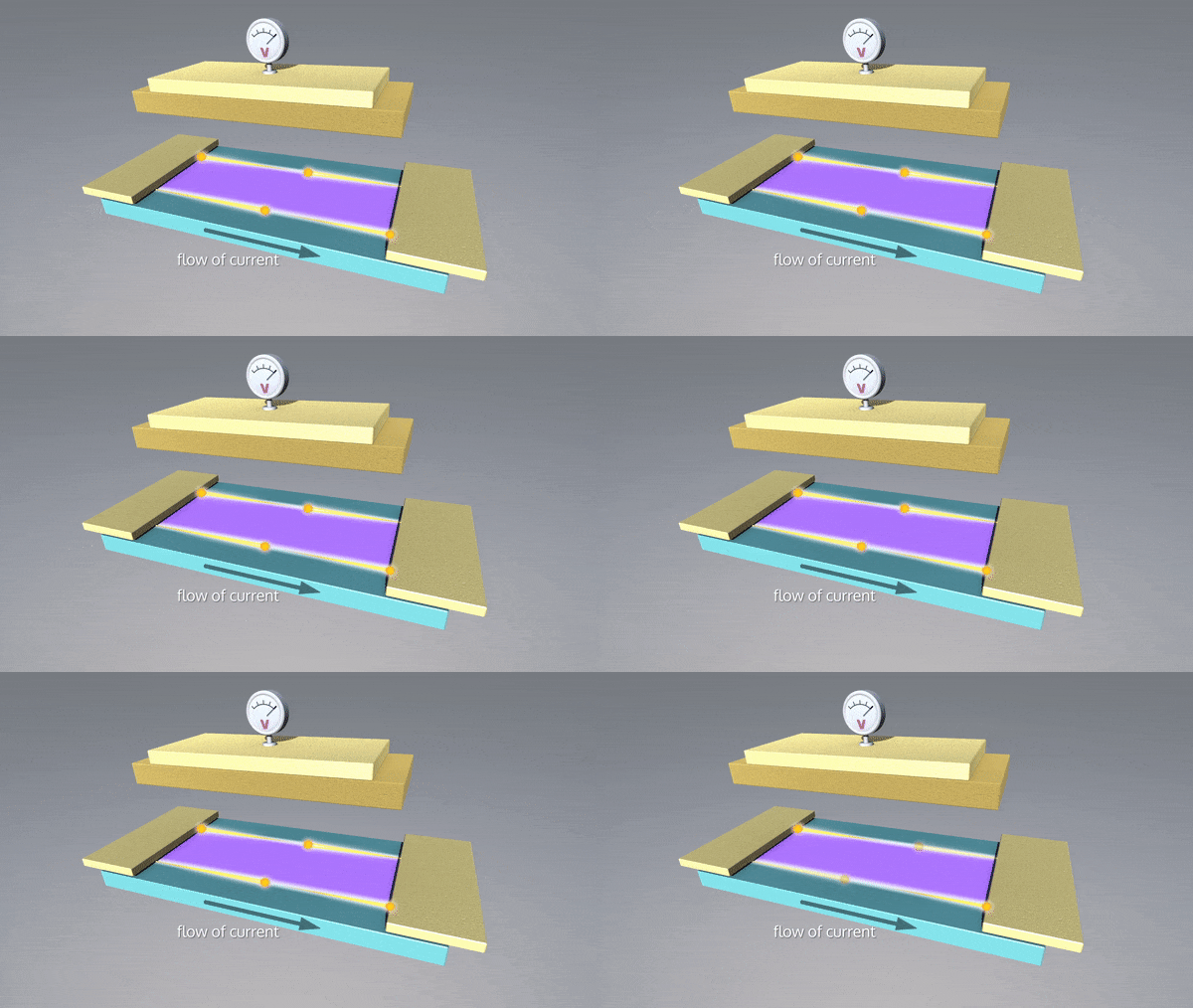
A Topological-Insulator Sandwich for Efficient Microelectronics
At the Advanced Light Source (ALS), researchers synthesized a topological insulator between two ferromagnetic layers and found that it is electronically characterized by a large magnetic band gap. The results could lead to the development of ultra low-energy electronics and spintronics. https://als.lbl.gov/a-topological-insulator-sandwich-for-efficient-microelectronics/
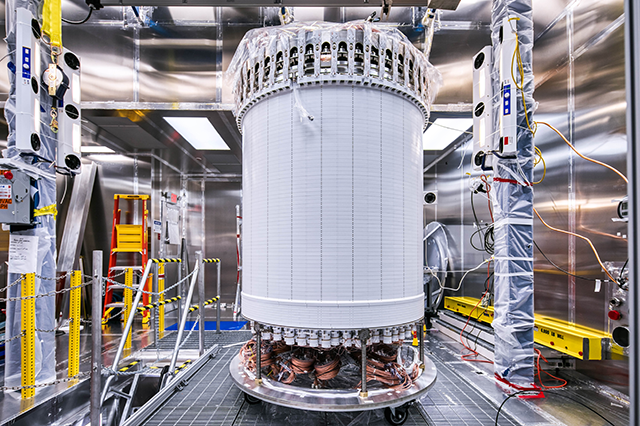
Researchers Affirm Successful Startup of LUX-ZEPLIN Dark Matter Detector
Deep below the Black Hills of South Dakota in the Sanford Underground Research Facility (SURF), an innovative and uniquely sensitive dark matter detector—the LUX-ZEPLIN (LZ) experiment led by Berkeley Lab — has passed a check-out phase of startup operations and delivered the first results. https://newscenter.lbl.gov/2022/07/07/berkeley-lab-researchers-record-successful-startup-of-lux-zeplin-dark-matter-detector-at-sanford-underground-research-facility/
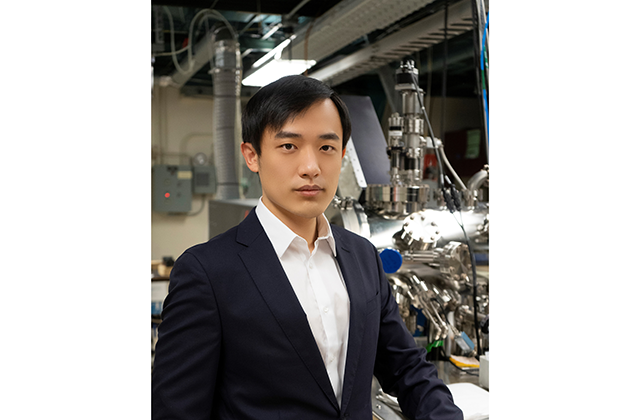
Kaichen Dong Included in MIT’s 35 Innovators Under 35 List
In its annual Innovators Under 35 contest, MIT Technology Review honored postdoctoral affiliate Kaichen Dong of the Materials Sciences Division for his work on a smart roof coating that automatically switches from radiating heat away from a home on a hot day to insulating it in cooler weather. https://www.technologyreview.com/innovator/kaichen-dong/