A years-long study involving scientists and experiments at Berkeley Lab and UC Berkeley concludes that an odd assortment of particles found in beach sands in Japan are most likely fallout debris from the 1945 Hiroshima A-bomb blast. The ALS was used to help conduct measurements for this study. https://newscenter.lbl.gov/2019/05/13/study-concludes-glassy-menagerie-of-particles-in-beach-sands-near-hiroshima-is-fallout-debris-from-a-bomb-blast/
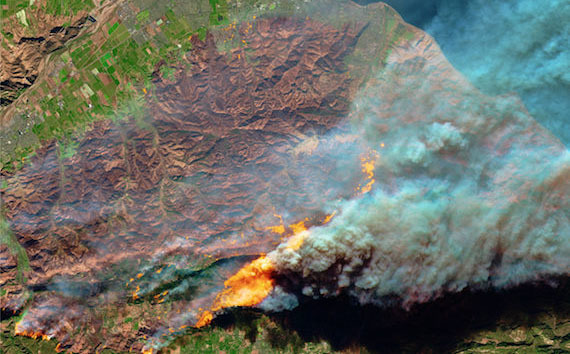
Could There Be an App for Detecting Wildfires?
Based on a study (posted in the journal Peer J) using real-time data from last year’s Camp Fire, EESA researcher Jeff Chambers has proposed the creation of an app that would pull together weather satellite data to help California quickly detect wildfire hot spots and alert emergency responders. https://eesa.lbl.gov/could-there-be-an-app-for-detecting-wildfires/
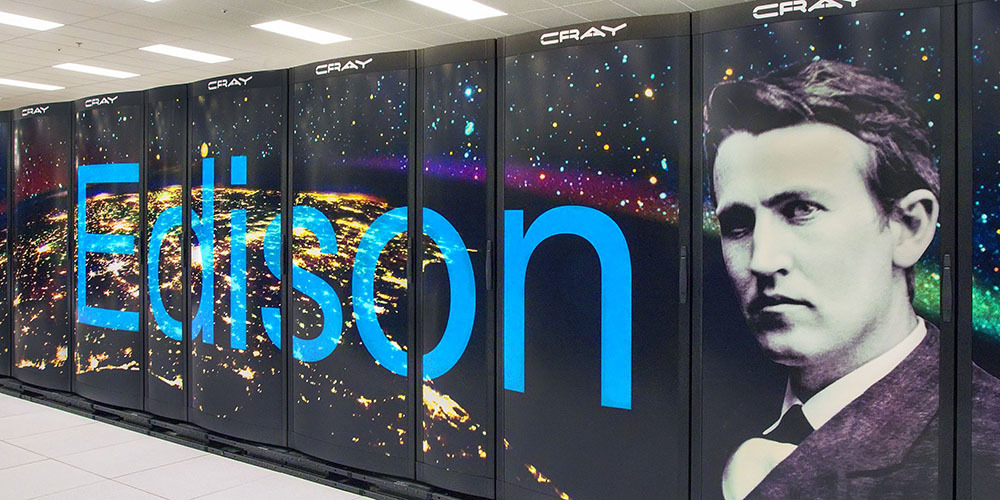
NERSC’s Edison Supercomputer Retires After Five Years of Service
After more than five years of supporting ground-breaking science, NERSC’s Edison supercomputer retired on Monday, May 13. Since coming online in January 2014, Edison has been a mainstay for the DOE’s Office of Science computational workload. https://www.nersc.gov/news-publications/nersc-news/nersc-center-news/2019/edison-supercomputer-to-retire-after-five-years-of-service/
Antibody Uses Mimicry to Block SARS Coronavirus
SARS and MERS are serious, often deadly, respiratory diseases. Using the ALS, researchers learned how antibodies inhibit the viruses from attaching to host cells, as well as how one antibody mimics its natural counterpart to effectively deactivate the SARS virus’s cell-invasion machinery. https://als.lbl.gov/antibody-uses-mimicry-to-block-sars-coronavirus
ETA’s Akanksha Menon Wins Sigma Xi Award
ETA’s Akanksha Menon received the Sigma Xi dissertation award for her work on polymer-based thermoelectrics. The Sigma Xi society recognizes outstanding Ph.D. theses in science and engineering. Menon is an ITRI-Rosenfeld fellow working on materials and technologies for the water-energy nexus. https://sigmaxi.gatech.edu/georgia-tech-sigma-xi-research-awards/
A New Filter to Better Map the Dark Universe
By homing in on a particular type of distortion in the universe’s oldest light, known as the cosmic microwave background, researchers have opened a clearer view of the distribution of all matter in space. https://newscenter.lbl.gov/2019/05/08/new-filter-better-map-dark-universe/
Building a Diverse Pipeline for Science Careers at the Lab
As part of the Berkeley Bridge Graduate Summer Fellowships program, first-year grad students from UC Berkeley will conduct research at the Lab starting in June. The goal, says Deputy Director for Research Horst Simon, is to “increase diversity in the Lab’s future pipeline of applicants.” https://stratcomm-elements.lbl.gov/2019/05/07/building-a-diverse-pipeline-for-science-careers-at-the-lab/
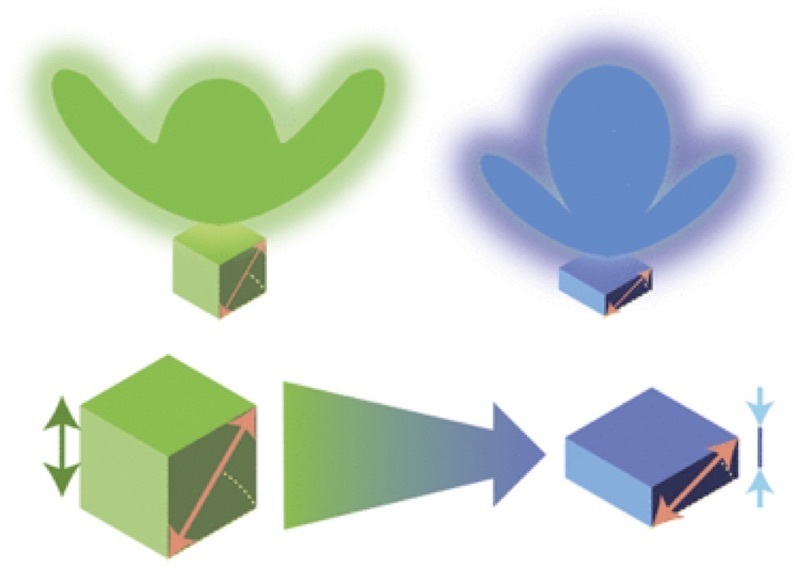
A Promising New Material for More Efficient LEDs
Researchers at the Molecular Foundry have created thin platelets of cesium lead halide perovskites that direct emitted light outward, making them a promising material for efficient LEDs. http://foundry.lbl.gov/#/news/2019-05-03_B.html
In a recent Nature article, EESA researcher Charles Koven co-authored a commentary on how the Arctic permafrost is thawing much more quickly than models have predicted. The researchers warn this might double the warming from greenhouse gases released from tundra.
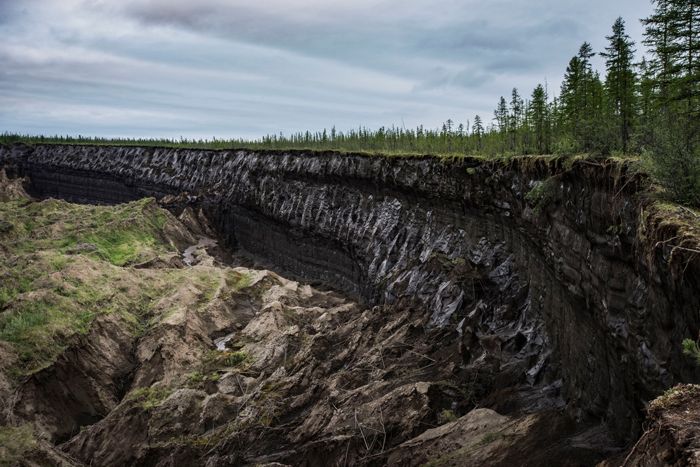
Permafrost Collapse is Accelerating Carbon Release
In a recent Nature article, EESA researcher Charles Koven co-authored a commentary on how the Arctic permafrost is thawing much more quickly than models have predicted. The researchers warn this might double the warming from greenhouse gases released from tundra. https://www.nature.com/articles/d41586-019-01313-4