An article in Forbes magazine examines the stoppage of scientific research during the COVID-19 lock down and the effect it’s having on other critical work, such as climate change. Berkeley Lab is featured in the story, as well as the Lab video that highlighted our near-empty hill site last month. https://www.forbes.com/sites/brentanalexander/2020/05/19/covid-19-is-hampering-rd-and-our-ability-to-fight-climate-change/#18cfbfc814b0
Piette Discusses Building Efficiency Trends in Podcast
Researchers can now collect more building data than ever, and that is transforming approaches to energy efficiency. Mary Ann Piette of the Energy Technologies Area discusses this shift and other trends in building energy efficiency in a recent episode of the podcast Global Minima. https://buildings.lbl.gov/news/article/mary-ann-piette-featured-global
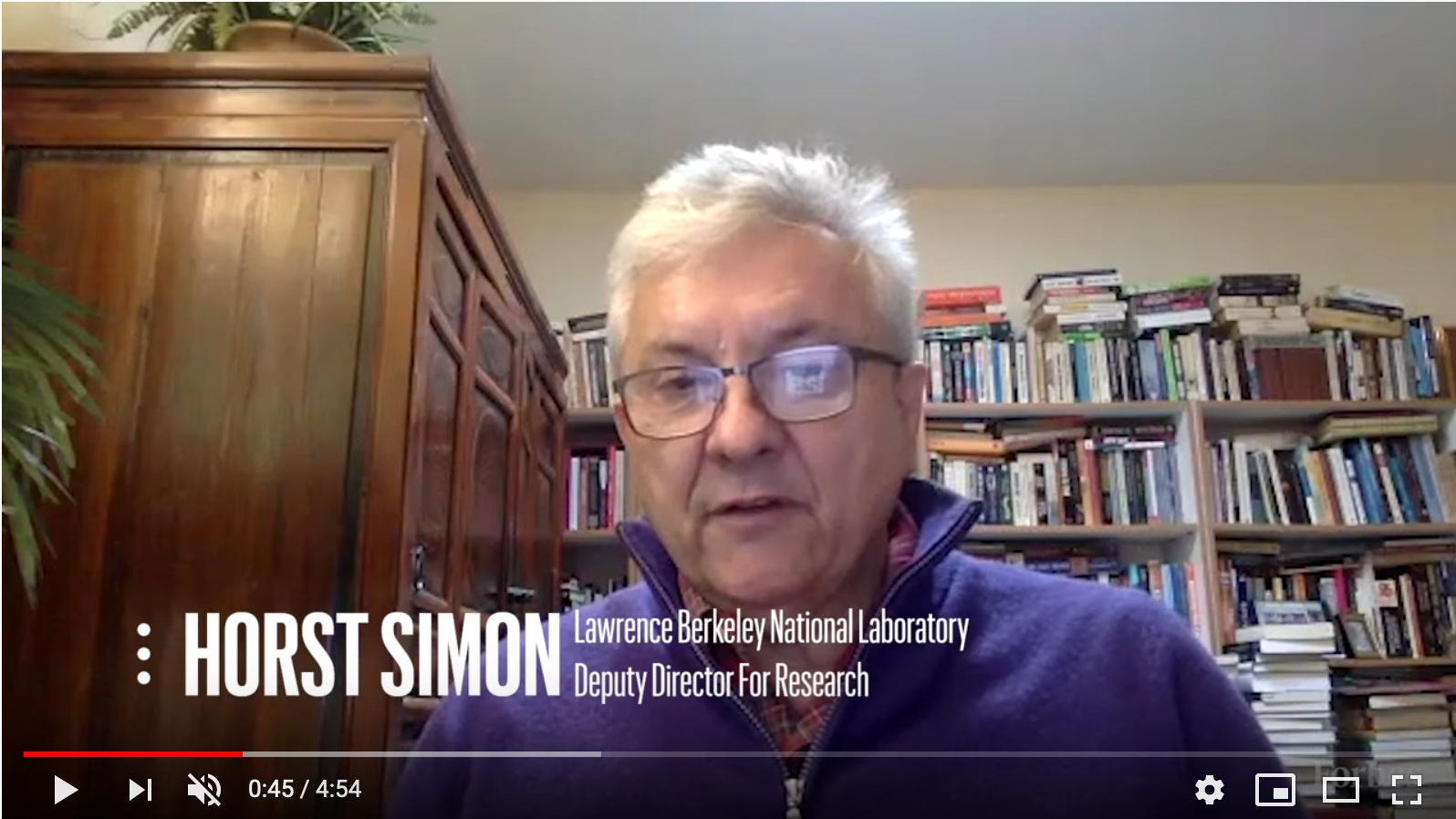
Horst Simon Talks Computing & COVID in Forbes Video
Berkeley Lab’s Deputy Director for Research Horst Simon was recently interviewed by Forbes for a video report that explored the role high-performance computing is taking in COVID-19 research. https://youtu.be/n2Jdi8VcdyY
Q&A With Director Witherell in SF Business Times
Lab Director Mike Witherell discusses what brought him to Berkeley Lab, his leadership style, and career advice he’d give to his younger self in a Q&A feature in the San Francisco Business Times. Read more in this copy of the interview (for internal use only). https://drive.google.com/a/lbl.gov/file/d/1flKzSvr40C_rTb3_cKRNushFQ_S3rkRI/view?usp=sharing
NAWI’s Mauter Featured on ‘Here & Now’ Broadcast
Meagan Mauter of the National Alliance for Water Innovation (NAWI), based at Berkeley Lab, was featured on the public radio program “Here & Now,” discussing the role of desalination in the larger portfolio of options that researchers are exploring to help stem California’s fresh water shortages. https://www.wbur.org/hereandnow/2020/02/18/desalination-climate-change-water-scarcity
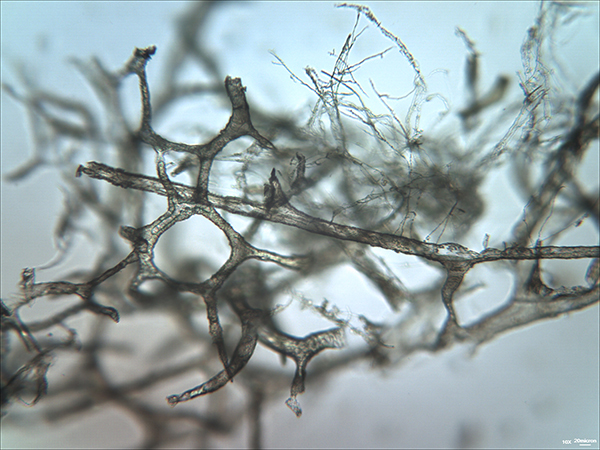
ALS Reveals Preserved T. Rex Blood Vessels
Scientists used the Lab’s Advanced Light Source to determine the chemical mechanisms that allow soft tissue structures to persist in dinosaur bones, countering the long-standing belief that protein-based body parts can’t survive more than 1 million years. The sample came from a T. rex femur. https://newscenter.lbl.gov/2020/02/14/dinosaur-blood-vessels/
Four Lab Scientists Awarded 2020 Sloan Fellowships
Four Lab scientists have been awarded 2020 Sloan Research fellowships for their scientific achievement. The fellowships from the Alfred P. Sloan Foundation seek to stimulate fundamental research by early-career scientists and scholars of outstanding promise. https://stratcomm-elements.lbl.gov/2020/02/12/four-2020-sloan-research-fellows-from-berkeley-lab/
Frick Talks Peak Demand & Energy Efficiency on Podcast
Natalie Mims Frick of Berkeley Lab’s Energy Technologies Area recently appeared on the podcast Finely Tuned to discuss her team’s research on how energy efficiency can affect peak demand and costs on the electric grid. https://soundcloud.com/user-573696350/whats-the-cost-of-lowering-peak-demand-with-energy-efficiency-w-natalie-mims-frick-lbnl
Yelick, Oliker Featured on Exascale Podcast
The latest episode of the “Let’s Talk Exascale” podcast features Berkeley Lab’s Kathy Yelick and Lenny Oliker. They discuss the ExaBiome: Exascale Solutions for Microbiome Analysis project, which seeks to develop computational tools to analyze microbial species. https://exascaleproject.org/providing-exascale-solutions-for-the-assembly-and-analysis-of-metagenomic-data/
Arnold Touts Lab’s Diversity Efforts in ChemistryWorld
In a recent article in ChemistryWorld, Polly Arnold — director of the Lab’s Chemical Sciences Division — discusses her work to unlock the mystery of heavy elements, the joys of team science, and the “exciting” approach taken to increase diversity at the Lab. https://www.chemistryworld.com/features/polly-arnolds-diversity-of-interests/4010778.article